Le peintre en plein air — História e Análise
In this fleeting moment of creation, a painter immerses himself in the embrace of nature, capturing the world as it dances on the edge of a dream. Here, amidst the wild blooms and whispering breezes, there lies a sacred dialogue between the artist and his surroundings. Look closely at the figure in the canvas' foreground; the painter’s brush rests poised, a reflection of the tranquil lake behind him. Notice how the dappled sunlight filters through the foliage, casting delicate shadows across the scene.
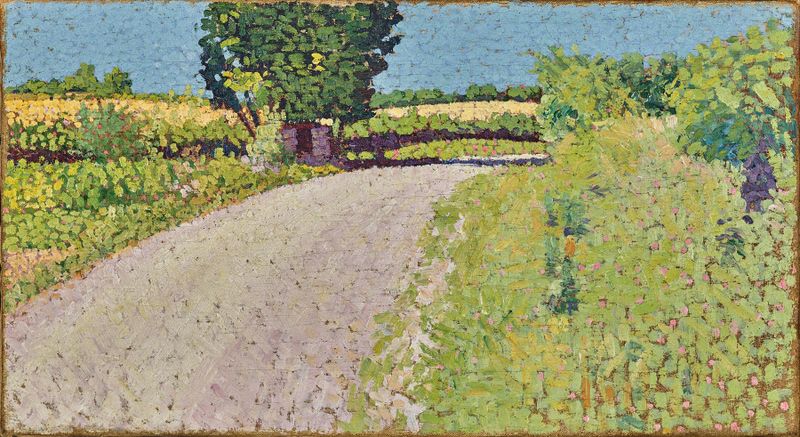
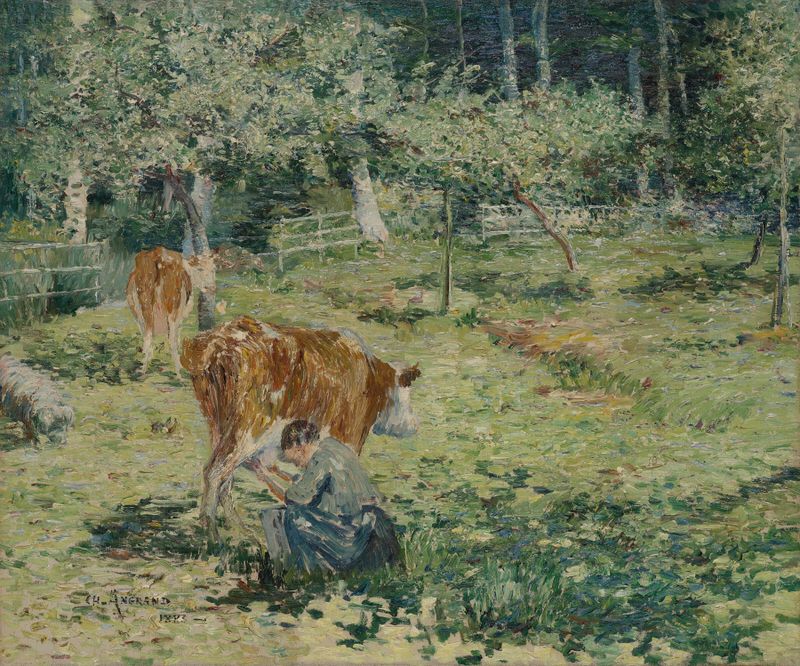
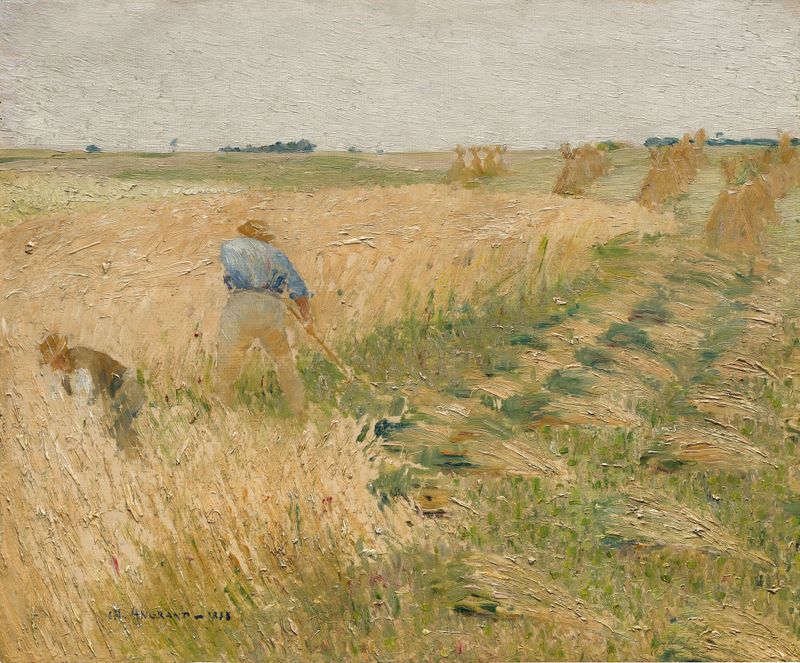
The palette is vibrant yet harmonious, with soft greens and warm earth tones blending beautifully, evoking the very essence of outdoor life. The visible strokes convey movement and immediacy, inviting the viewer to share in this intimate moment of creation. Beneath the surface, the painting pulsates with themes of solitude and exploration. The juxtaposition of the artist’s focused gaze against the sprawling, untamed nature highlights the tension between man and the wild.
Here, creativity becomes a refuge, a sanctuary from the chaos of the world, urging the onlooker to reflect on their own relationship with the natural environment. The dreamlike quality lingers, suggesting that in the act of creation, we find our truest selves. At the time of this work, Charles Angrand was deeply embedded in the post-Impressionist movement, exploring techniques that emphasized emotion and perception. Though the exact date remains unknown, his works from the late 19th century reflect a time when artists sought to break free from traditional constraints, embracing the outdoors as both subject and muse.
This painting captures not just a moment in nature but a turning point in how art was understood and appreciated.