
Procession before the tombs of the Caliphs, Grand Cairo — História e Análise
In the heart of Cairo, a group of solemn figures steps lightly over the ancient stones, each footfall echoing the weight of centuries. The sun looms above, casting a warm golden hue that dances upon the ornate surfaces of the tombs, highlighting the intricate carvings that tell stories long forgotten. Clad in flowing garments, the procession seems caught between reverence and the fragility of existence, as if the very air holds its breath in anticipation of what lies ahead. Look to the left and observe the rich tapestry of colors that envelops the scene, from the deep blues of the sky to the earthy tones of the stones below.
Notice how the light plays delicately on the figures, their shadows elongated and almost spectral, heightening the sense of history and memory. The power of composition lies in the diagonal lines that draw the viewer’s eye toward the tombs, creating a natural flow that guides the observer deeper into this sacred moment. As you delve deeper, consider the juxtaposition of the living and the dead; the participants in the procession embody a fleeting presence among the eternal structures. Each figure’s expression reveals a kaleidoscope of emotions—grief, contemplation, and perhaps a hint of hope.
This tension between the vibrancy of life and the stillness of death encapsulates the fragility of humanity's place in the continuum of time, urging reflection on our transient nature. In 1846, David Roberts painted this scene while traveling through Egypt, capturing not only the physical grandeur of the Caliphs' tombs but also the cultural resonance of the moment. At that time, Europe was captivated by the East, and Roberts was instrumental in bringing its wonders to the attention of Western audiences. His meticulous attention to detail and evocative compositions made him a prominent figure in the Orientalist movement as he sought to bridge the gap between two distinct worlds.
Mais obras de David Roberts
Ver tudo →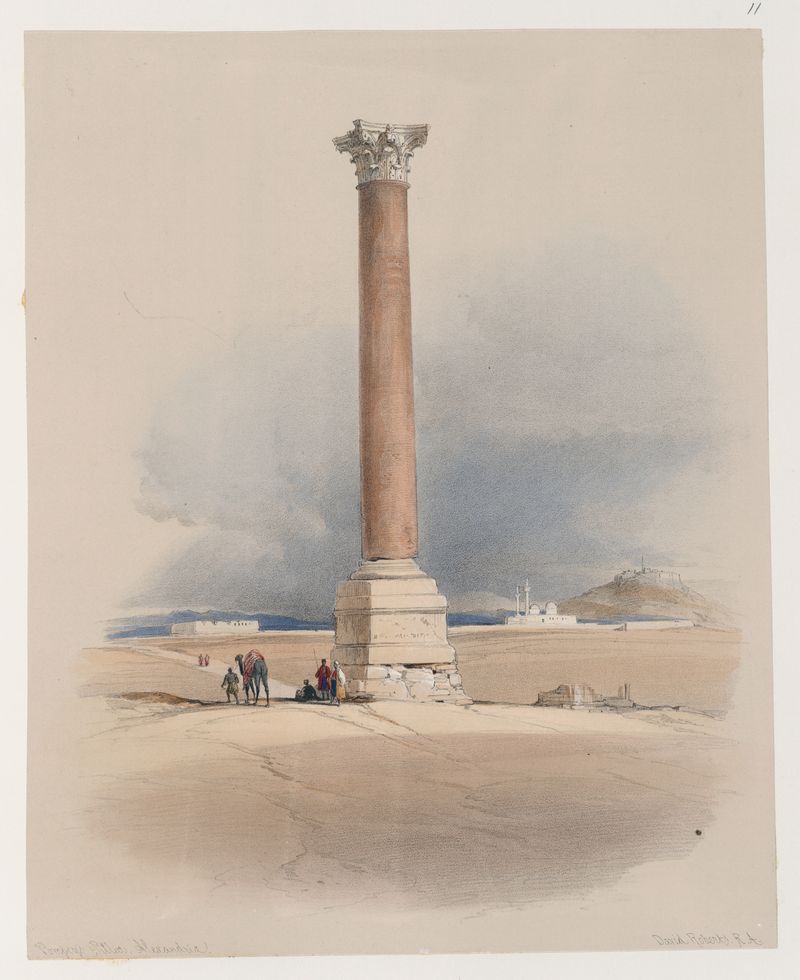
Pompey’s Pillar, Alexandria.
David Roberts

Approach to the Fortress of Ibrim.
David Roberts

Karnac [Karnak]. Nov. 29th, 1838.
David Roberts
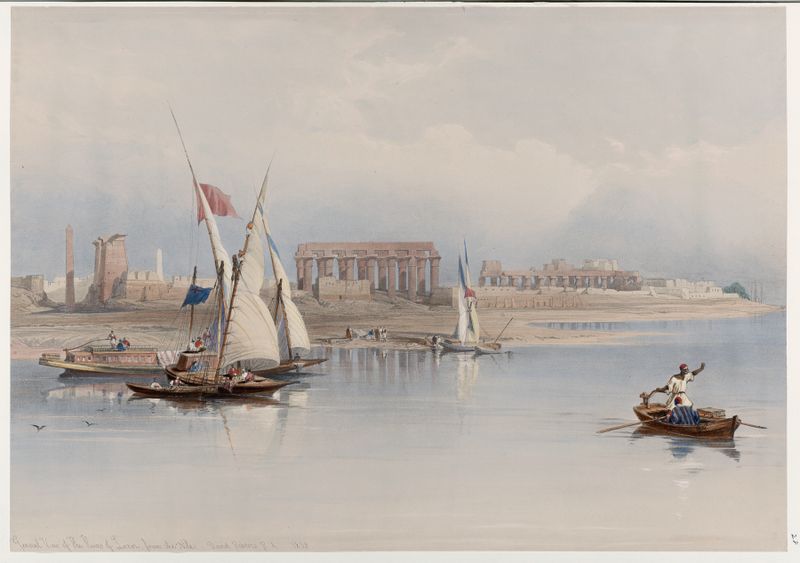
General view of the ruins of Luxor, from the Nile. 1838.
David Roberts

Statues of Memnon at Thebes, during the inundation.
David Roberts

Entrance to the tombs of the kings of Thebes. Bab-el-Malouk [Bîbân al-Mulûk].
David Roberts

The Fortress of the Alhambra, Granada
David Roberts
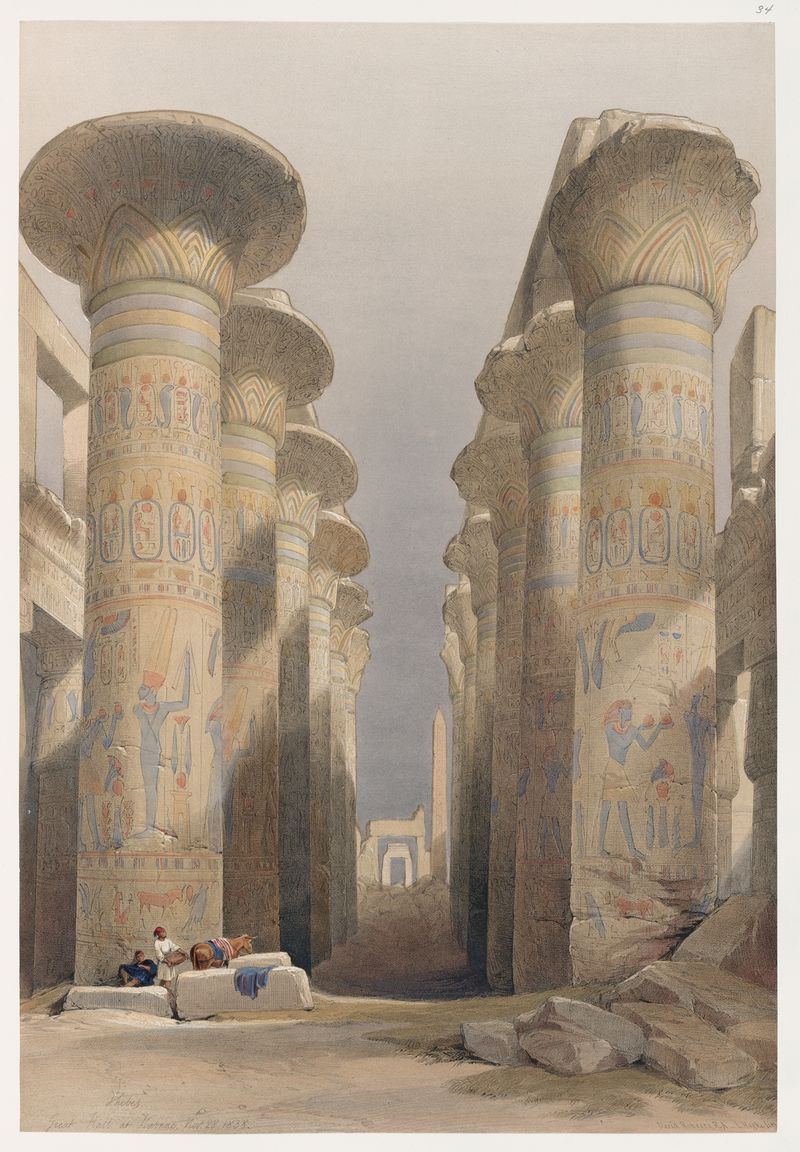
Thebes. Great Hall at Karnak. Nov. 28, 1838.
David Roberts
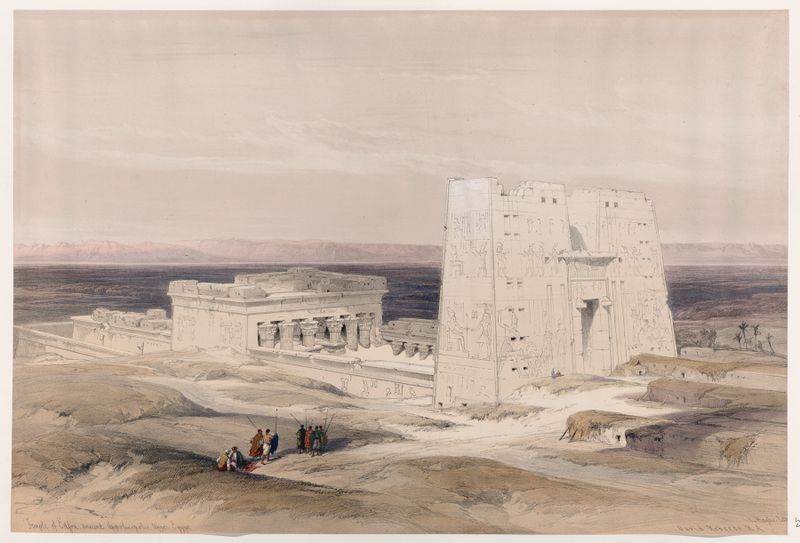
Temple of Edfou [Idfû], ancient Appolinopolis, Upper Egypt.
David Roberts

Temple of Kalabshee [Kalabsha, Kalâbishah], Nubia. Nov. 1838.
David Roberts
Mais arte de Pintura Histórica
Ver tudo →
The Night Watch Militia Company of District II under the Command of Captain Frans Banninck Cocq
Rembrandt van Rijn
Lincoln Memorial
Henry Bacon
The Third of May 1808
Francisco de Goya

Isaac and Rebecca, Known as ‘The Jewish Bride’
Rembrandt van Rijn
The Charge of the Mamelukes (1814)
Francisco de Goya

De vier ruiters van de apocalyps
Albrecht Dürer