
Ruïnelandschap met de vlucht naar Egypte — História e Análise
Could beauty survive in a century of chaos? Ruïnelandschap met de vlucht naar Egypte presents a delicate harmony amid turmoil, where ruins serve as a profound backdrop to a sacred flight. Look to the left at the towering remnants of ancient architecture, each crumbling stone whispering stories of a world once vibrant. Observe how the soft light filters through the billowing clouds, illuminating the figures of the Holy Family in the foreground. The colors—a palette of muted earth tones mingled with ethereal blues—draw the eye to their serene expressions, contrasting sharply with the desolation surrounding them.
It’s a masterful balance of shadow and light, evoking both hope and melancholy in a single frame. Embedded in the composition are the tensions of faith and despair, as the family seeks refuge against the encroaching decay of civilization. The stark juxtaposition of their innocence against the backdrop of ruin invites reflection on the fragility of human existence. The distant hills cradle the scene like a protective embrace, suggesting that even within chaos, there exists a sanctuary.
The emotional weight rests not just on the figures, but also on the intricate details of the landscape—the scattered remnants hinting at a past filled with grandeur and loss. Created between 1634 and 1693, the artist rendered this work during a period marked by upheaval in Europe. Amid the Thirty Years' War and shifting political landscapes, Umbach found solace in depicting biblical themes, merging the spiritual with the physical. This work stands as a testament to his skill in capturing the human experience, resonating with both the challenges of his time and the enduring essence of hope.
Mais obras de Jonas Umbach
Ver tudo →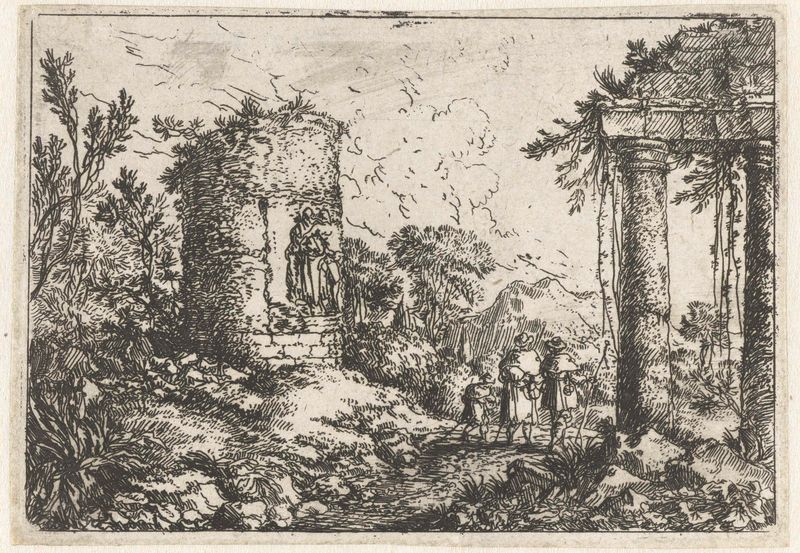
Landschap met ruïnes en drie pelgrims
Jonas Umbach

Johannes de Doper water drinkend
Jonas Umbach

Heilige Antonius van Padua en zijn visioen van het Christuskind
Jonas Umbach
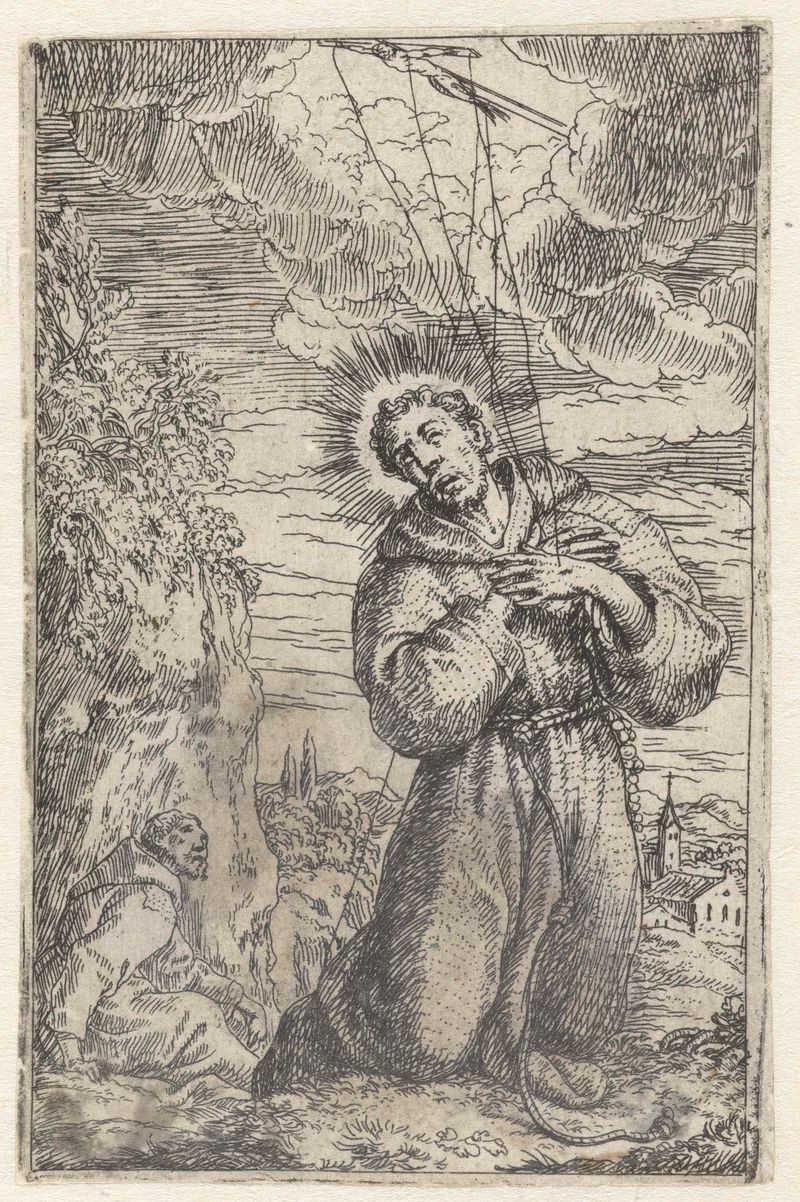
Stigmatisatie van heilige Franciscus
Jonas Umbach
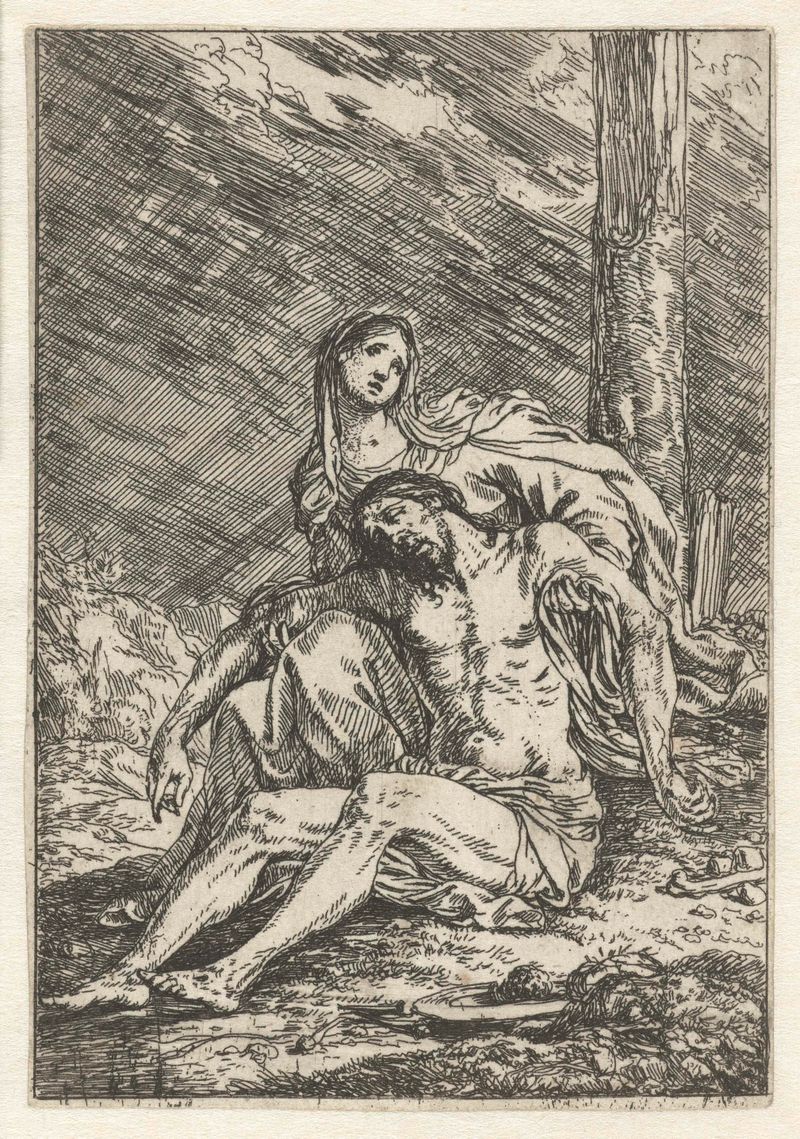
Maria met het lichaam van Christus (Pietà)
Jonas Umbach

Stigmatisatie van heilige Franciscus
Jonas Umbach
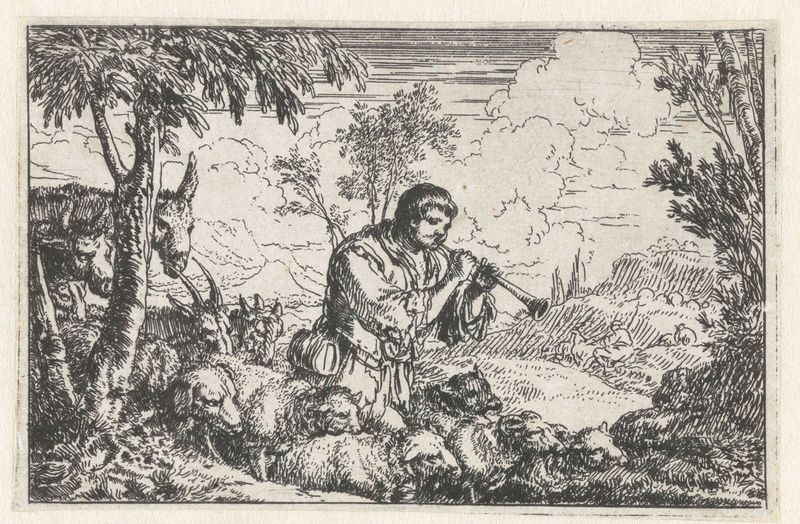
Schalmeispelende herder met kudde
Jonas Umbach
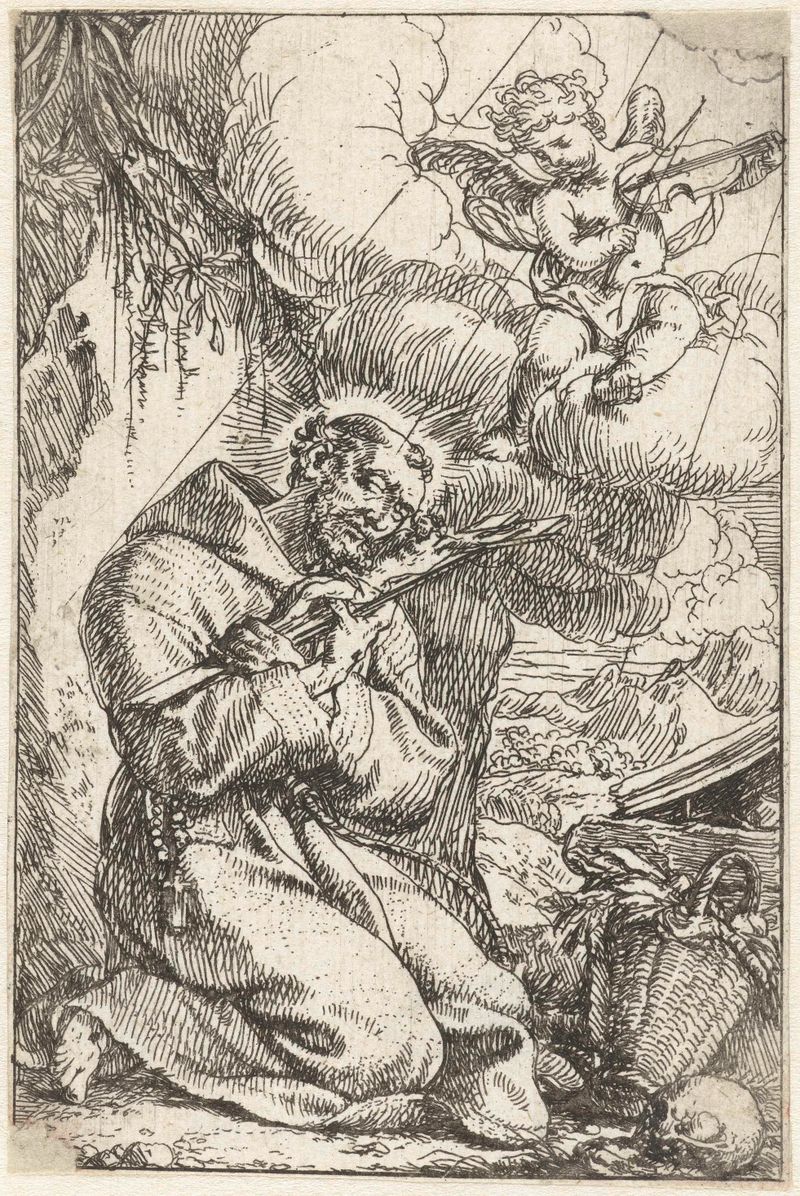
Heilige Franciscus het kruis kussend
Jonas Umbach
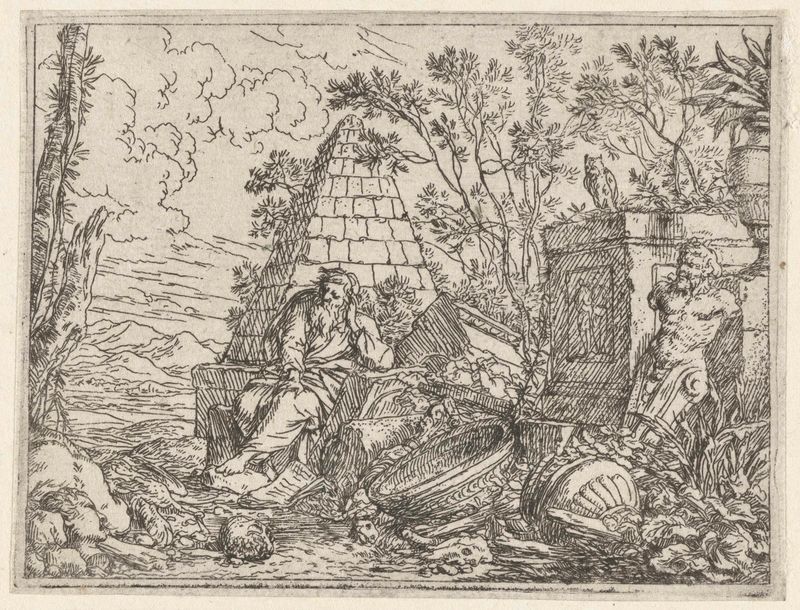
Democritus mediterend
Jonas Umbach

Twee rustende jagers met hun honden en buit
Jonas Umbach





