
Schepping van hemel en aarde — História e Análise
Is this a mirror — or a memory? In Schepping van hemel en aarde, the artist invites the viewer to ponder the fragility of existence and the echoes of time that linger within us. First, look to the top of the composition, where luminous clouds swirl delicately, capturing the ethereal qualities of creation itself. The vibrant blues and soft whites contrast dramatically with the darker hues below, suggesting a celestial divide. Notice how the figures, rendered in meticulous detail, inhabit this divine moment; their gestures express both reverence and awe as they witness the birth of heaven and earth.
The painter's technique gives life to the swirling forms, creating a sense of movement that draws the eye across the canvas. Peering deeper, there's a palpable tension between the celestial and the earthly; decay lies just beneath the surface of beauty. The vibrant colors and lively figures are juxtaposed against the hints of erosion in the landscape below, a reminder of mortality amidst the splendor of creation. This duality resonates deeply, perhaps suggesting that every moment of life is layered with the inevitability of decline, evoking a complex emotional landscape of hope and melancholy. Herman Coets painted Schepping van hemel en aarde in the year 1700, a time when the Baroque period was flourishing in the Netherlands.
As the art world was dominated by grandiose themes and emotional depth, Coets' work emerged during a transitional phase, where the interplay of light and shadow was finely explored. This period marked a shift in focus from religious iconography to more personal reflections, allowing the artist to imbue layers of meaning within his creations, echoing the philosophical inquiries of his time.
Mais obras de Herman Coets
Ver tudo →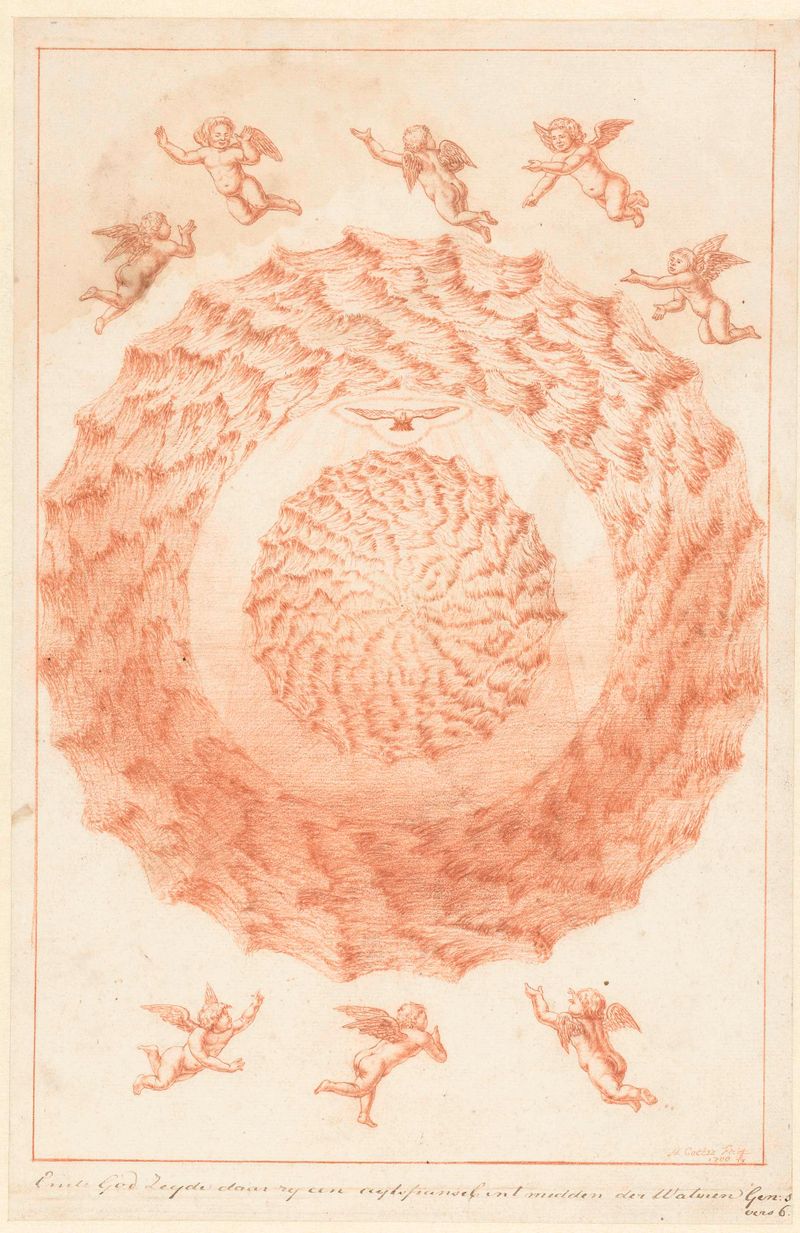

Mais arte de Arte Religiosa
Ver tudo →
The Return of the Prodigal Son
Rembrandt van Rijn

The Garden of Earthly Delights
El Bosco

Count Orgaz’ funeral
El Greco

The Hundred Guilder Print: the central piece with Christ preaching, the plate arched
Rembrandt van Rijn

The Descent from the Cross
Rogier van der Weyden

The return of the prodigal son
Rembrandt van Rijn