
Sea in springtime — História e Análise
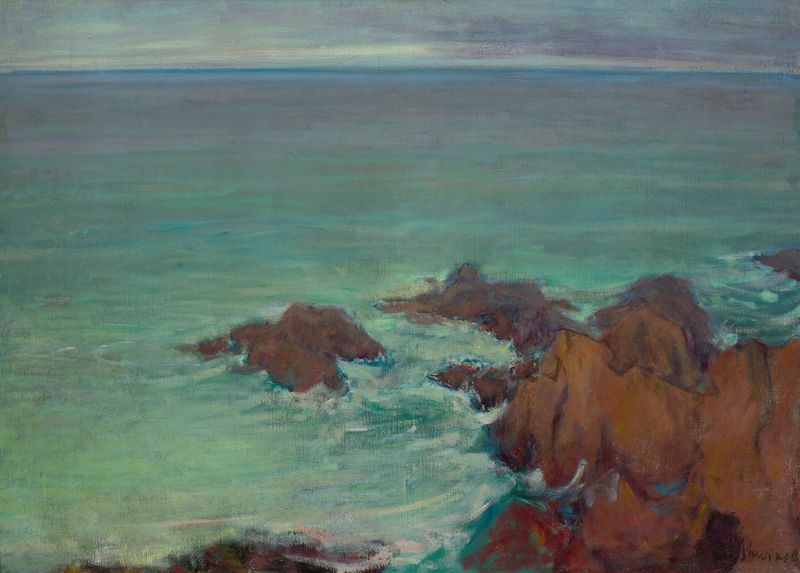
Who listens when art speaks of silence? In Sea in Springtime, a revelation unfolds—a tranquil yet profound meditation on the intersection of nature and emotion. Look to the horizon, where the sea kisses the sky in a dance of blues and whites. The gentle brush strokes create a rhythmic ebb and flow, mirroring the waves that seem to whisper secrets of renewal. Notice how the light plays across the water's surface, glimmering like scattered pearls, inviting the viewer to lose themselves in the serene depths of the scene.
The composition is expansive, anchoring our gaze in the vibrant interplay of colors, each hue a testament to the promise of spring. Yet, beneath this calm exterior lies a tension between the stillness of the sea and the anticipation of life awakening. The subtle gradations of color suggest not merely the beauty of nature, but the emotional weight of transition—the quiet moment before a storm or the stillness after. Small details, like the wispy clouds overhead, enhance this sensation of longing, as if nature itself holds its breath, waiting for the next chapter to unfold. In 1911, Władysław Ślewiński painted this work during a time of personal exploration and artistic evolution.
Living in Paris, he was deeply influenced by the Post-Impressionist movement, yet sought to carve out his own identity amidst the changing landscape of modern art. His embrace of color and form in Sea in Springtime reflects a broader dialogue in the art world—a quest for authenticity and emotional resonance amidst the tumultuous shifts of early 20th-century creativity.
Mais obras de Władysław Ślewiński
Ver tudo →
Rough sea
Władysław Ślewiński
Sea in Brittany
Władysław Ślewiński

Cottages in the snow
Władysław Ślewiński

Sea
Władysław Ślewiński

Waves in a rocky bay
Władysław Ślewiński

Sea with white waves
Władysław Ślewiński
Mountain stream – in the Tatra Mountains below Mt Nosal
Władysław Ślewiński
The Sea in Brittany
Władysław Ślewiński

A Coastal Landscape
Władysław Ślewiński

Sea at night
Władysław Ślewiński





