Spring — História e Análise
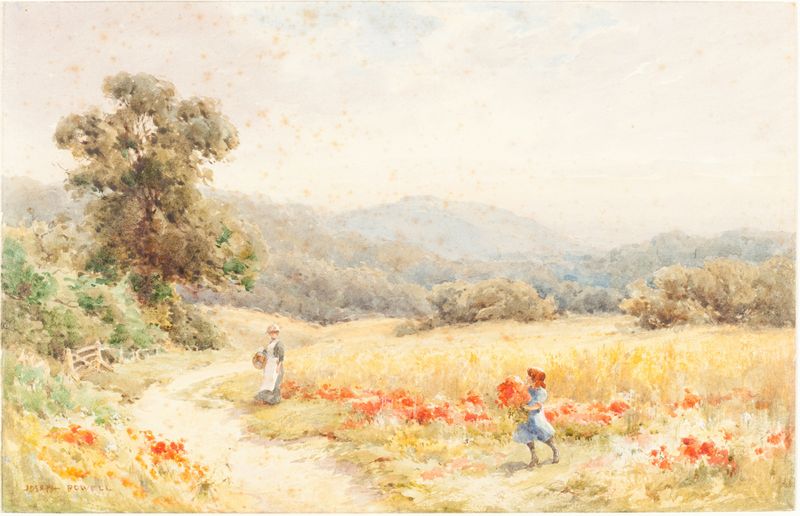
Could beauty survive in a century of chaos? In an era where turmoil often drowns the delicate whispers of creation, Powell's work emerges as a sanctuary, a testament to nature's resilience and the human spirit's unwavering quest for beauty. Look to the center of the canvas, where vibrant greens mingle with soft pastels, a lush grove bursting forth in a harmonious celebration of life. The brushwork is fluid yet precise, guiding the viewer's eye across blooming flora and intricate details that evoke the freshness of spring. Notice how the light dances through the leaves, creating a dappled effect that imbues the scene with warmth and vitality, suggesting a world of renewal just beginning to unfold. Beneath its surface, the composition speaks to contrasts between fleeting beauty and the inevitable passage of time.
The exuberant blossoms, in their prime, subtly hint at decay — a reminder that all beauty is transient. The interplay of shadow and light invokes a sense of both hope and melancholy, as if the artist is urging us to cherish these fleeting moments before they fade. Here, nature's cycle mirrors our own existence, underscoring the fragility that underlies even the most vibrant of experiences. During the period in which this piece was created, Powell was navigating personal and societal upheaval, reflecting an artistic climate marked by both innovation and unrest.
Painting this work, he likely sought not only to capture the essence of spring but also to transcend the chaos of his time, embedding his emotional landscape into the very fabric of his creation.