
St. Mark’s Piazza — História e Análise
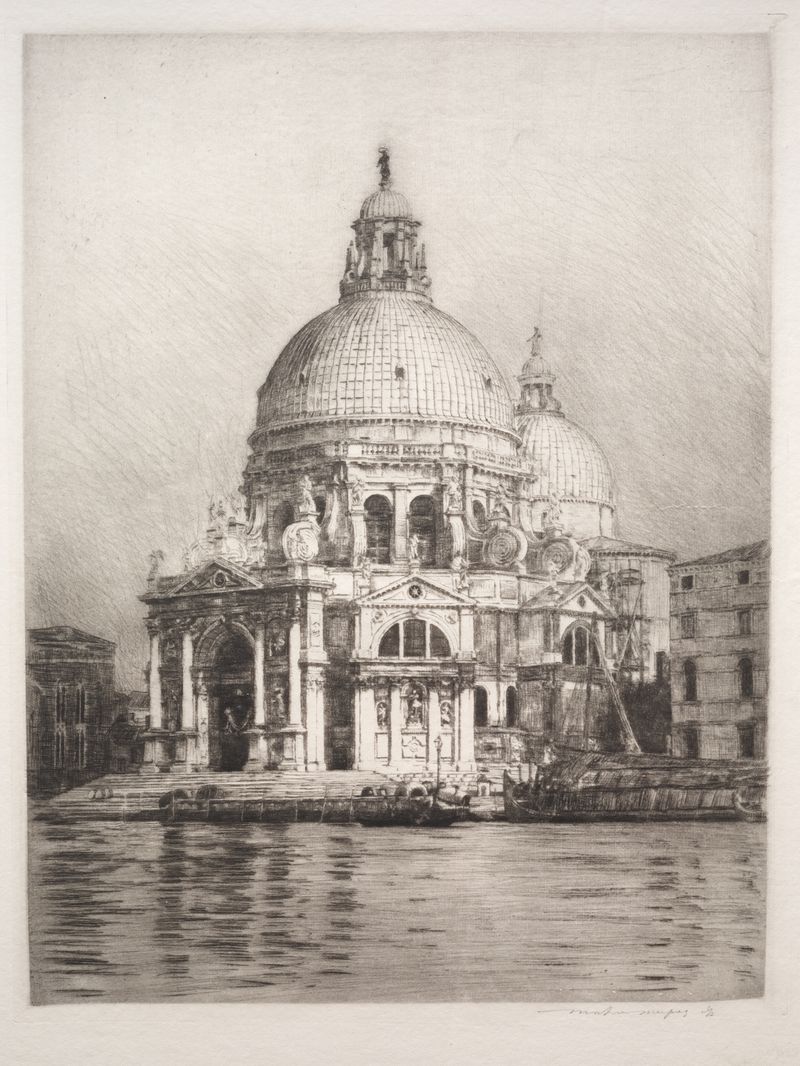
Could beauty survive in a century of chaos? The question echoes through the vibrant strokes of this artwork, capturing a moment in time where tranquility meets tumult, inviting us to ponder the resilience of art in a world marked by upheaval. Look to the left, where the intricate architecture of St. Mark’s Basilica rises majestically, its golden mosaics glimmering under the soft Venetian light. The artist’s brushwork creates a dance of shadows and highlights, drawing the viewer’s eye into the ornate details of the façades.
This careful composition, with its lively palette of blues and earth tones, evokes the timelessness of the piazza as a gathering place, bustling with life yet simultaneously serene in its beauty. Beneath the surface, contrasts emerge — the juxtaposition of the vibrant, animated figures against the stoic, historical backdrop of the basilica speaks to the tension between the ephemeral nature of human existence and the enduring legacy of architecture. The artist captures the fleeting joy of passersby, hinting at the underlying currents of change sweeping through Europe in the early 20th century, suggesting a yearning for peace amidst the chaos of revolution. In 1910, the artist created this work while living in London, having been inspired by his travels across Europe. The turn of the century was a time of artistic exploration and upheaval, with modernism challenging traditional forms.
Menpes, known for his impressionistic style, sought to convey the emotional resonance of landscapes and cityscapes, capturing moments of beauty that defy the tumult of a rapidly changing world.
Mais obras de Mortimer Menpes
Ver tudo →




Mais arte de Arquitetura
Ver tudo →
The statue of Liberty
Frédéric Auguste Bartholdi

View of Houses in Delft, Known as ‘The Little Street’
Johannes Vermeer

View of Houses in Delft, Known as ‘The Little Street’
Johannes Vermeer

The Cathedral in Rouen. The portal, Grey Weather
Claude Monet

The yellow house
Vincent van Gogh

The Church in Auvers-sur-Oise, View from the Chevet
Vincent van Gogh