
St. Mark’s Piazza — História e Análise
The allure of stillness can both soothe and obsess, drawing us into the heart of a bustling world yet untouched by sound. In St. Mark’s Piazza, this dichotomy thrives, inviting viewers to navigate the delicate balance between fervor and tranquility. Focus on the sweeping expanse of the piazza, where the intricate architecture stands sentinel against the bright sky.
Notice how the light dances across the façades of the buildings, emphasizing their ornate details, while the shadows play hide and seek in the corners. The lively figures—tourists and locals alike—populate the scene, creating a dynamic tension that breathes life into the stillness of the moment. The artist's deft brushwork captures both the vibrancy of the scene and the quiet contemplation that accompanies it. Hidden within the vibrant chaos, themes of obsession emerge.
The meticulous attention to detail reveals a deeper yearning for connection to place, memory, and experience. The figures, though animated, appear transient—each a momentary brushstroke in the grand canvas of life. The juxtaposition of the historic square with its contemporary visitors suggests a dialogue between eras, embodying both the nostalgia of the past and the relentless passage of time. In 1910, while painting this work, the artist was deeply engaged with capturing the essence of travel and discovery, reflecting a time where the world was opening up to modernity.
Menpes, a British painter, was influenced by the Impressionist movement, which sought to convey moments of life's fleeting beauty. His travels across Europe fueled his desire to portray the unique character of each location, with St. Mark’s Piazza standing as a testament to both his artistic evolution and the enchanting allure of Venice.
Mais obras de Mortimer Menpes
Ver tudo →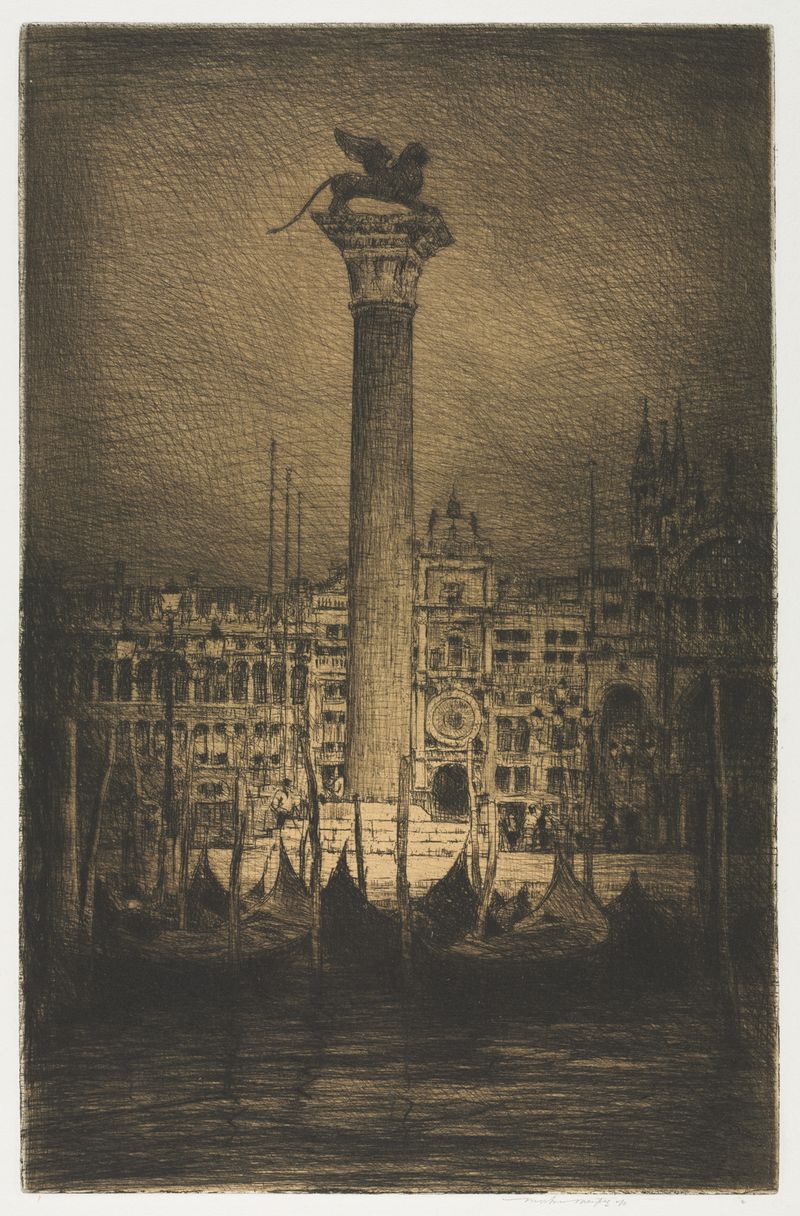




Mais arte de Arquitetura
Ver tudo →
The statue of Liberty
Frédéric Auguste Bartholdi

View of Houses in Delft, Known as ‘The Little Street’
Johannes Vermeer

View of Houses in Delft, Known as ‘The Little Street’
Johannes Vermeer

The Cathedral in Rouen. The portal, Grey Weather
Claude Monet

The yellow house
Vincent van Gogh

The Church in Auvers-sur-Oise, View from the Chevet
Vincent van Gogh