Still Life with Parrot and Snipes — História e Análise
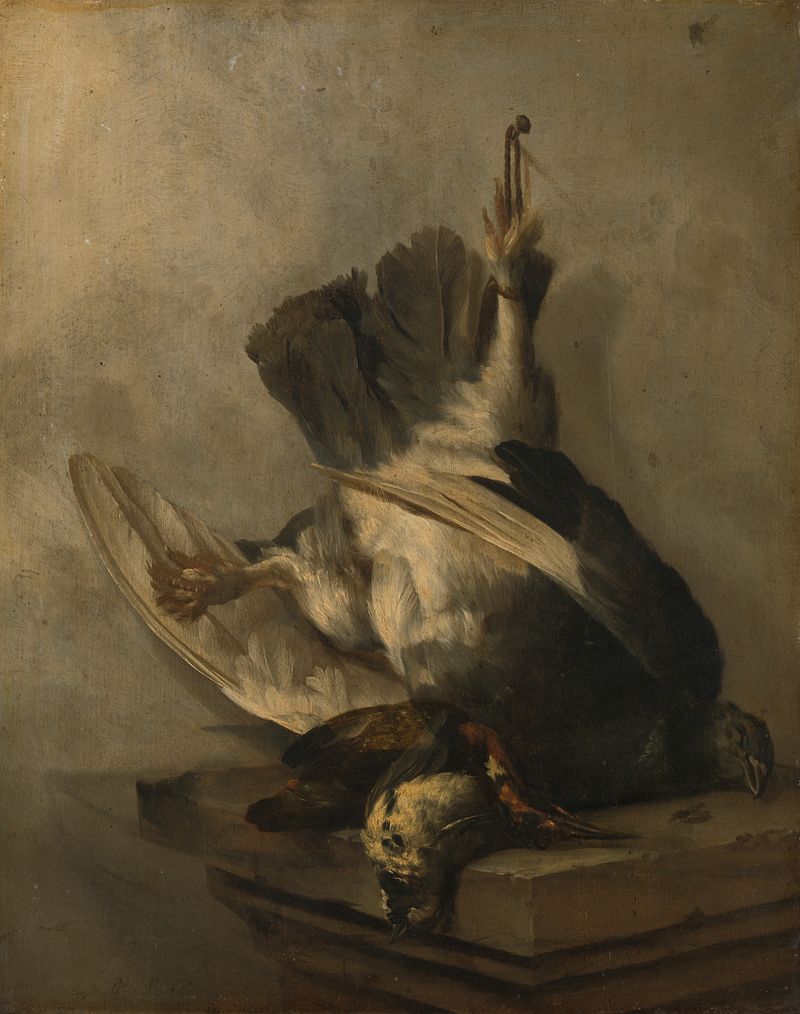
Could a single brushstroke hold eternity? This profound question lingers in the air as one gazes upon the intricate tableau rendered by a master of still life. Look to the center of the canvas where the parrot perches, vibrant and alive, its feathers a cascade of emerald and scarlet. The artist employs light deftly, illuminating the bird’s glossy plumage against the muted backdrop, creating a striking contrast that draws the eye. Notice how the delicate arrangement of snipes, their bodies draped with meticulous precision, adds depth to the composition, inviting contemplation of life and death in the same breath.
Each object is a testament to the artist’s skill, revealing textured surfaces that engage your sense of touch, alongside a rich palette that evokes an air of tranquility. Delving deeper, one can uncover the interplay of faith and nature that lies beneath the surface. The parrot, often a symbol of the soul, perched amidst the hunted snipes, speaks to the duality of existence: the vibrancy of life amid vulnerability. The careful arrangement of the elements hints at the belief in the beauty of creation, while the stillness evokes a moment suspended in time, prompting reflections on mortality and the passage of earthly delights. In 1655, during a period of remarkable innovation in Dutch art, Cornelis Lelienbergh created this work against a backdrop of intense exploration and burgeoning trade.
Working in a region noted for its flourishing still life tradition, he infused his pieces with both technical precision and philosophical depth, a reflection of the era's embrace of both materialism and spirituality. This painting, part of a broader artistic journey, encapsulates his exploration of the transient nature of life, inviting viewers into a dialogue that transcends time.