Taarbæk Harbour — História e Análise
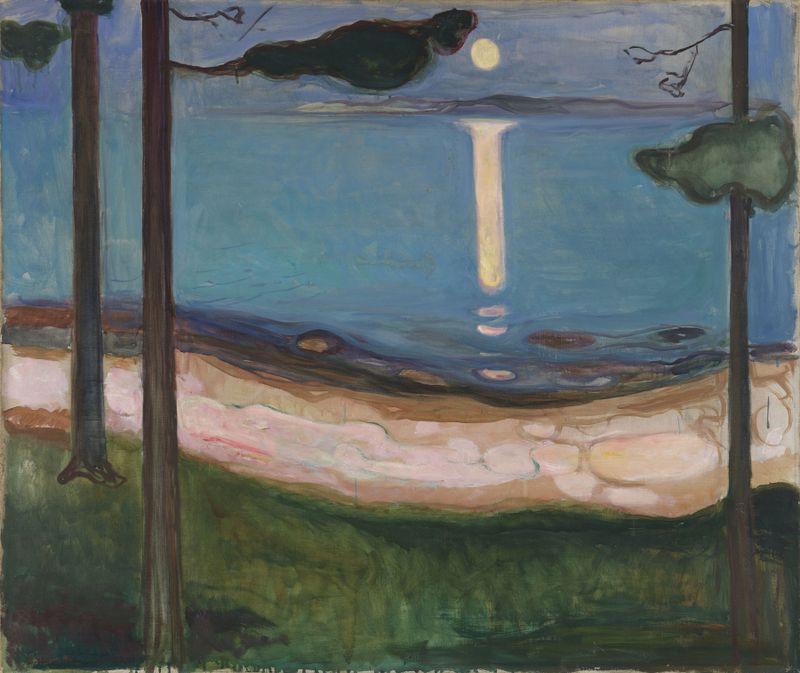
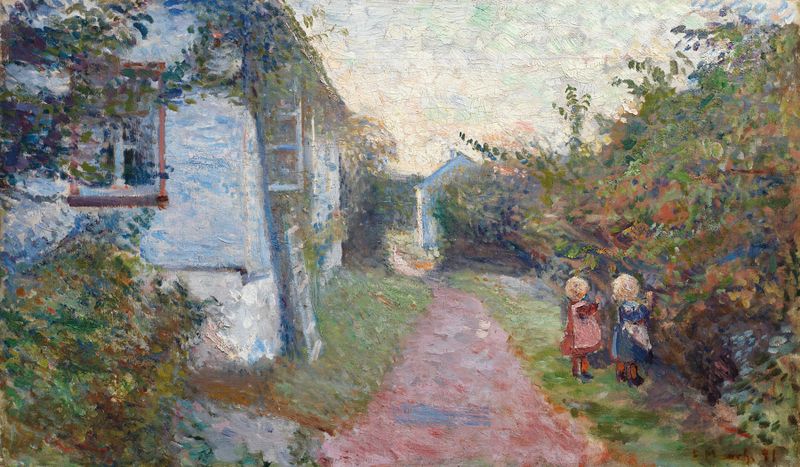
Could beauty survive in a century of chaos? In Taarbæk Harbour, Edvard Munch captures the delicate balance between serenity and tumult, a reflection of the inherent faith we place in nature's enduring tranquility amidst our turbulent existence. Look to the left, where the water shimmers in iridescent blues and greens, kissed by a soft golden light. The gentle waves lap against a wooden jetty, inviting the viewer’s gaze toward the horizon. Notice how Munch skillfully uses vivid brushstrokes to contrast the calmness of the water with the jagged forms of the surrounding boats, invoking a sense of both peace and foreboding.
The sky looms overhead, painted in hues that transition from deep purple to pale lavender, suggesting the fleeting moments of twilight. Delve deeper and observe the solitary figure positioned on the dock, head bowed as if in reverence to the scene before them. This figure, seemingly at one with the environment, embodies introspection and faith, hinting at a narrative of personal solace amidst the chaos of the world. The juxtaposition of the vibrant setting against the stillness of the figure speaks to the emotional tension between isolation and communion, inviting viewers to ponder their own place within nature’s beauty. In 1905, while Munch painted this piece in Norway, he was navigating a tumultuous personal landscape, marked by both artistic struggle and a burgeoning recognition.
The early 20th century was a period of profound change in the art world, as Munch's explorations of psychological depth began to resonate with a society grappling with modernity. In this context, Taarbæk Harbour stands as a testament to his longing for connection and understanding in an increasingly chaotic world.