The departure for the hunt — História e Análise
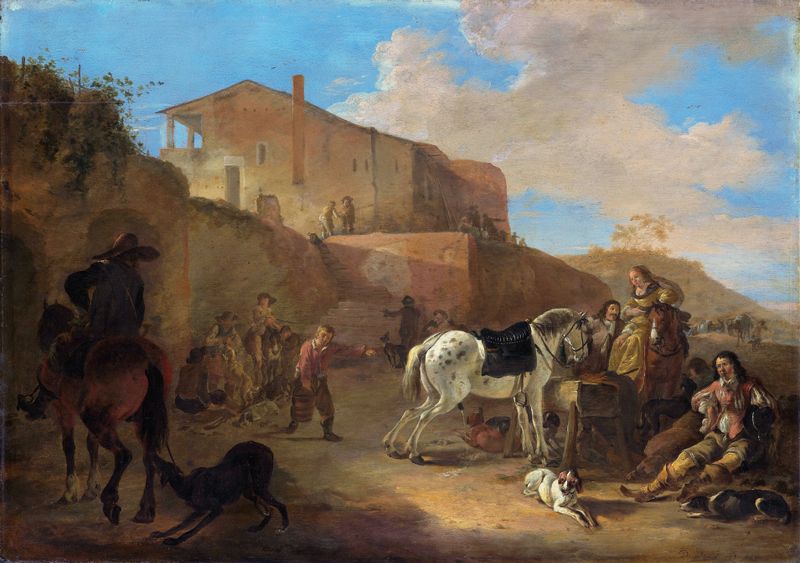
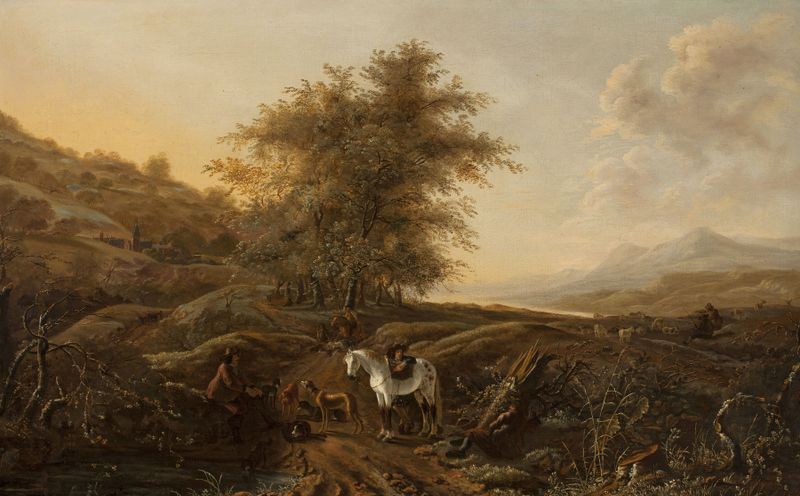
In the presence of The Departure for the Hunt, this statement resonates with the vivid hues that dance across the surface, each stroke imbued with the weight of anticipation and the thrill of adventure. Focus on the vibrant greens that dominate the foreground, where lush foliage frames a gathering of elegantly dressed figures. Your gaze is drawn to the central group, poised with a palpable energy, their faces illuminated by the golden light of early morning. The horses, noble and strong, seem to almost leap from the canvas, their coats glistening under the sun's caress, while the subtle interplay of shadows adds depth, suggesting both movement and the fleeting nature of time. Amidst the vivid colors, there exists a tension between the excitement of the hunt and the serenity of the landscape.
Notice how the distant trees fade into a soft blue, hinting at the vastness of the world awaiting the figures, while their expressions reflect a mixture of confidence and uncertainty. Each detail—the gleaming saddles, the fluttering banners—speaks to the duality of nature and civilization, ambition and restraint, as they prepare to engage with the wilderness ahead. In the period when The Departure for the Hunt was created, Dirk Stoop was deeply engaged with the genre of hunting scenes, reflecting the aristocratic interests of the time. He worked during the late 16th to early 17th century, a period marked by a fascination with the nobility’s leisure pursuits and the natural world.
This work encapsulates the spirit of adventure that defined much of his art, as he sought to blend realism with a romanticized vision of outdoor exploits.