
The Royal Exchange and the Bank of England — História e Análise
What secret hides in the quiet of the canvas? A yearning for progress and stability weaves its way through history, reflecting a pivotal moment in time. Look to the center at the majestic façade of the Bank of England, where colossal columns stand as silent guardians of financial power. Notice how the sunlight dances on the stone, casting intricate shadows that reveal the texture of the figures milling about in their daily pursuits. The artist’s meticulous attention to detail is evident in the careful brushwork that brings life to the architecture and its bustling surroundings.
The palette, dominated by earthy tones, lends a sense of grounding amidst the hustle, contrasting the ambition of the era with the tranquility of the scene. Within the composition, one can sense the tension between tradition and innovation. The Bank represents a beacon of stability during a time of vast change in British society, yet the subtle expressions of the passersby hint at their individual stories—each face a testament to personal aspirations and uncertainties. The juxtaposition of the stately building with the everyday lives of the citizens captures the dichotomy of progress: the promise of security shadowed by an unquenchable desire for something more. Edmund Walker painted this work in 1852, a period marked by rapid industrial growth and urban expansion in London.
As the city transformed, the financial institutions began to play an increasingly pivotal role in society, embodying both hope and anxiety. Walker, influenced by the evolving landscape, sought to encapsulate this moment of duality, where the grandeur of architecture met the intimate pulse of human experience.
Mais obras de Edmund Walker
Ver tudo →
A View of London Bridge
Edmund Walker
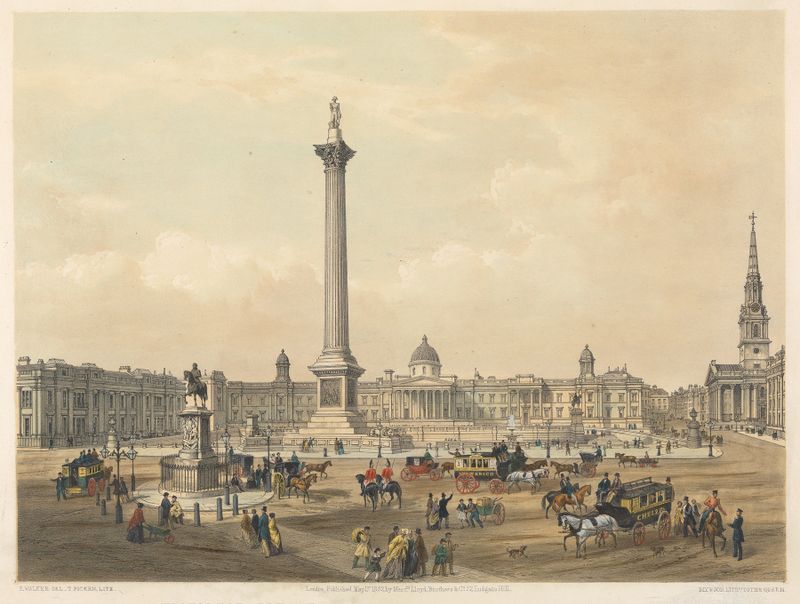
Trafalgar Square, with the National Gallery and St. Martin’s Church
Edmund Walker
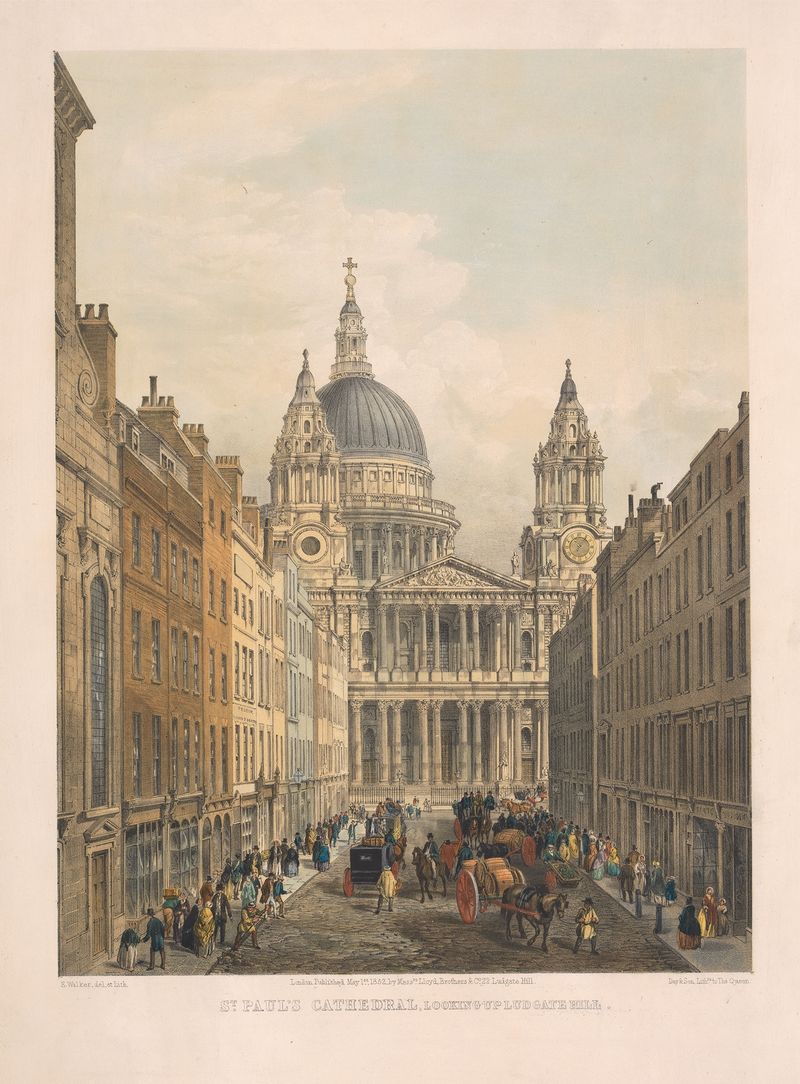
St. Paul’s Cathedral, looking up Ludgate Hill
Edmund Walker
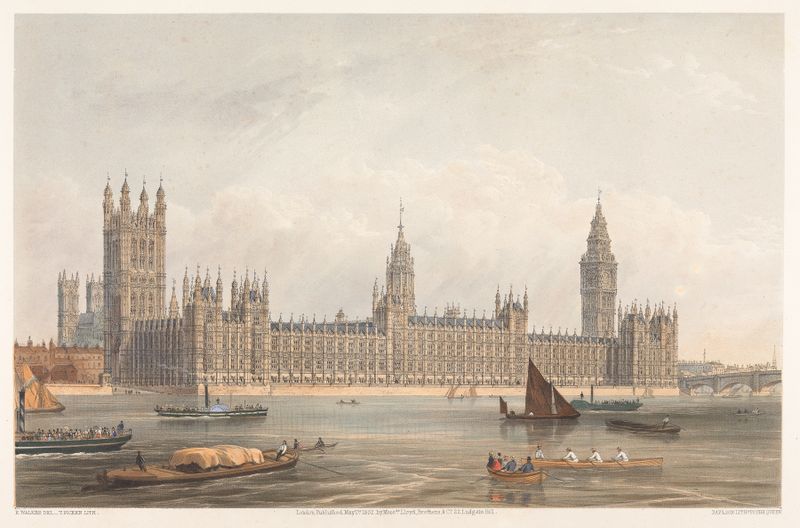
The New Houses of Parliament
Edmund Walker
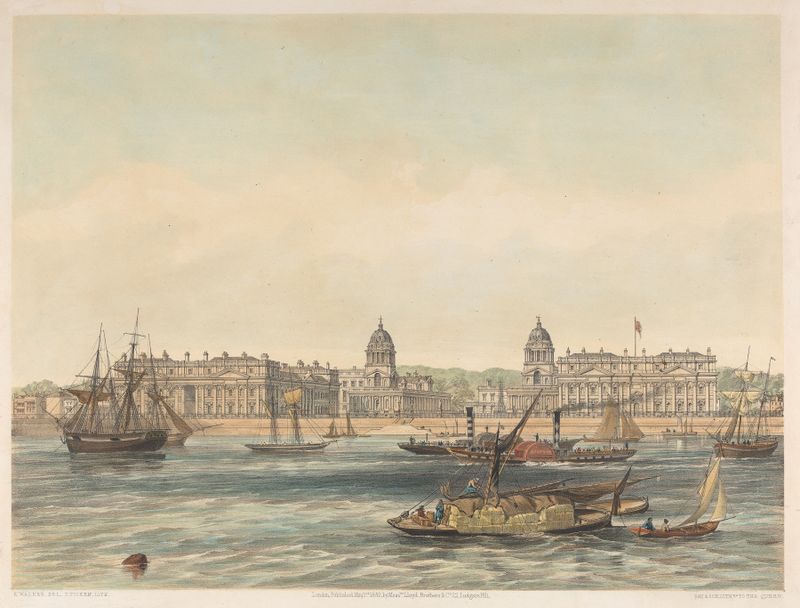
Greenwich Hospital
Edmund Walker
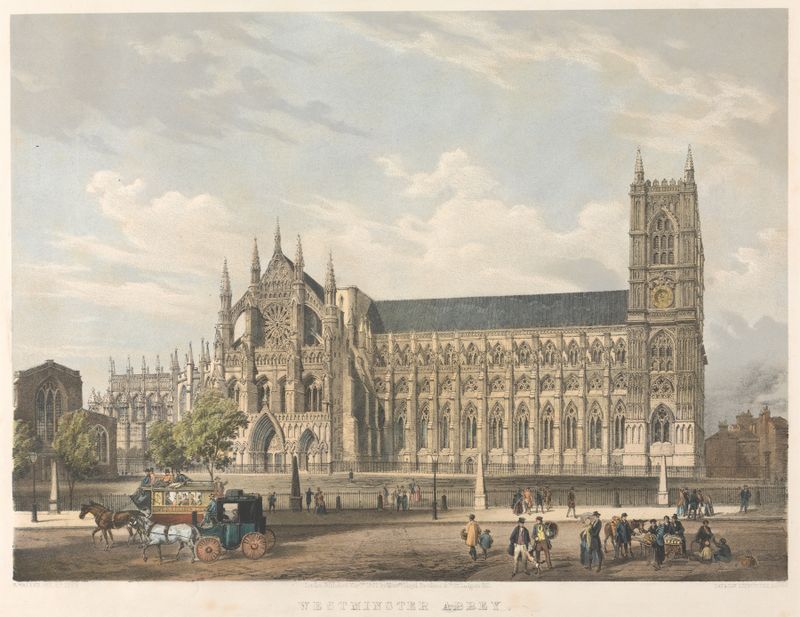
Westminster Abbey
Edmund Walker
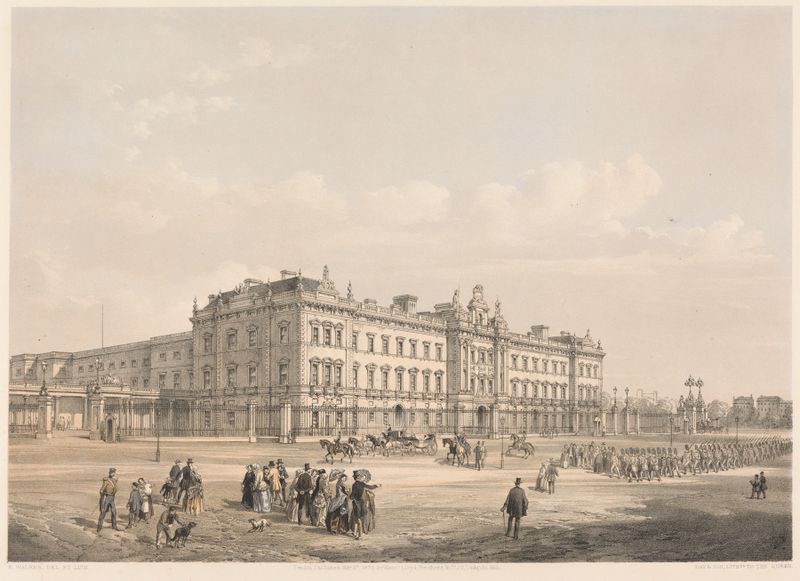
Buckingham Palace
Edmund Walker

London Bridge from above Bridge
Edmund Walker

The British Museum
Edmund Walker
Mais arte de Arquitetura
Ver tudo →
The statue of Liberty
Frédéric Auguste Bartholdi

View of Houses in Delft, Known as ‘The Little Street’
Johannes Vermeer

View of Houses in Delft, Known as ‘The Little Street’
Johannes Vermeer

The Cathedral in Rouen. The portal, Grey Weather
Claude Monet

The yellow house
Vincent van Gogh

The Church in Auvers-sur-Oise, View from the Chevet
Vincent van Gogh