
The Well — História e Análise
In the depths of Giovanni Battista Piranesi's The Well, a profound sense of longing reverberates through the intricate architectural labyrinth, beckoning us to uncover its secrets. Look closely at the swirling lines that guide your gaze through the composition. Notice how the light plays across the textured surfaces of stone and shadow, creating an interplay of depth that draws you into the well’s mysterious embrace. The circular form at the center commands attention, its edges sharp yet inviting, as if promising solace within the chaos of its geometry.
The muted palette enhances the feeling of nostalgia, evoking a yearning for what lies beneath the surface. Within the carefully rendered details, the tension between enlightenment and obscurity emerges. The well symbolizes both a source of life and a descent into the unknown, inviting contemplation on the duality of existence. This interplay of the seen and unseen mirrors our own search for meaning, while the surrounding elements hint at the remnants of a forgotten world.
Each shadow and contour whispers stories of abandonment and hope, urging the viewer to reflect on their own desires and yearnings. Created in 1761, during his time in Rome, the artist was deeply immersed in the neoclassical movement, which sought to revive art that conveyed grandeur and idealism. Piranesi, renowned for his etchings and visionary architecture, captured the tension of his era — a time when the ruins of antiquity coexisted with the burgeoning modern world. This work, infused with his fascination for architectural forms and emotional depth, reflects an artist wrestling with the profound elegance and complexity of human longing.
Mais obras de Giovanni Battista Piranesi
Ver tudo →
Carcere I. Portada
Giovanni Battista Piranesi
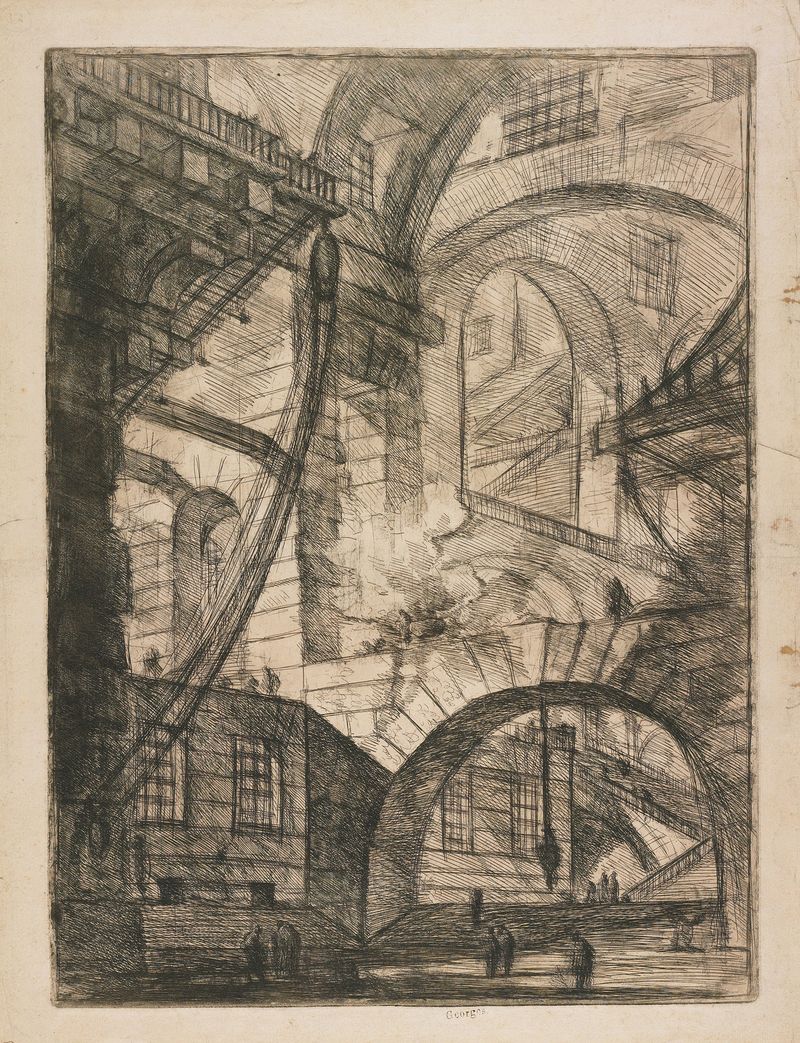
Perspective of Arches, with a Smoking Fire, Plate 6 from Carceri d’Invenzione
Giovanni Battista Piranesi
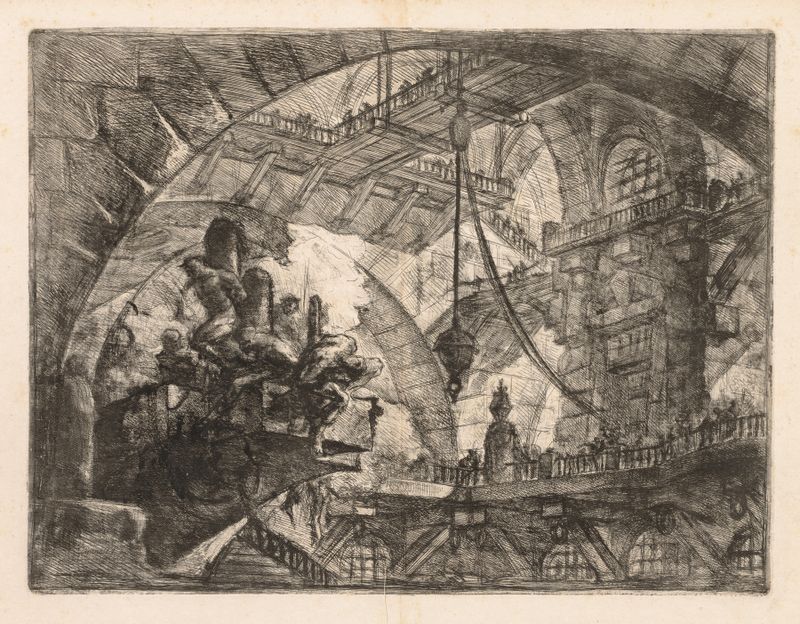
Prisoners on a Projecting Platform
Giovanni Battista Piranesi
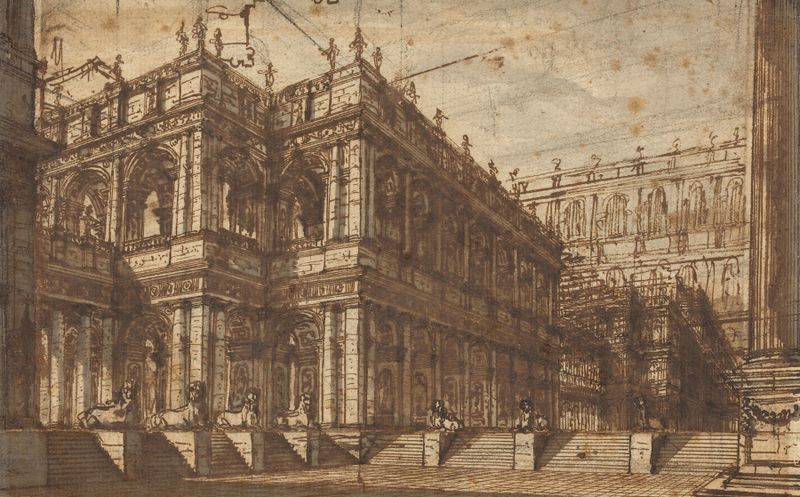
An Ancient Forum with Porticos
Giovanni Battista Piranesi

Imaginary Prisons of G. Battista Piranesi, Venetian Architect; title page
Giovanni Battista Piranesi

Veduta with the Temple of Jove
Giovanni Battista Piranesi
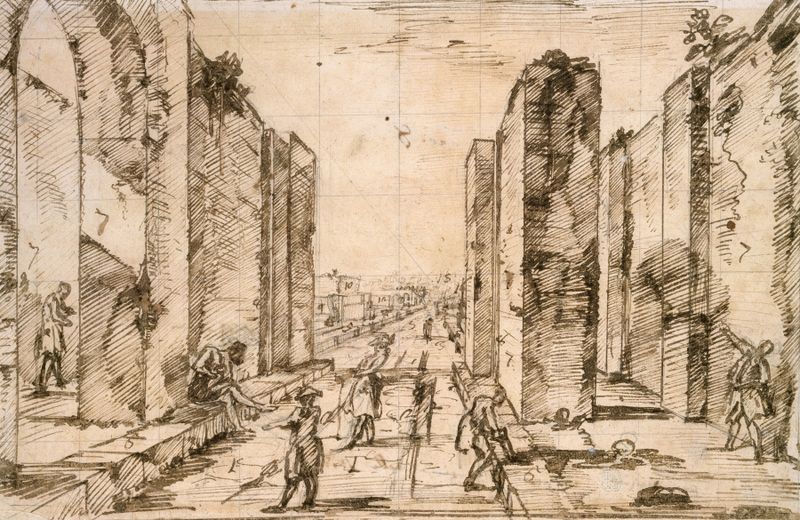
View through the Herculaneum Gate, Pompeii
Giovanni Battista Piranesi
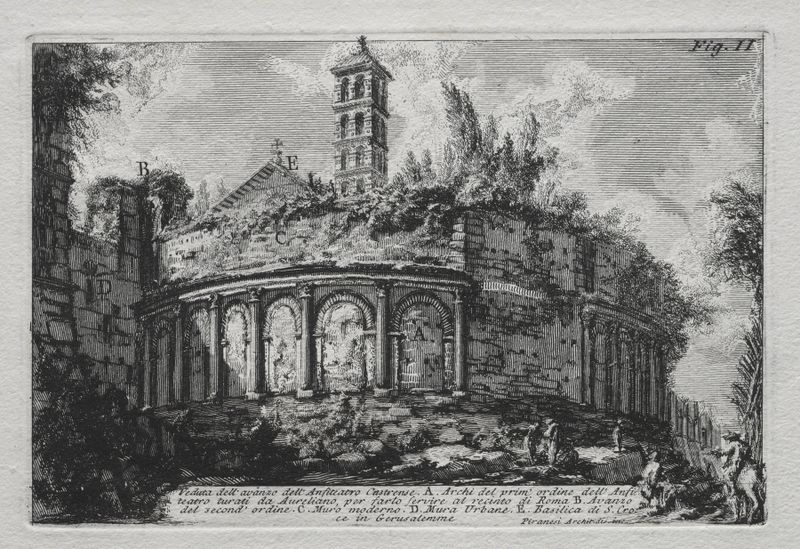
Veduta dell’avanzo dell’Anfiteatro Castranse
Giovanni Battista Piranesi
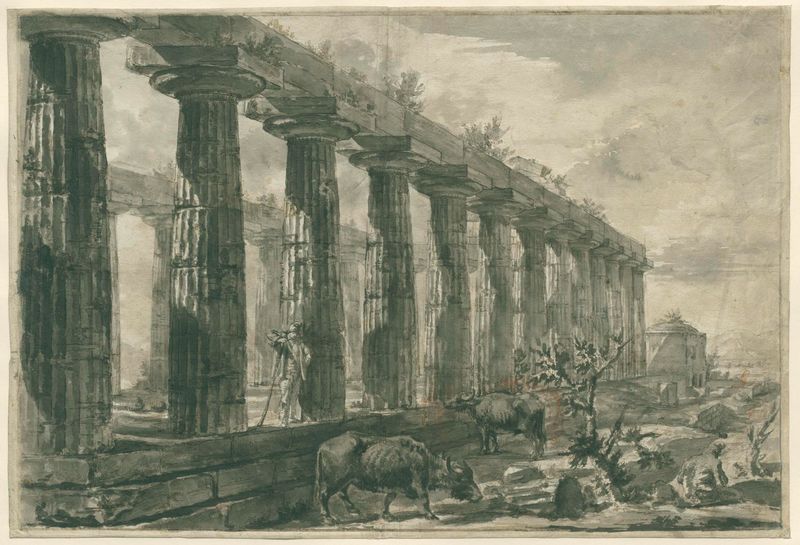
View of the Temple of ‘Juno’ at Paestum
Giovanni Battista Piranesi

The Giant Wheel
Giovanni Battista Piranesi
Mais arte de Arquitetura
Ver tudo →
The statue of Liberty
Frédéric Auguste Bartholdi

View of Houses in Delft, Known as ‘The Little Street’
Johannes Vermeer

View of Houses in Delft, Known as ‘The Little Street’
Johannes Vermeer

The Cathedral in Rouen. The portal, Grey Weather
Claude Monet

The yellow house
Vincent van Gogh

The Church in Auvers-sur-Oise, View from the Chevet
Vincent van Gogh