Twee liggende schapen — História e Análise
In the quietude of pastoral life, the hidden madness of existence often finds refuge in the simplest of forms. Look to the center of Twee liggende schapen, where two sheep recline peacefully on the verdant grass, their wooly bodies rendered with meticulous detail. Notice how the artist's brushstrokes create a soft texture that mimics the fluffiness of their coats, almost inviting the viewer to reach out and touch them. Surrounding them, the subtle interplay of greens and browns evokes a serene landscape, creating a comforting backdrop that contrasts sharply with the deeper themes beneath the surface. This tranquility, however, belies an underlying tension.
The choice of two seemingly content sheep may signify duality—comfort versus chaos, normalcy versus madness. Their quiet repose invites contemplation, urging viewers to reflect on the fragility of peace in a world that often sways towards disorder. The shadows creeping in at the edges serve as reminders of the complexities that lurk just beyond this idyllic scene. Nicolaes Pietersz Berchem painted this work between 1648 and 1652, during a period when Dutch art was flourishing, marked by a focus on genre scenes and a growing appreciation for pastoral life.
At the time, he was navigating the tension of his own artistic identity, experimenting with light, color, and subject matter to capture the essence of nature while remaining tethered to the evolving world of art around him.
Mais obras de Nicolaes Pietersz Berchem
Ver tudo →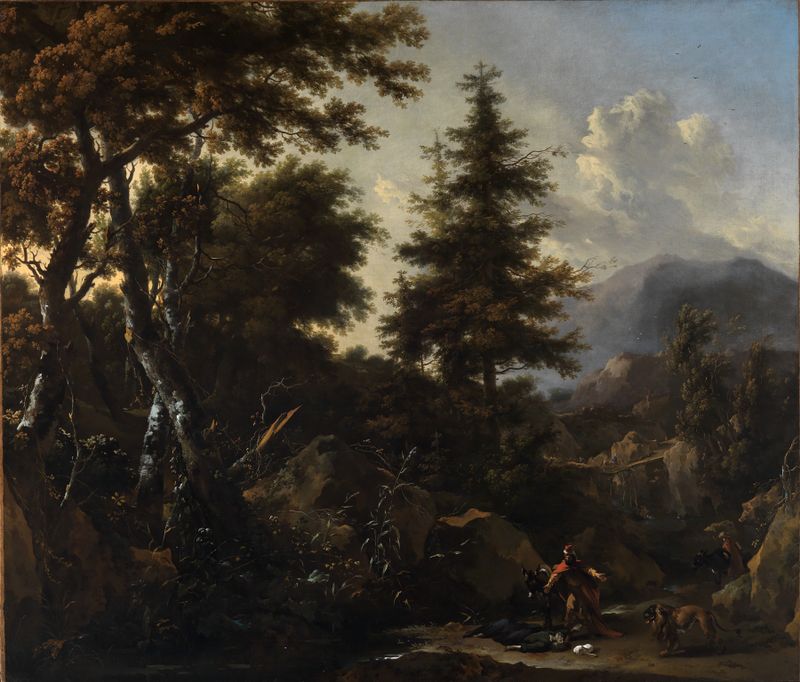
Schlucht im Bergwald mit alttestamentlicher Staffage
Nicolaes Pietersz Berchem
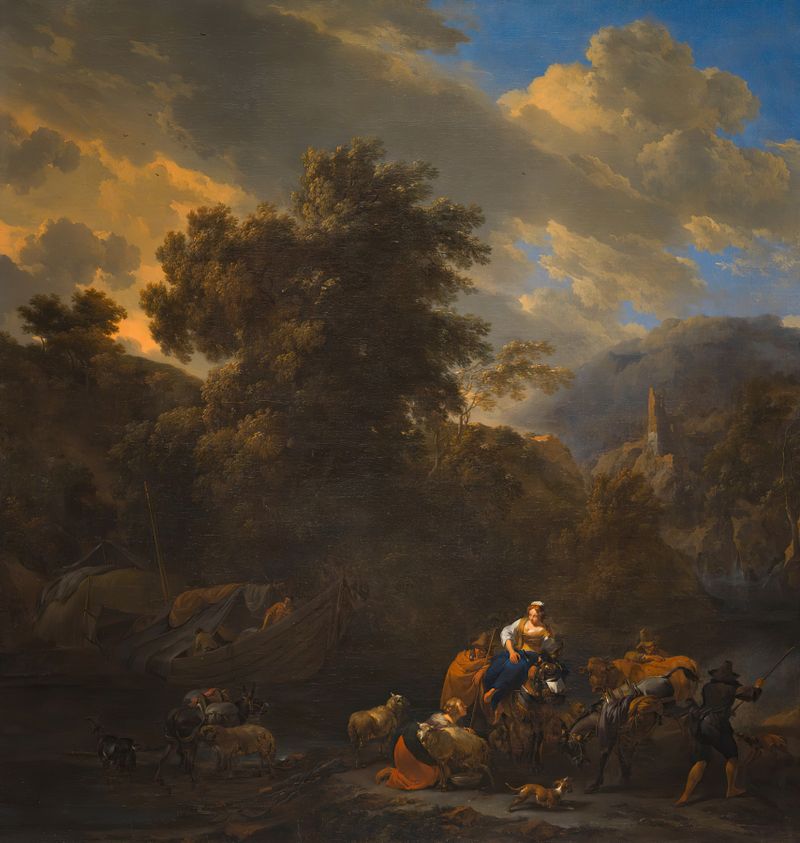
Italianate Landscape with Figures and Pack Animals on the Banks of a River
Nicolaes Pietersz Berchem
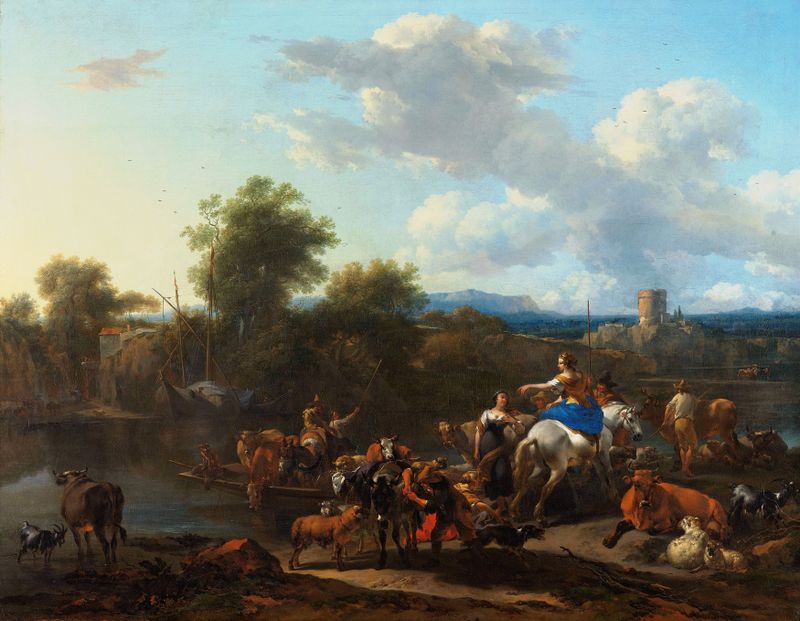
The Cattle Ferry
Nicolaes Pietersz Berchem
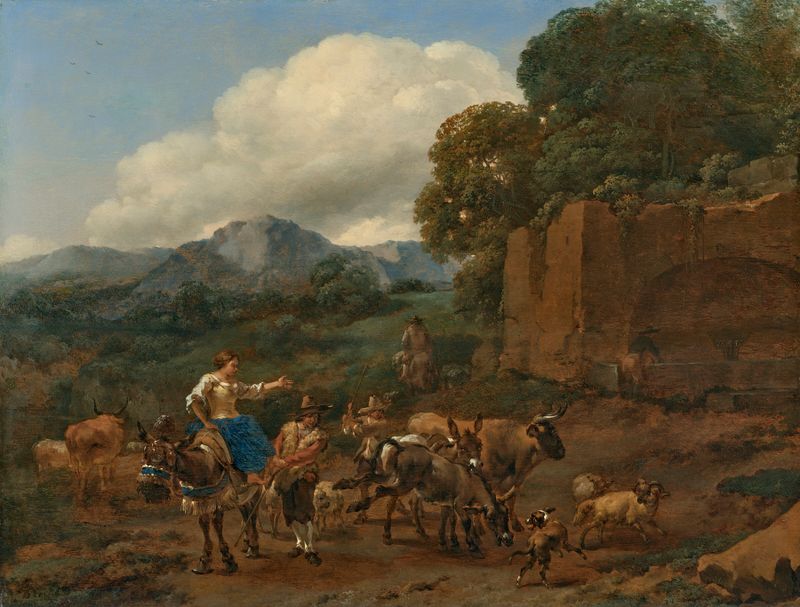
An Italianate landscape with a shepherdess on a mule and a shepherd, herding cattle, sheep, donkeys and dogs on a mountain track next to ruins
Nicolaes Pietersz Berchem
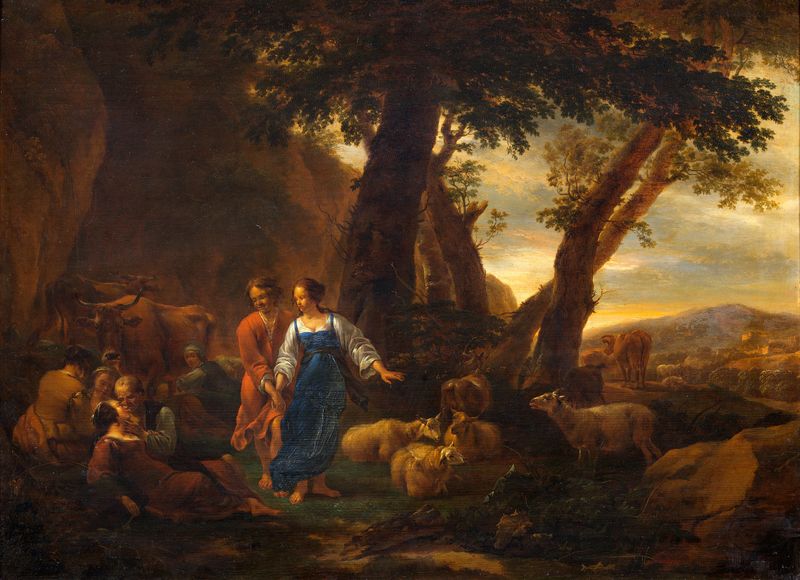
Landscape with Peasants and Cattle
Nicolaes Pietersz Berchem
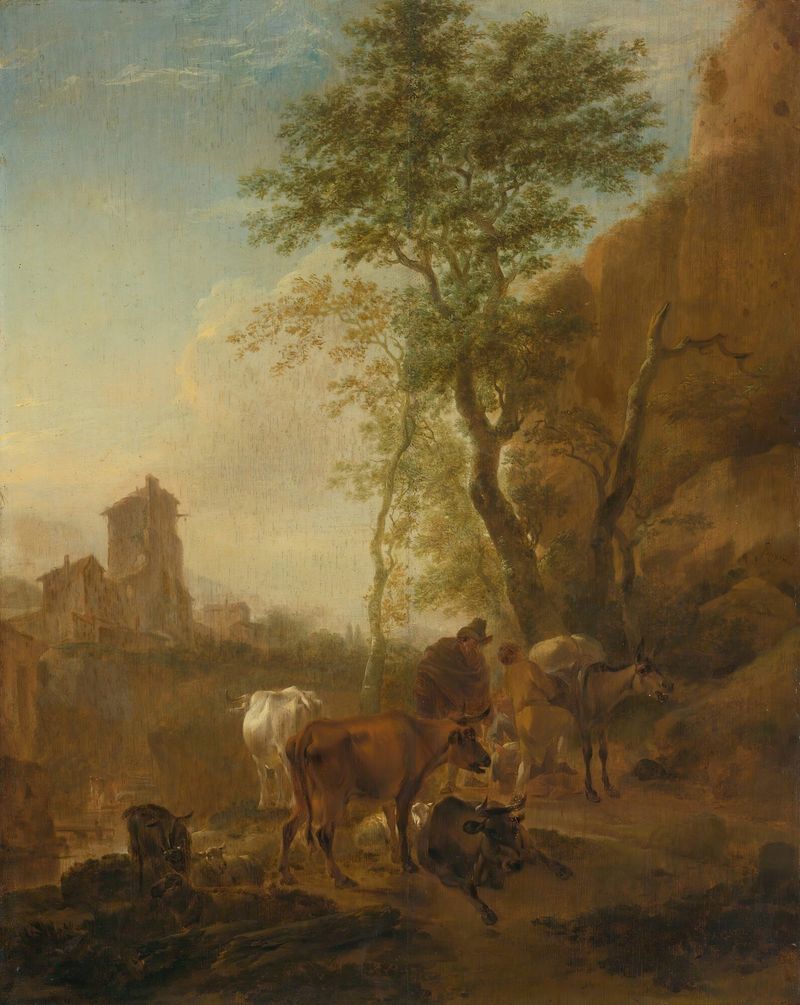
Italianate Landscape With Cows
Nicolaes Pietersz Berchem
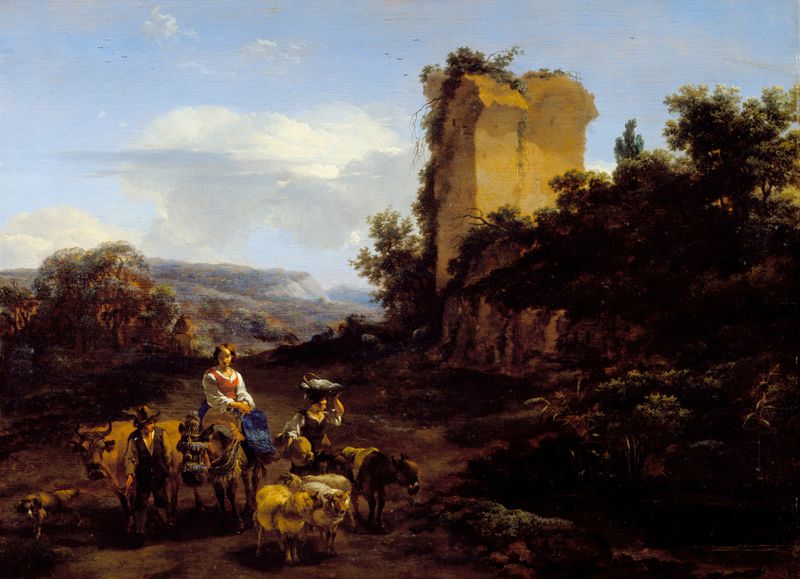
Landscape with Ruins and Travelers
Nicolaes Pietersz Berchem
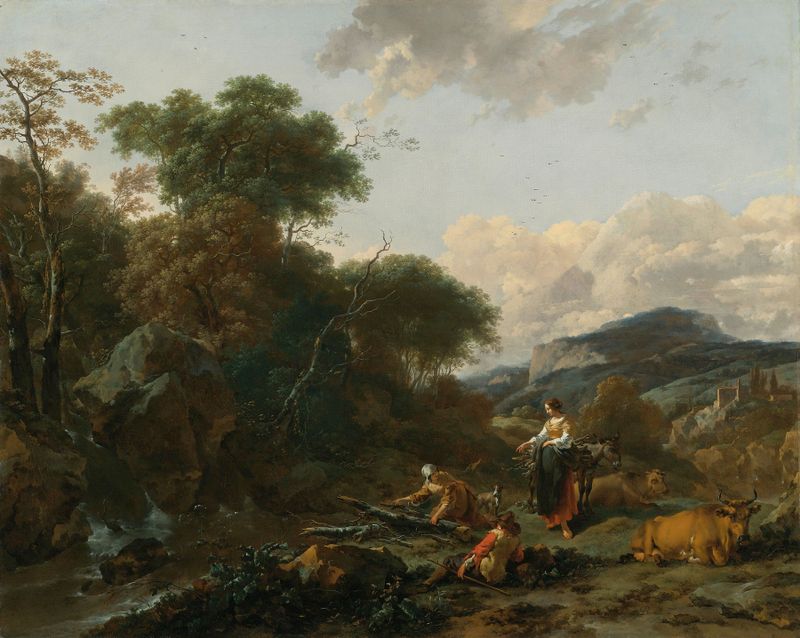
A Landscape With Figures
Nicolaes Pietersz Berchem
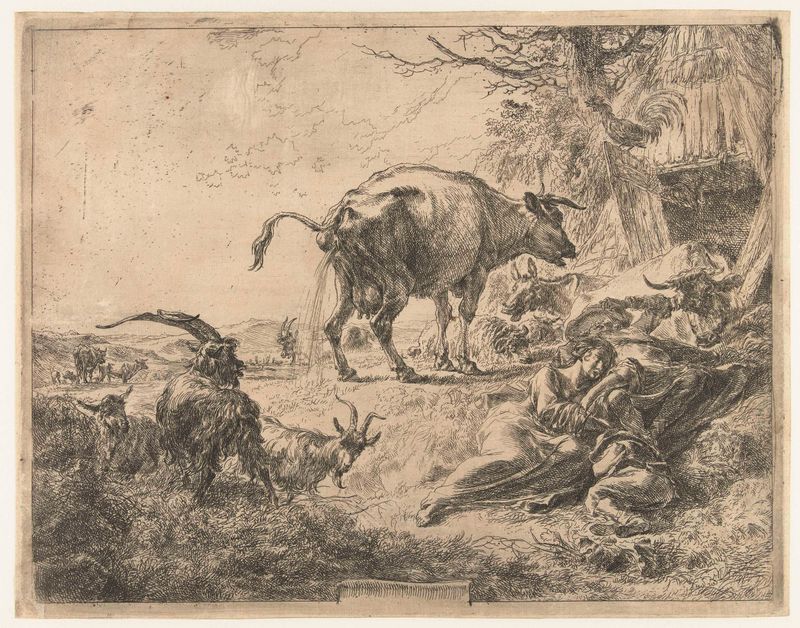
Slapende herdersfamilie en rustend vee
Nicolaes Pietersz Berchem
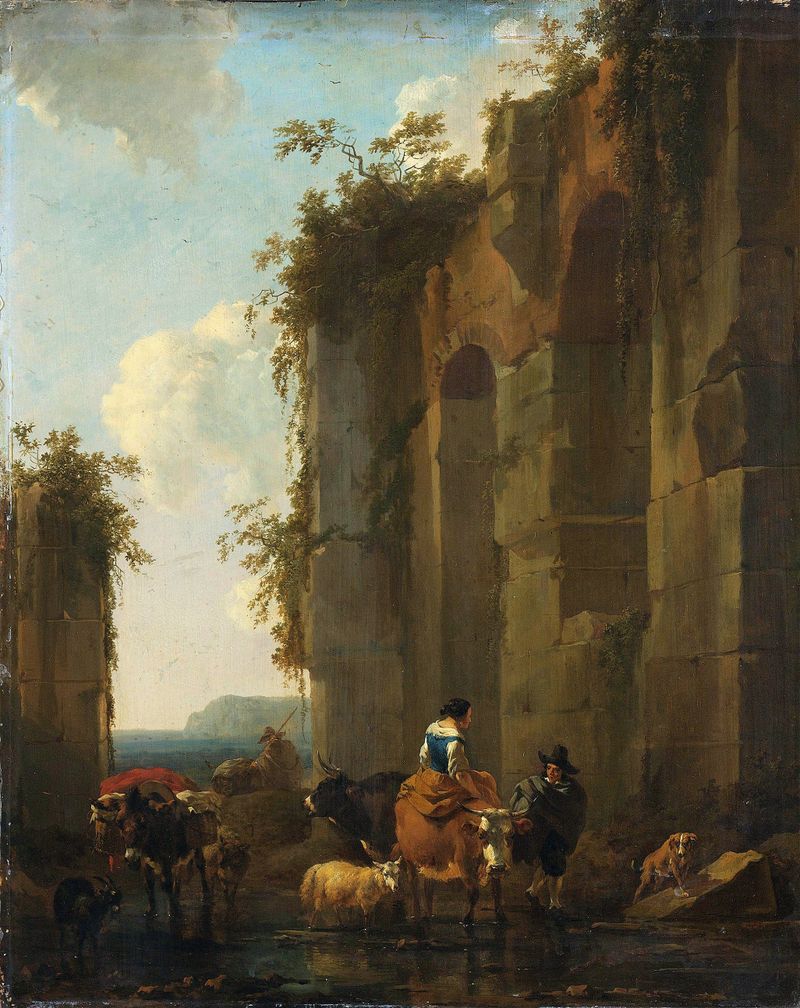
Ruins in Italy
Nicolaes Pietersz Berchem