
Venice, The Patriarch In Capa Magna Leaving San Giovanni E Paolo — História e Análise
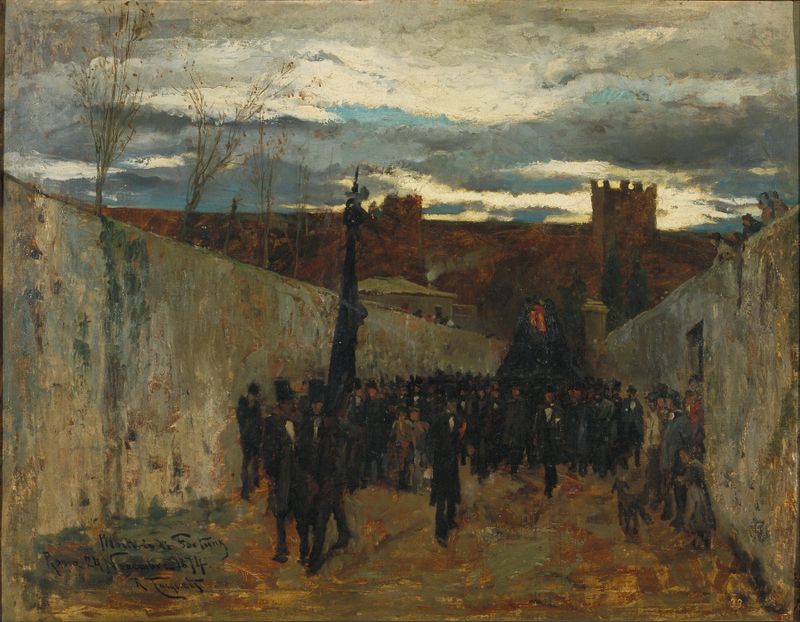
What happens when obsession transforms into art, merging the sacred and the ephemeral in a flood of color and form? Focus on the swirling blues and golds, where the sea dances beneath a vibrant sky, the colors intertwining like whispers of devotion. Notice how the figures in the foreground are cloaked in rich, deep tones, their faces animated with a mixture of hope and solemnity, drawing you into their world. The composition flows toward the church, San Giovanni E Paolo, its architecture rendered with meticulous detail, serving as a backdrop that pulses with historical weight. The emotional tension in this piece lies in the contrast between the vibrant life of the procession and the solemnity of the sacred space.
There is a palpable yearning, as if the figures are caught between devotion and desperation, each brushstroke echoing their inner dialogues. Hidden among the details, you may notice the shadows cast by the figures, suggesting a past that lingers; they are not merely participants but bearers of their own stories, each heartbeat intertwined with the history of Venice itself. Ramón Tusquets painted this scene during a time when modernism was beginning to assert its presence across Europe. Working in his studio in Barcelona, he was influenced by the vibrancy of life in Venice as well as the burgeoning movements in art that sought to capture emotional depth through innovative approaches.
This painting encapsulates a moment where tradition meets modernity, crafting a narrative that transcends time and resonates deeply with our shared human experience.
Mais obras de Ramón Tusquets
Ver tudo →
Mais arte de Pintura Histórica
Ver tudo →
The Night Watch Militia Company of District II under the Command of Captain Frans Banninck Cocq
Rembrandt van Rijn

Lincoln Memorial
Henry Bacon

The Third of May 1808
Francisco de Goya

Isaac and Rebecca, Known as ‘The Jewish Bride’
Rembrandt van Rijn

The Charge of the Mamelukes (1814)
Francisco de Goya

De vier ruiters van de apocalyps
Albrecht Dürer