A Merchantman Off Veere — History & Analysis
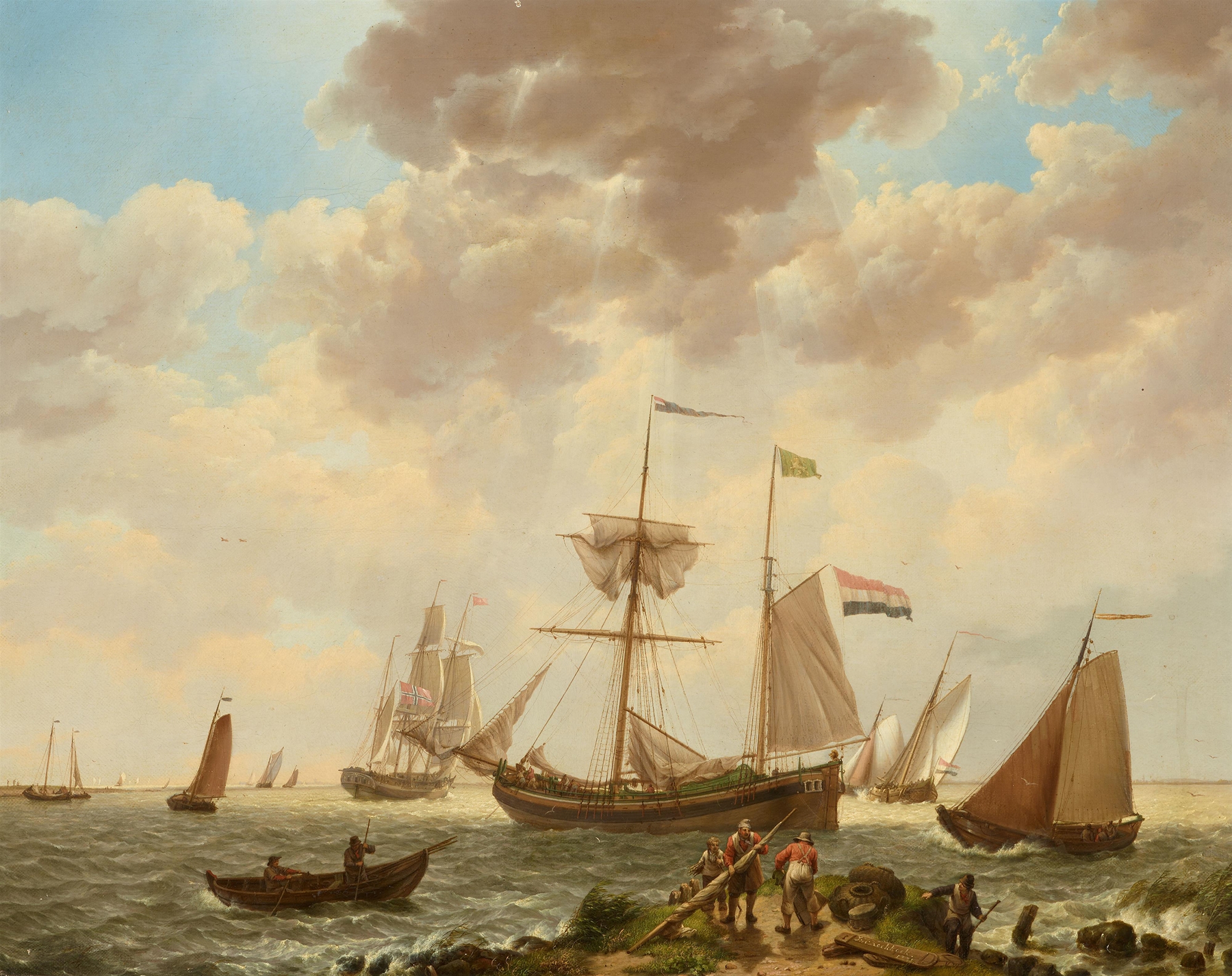
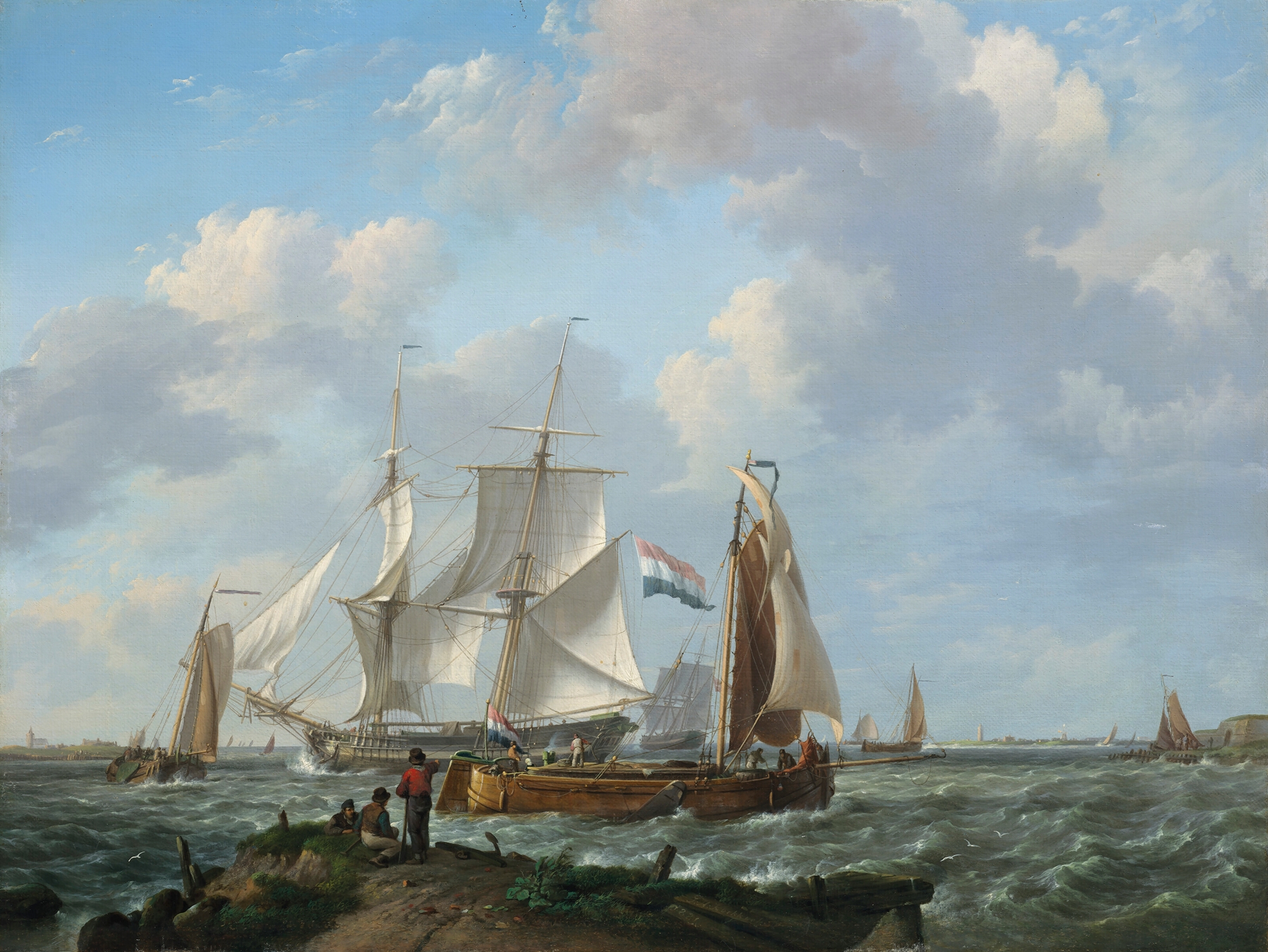
What secret hides in the quiet of the canvas? In A Merchantman Off Veere, a world unfolds where dreams linger on the water's surface, beckoning the viewer to explore its depths. First, look to the left, where the majestic merchant vessel rests against the backdrop of a serene Dutch sky. The sails, billowing softly, capture the golden light of the sun, creating a harmonious dance of shadow and brilliance.
Notice how the ruffled waves reflect the gentle hues of blue and gold, drawing you deeper into the tranquil atmosphere. Each brushstroke combines realism with a hint of romance, inviting a sense of longing that transcends the ordinary. Yet within this serene tableau lies a tension—a contrast between the quiet of the scene and the bustling life of trade that it represents. The distant shore, shrouded in mist, suggests both a homecoming and an uncharted journey, hinting at the dreams and aspirations of those aboard.
The soft clouds above cradle this moment, as if time itself pauses to honor the delicate balance between adventure and safety, between the known and the mysterious. Johannes Hermanus Koekkoek painted this work in the mid-19th century, during a time of great change in the Dutch art scene. As part of a prominent artistic family, he was influenced by the Romantic movement, which celebrated nature and emotion. This period saw a growing interest in marine subjects, reflecting the era’s maritime heritage and the collective longing for exploration.