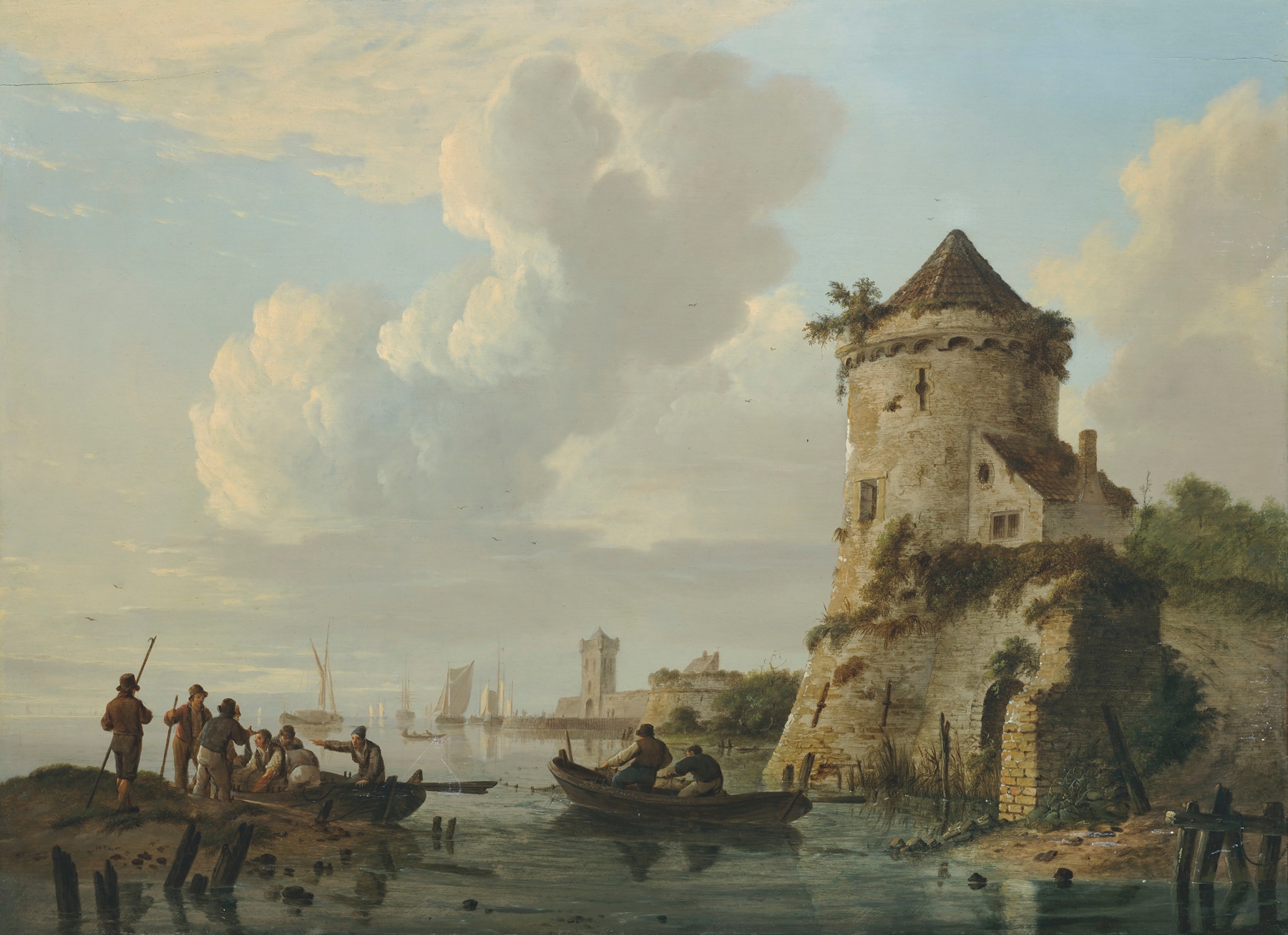
Ships in a squall with figures on shore — History & Analysis
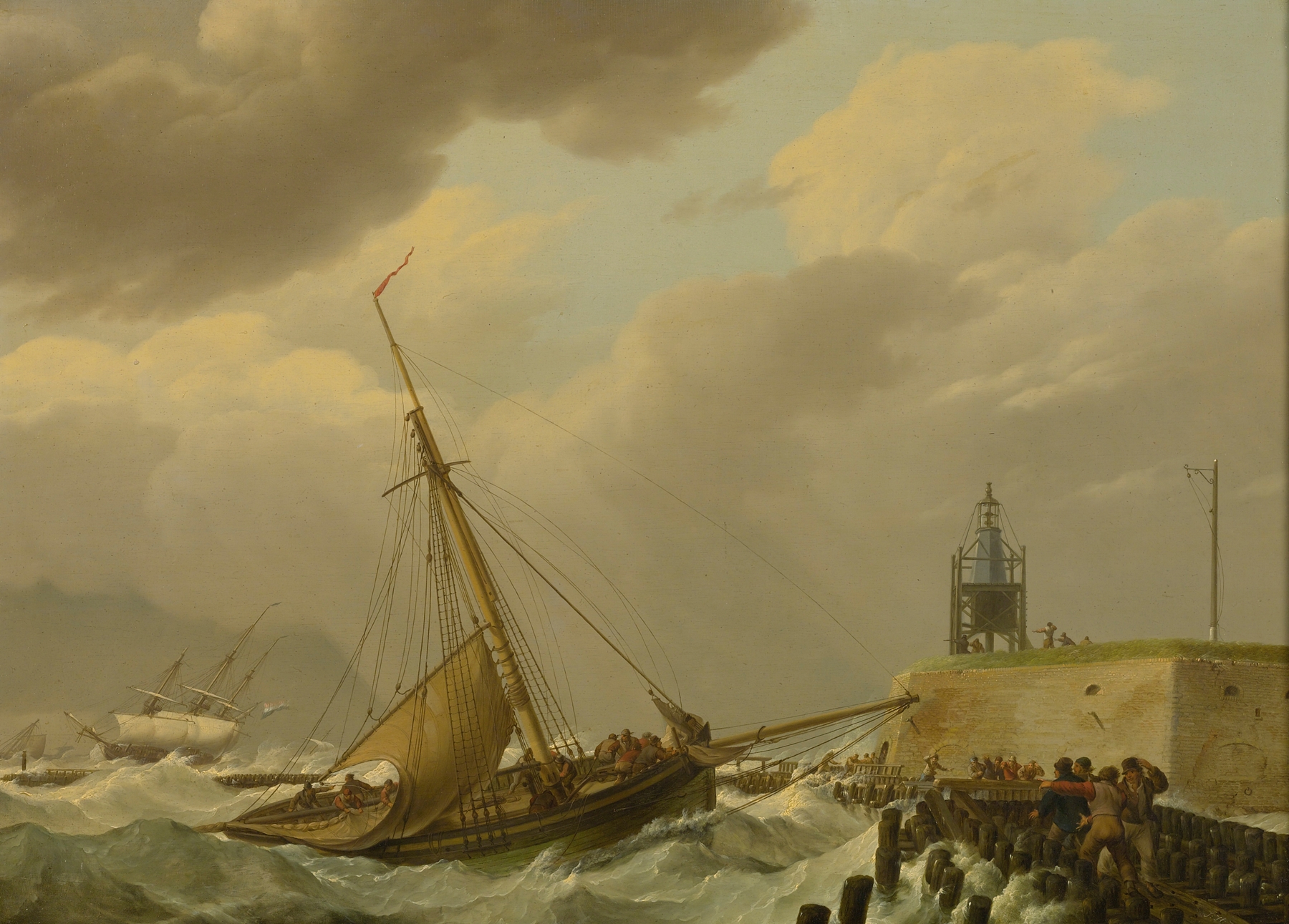
“Every brushstroke is a heartbeat remembered.” Color breathes life into the turmoil of nature, capturing the essence of conflict and resolution in a single frame. In this artwork, hues are not merely pigments but whispers of emotion and memory layered upon a canvas. Look to the tumultuous sky where dark, brooding clouds clash against the lighter, hopeful patches breaking through. The deep indigos and turbulent grays dance with hints of white, creating a dramatic background that sets the stage for the chaos below. Notice how the bold strokes of the waves mirror the frenetic energy of the storm, while figures on the shore, painted with delicate yet deliberate strokes, invite our gaze with their resolute stances.
Their muted colors contrast starkly with the vibrant chaos of the sea, emphasizing their vulnerability amidst nature's fury. Delve deeper into the painting's contrasts; the tension between the figures and the storm hints at human resilience against overwhelming odds. The sailors' postures speak of determination, yet their smallness in the face of nature’s wrath evokes profound empathy. The vivid colors used for the sea stir a sense of chaos, while the muted tones of the land invite contemplation, highlighting the fragile boundary between man and nature.
This interplay of color and emotion evokes a narrative that resonates beyond the canvas. Johannes Hermanus Koekkoek painted this work in 1821 during a period marked by Romanticism’s embrace of nature’s sublime power. Living in the Netherlands, he witnessed firsthand the tumultuous seas and turbulent weather that inspire his dramatic compositions. His art reflects not only personal experiences but also the broader context of European art, where nature began to be portrayed not just as a backdrop, but as an active participant in the human story.