Am Chiemsee — History & Analysis
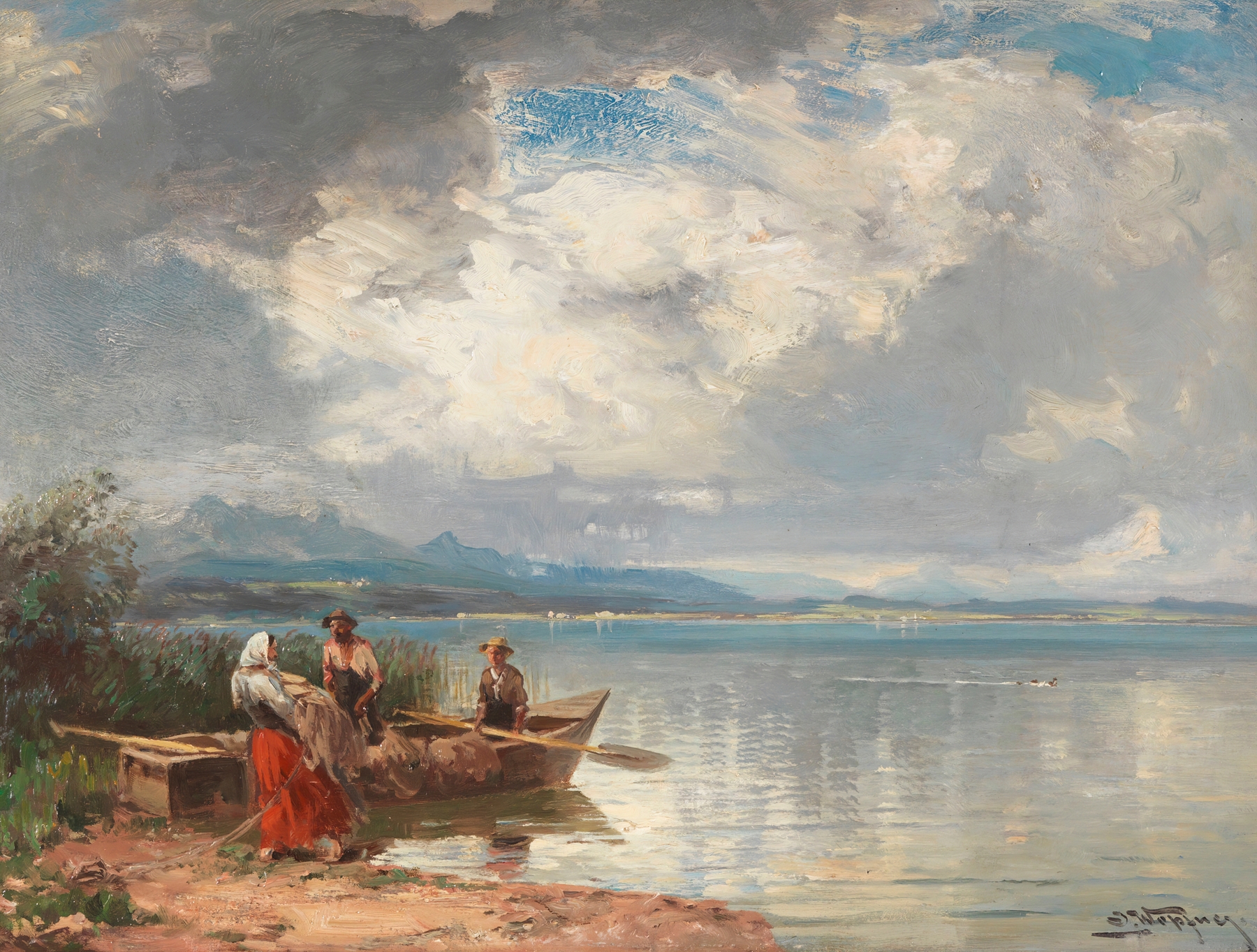
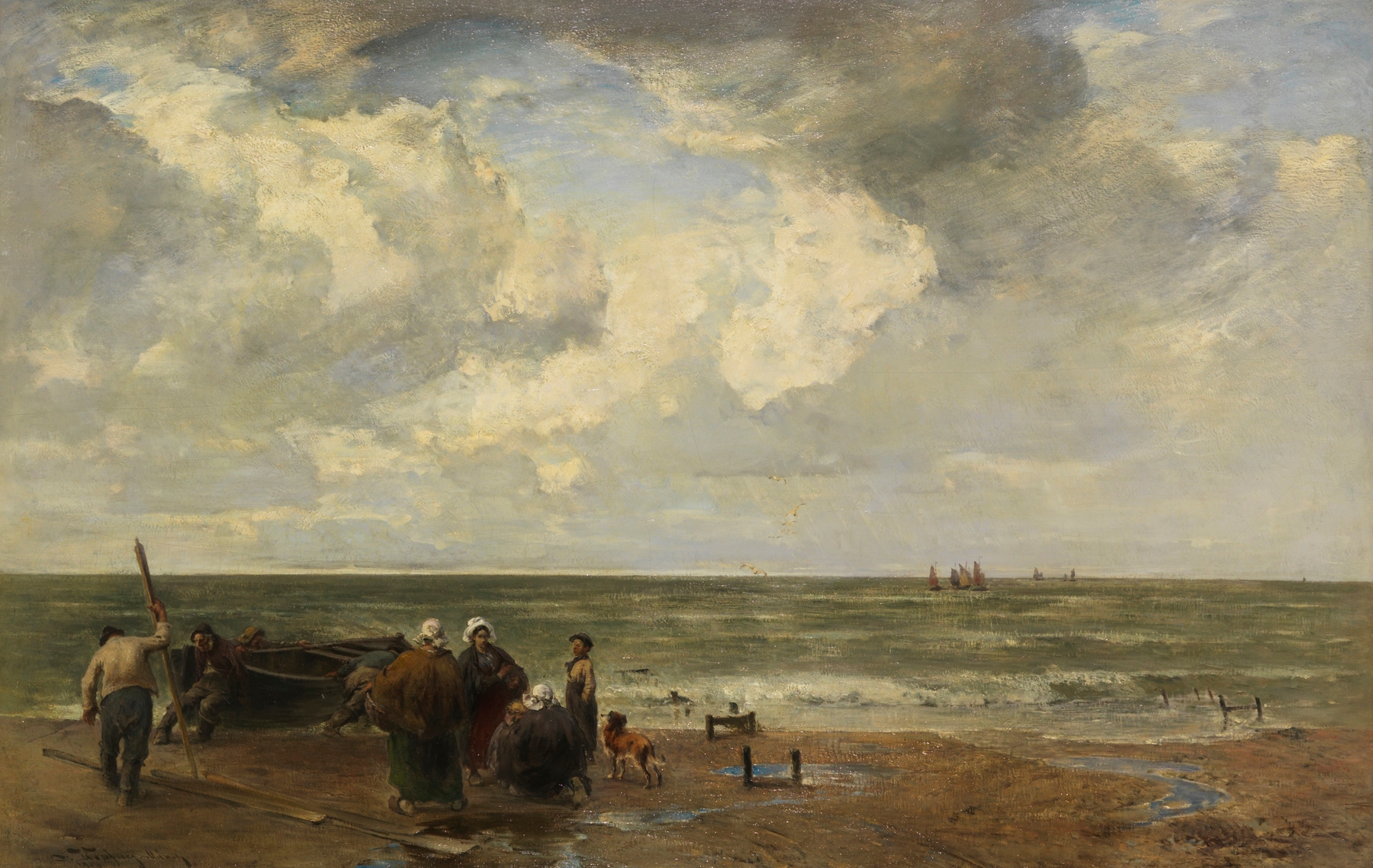
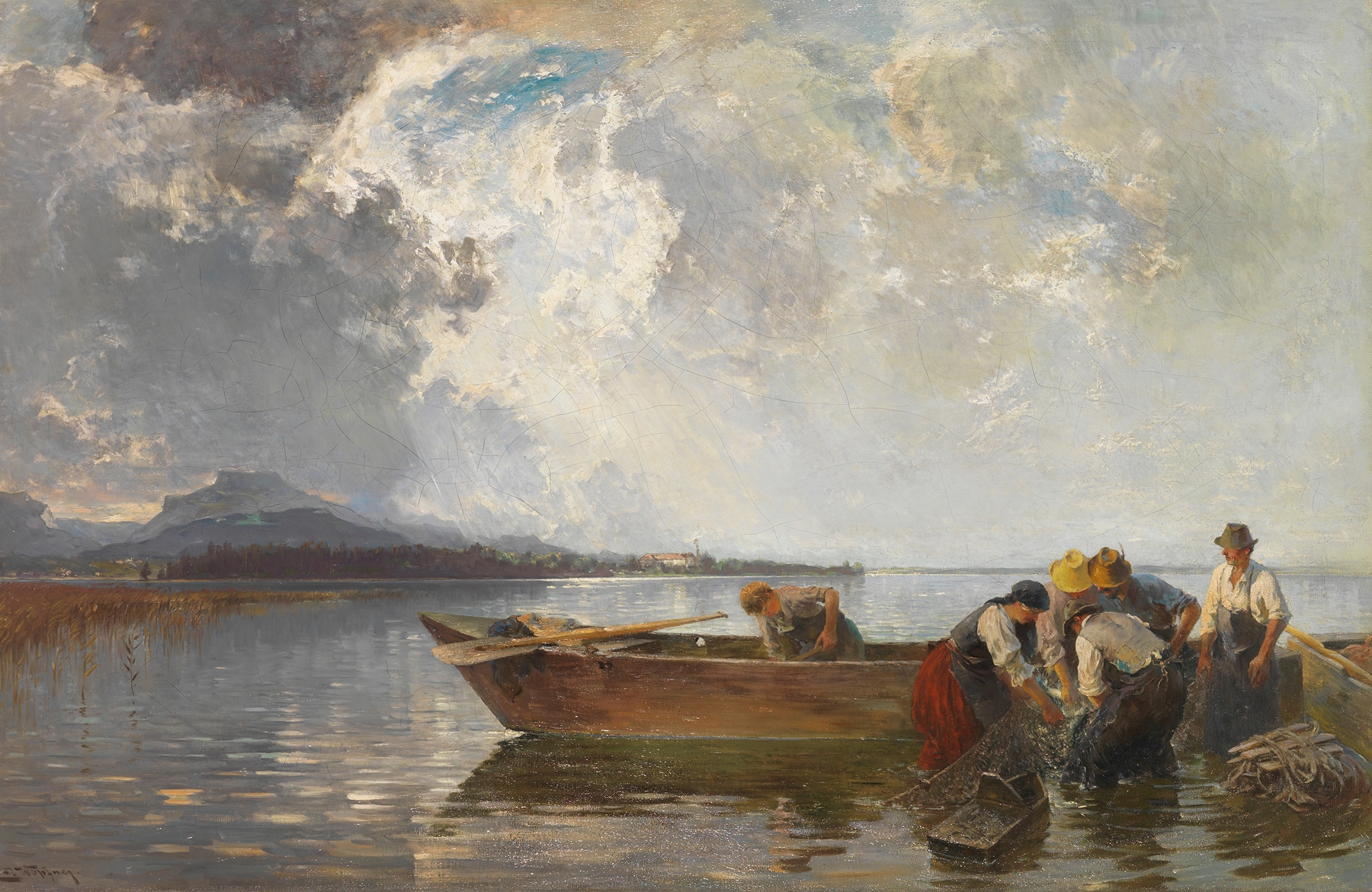
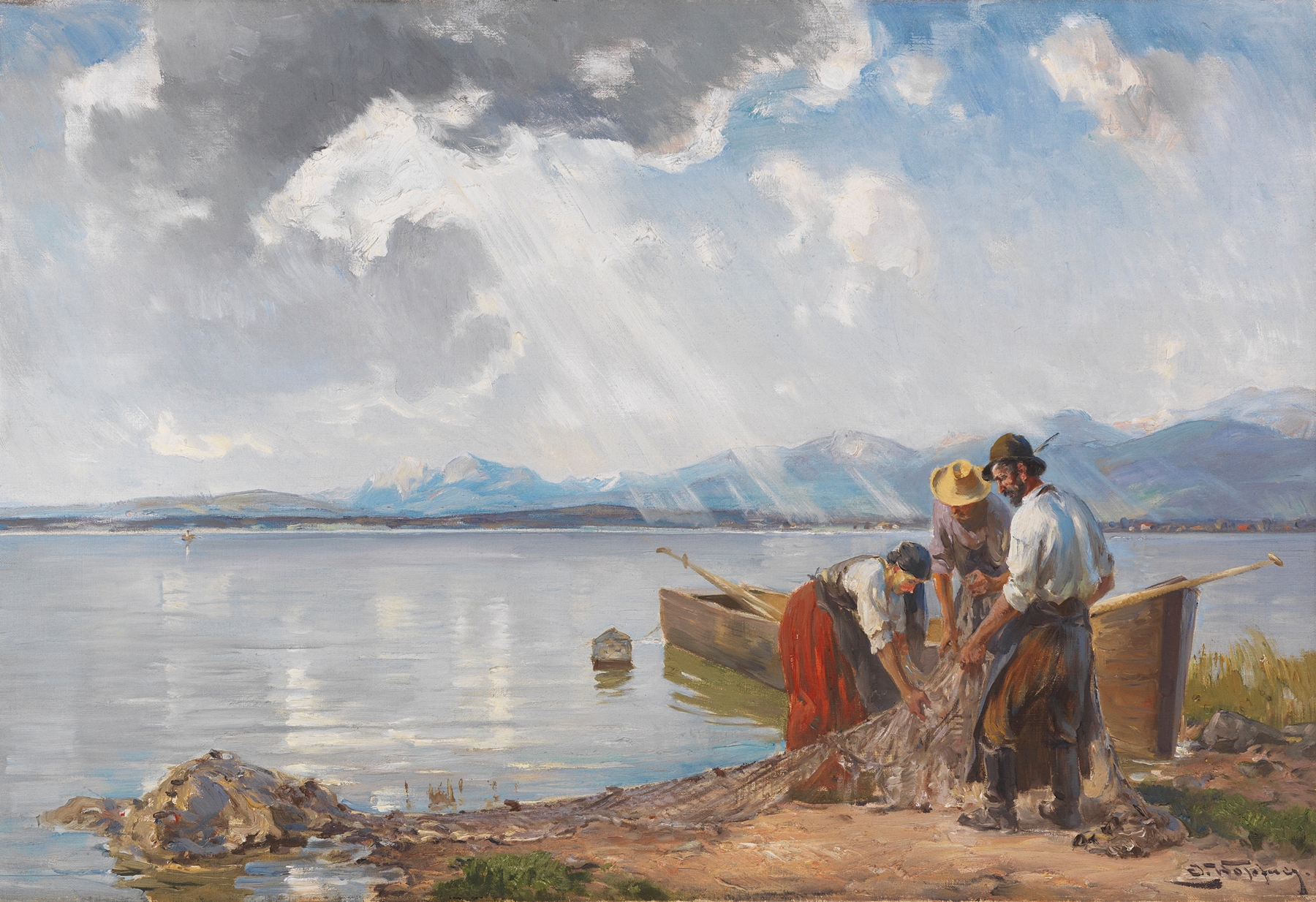
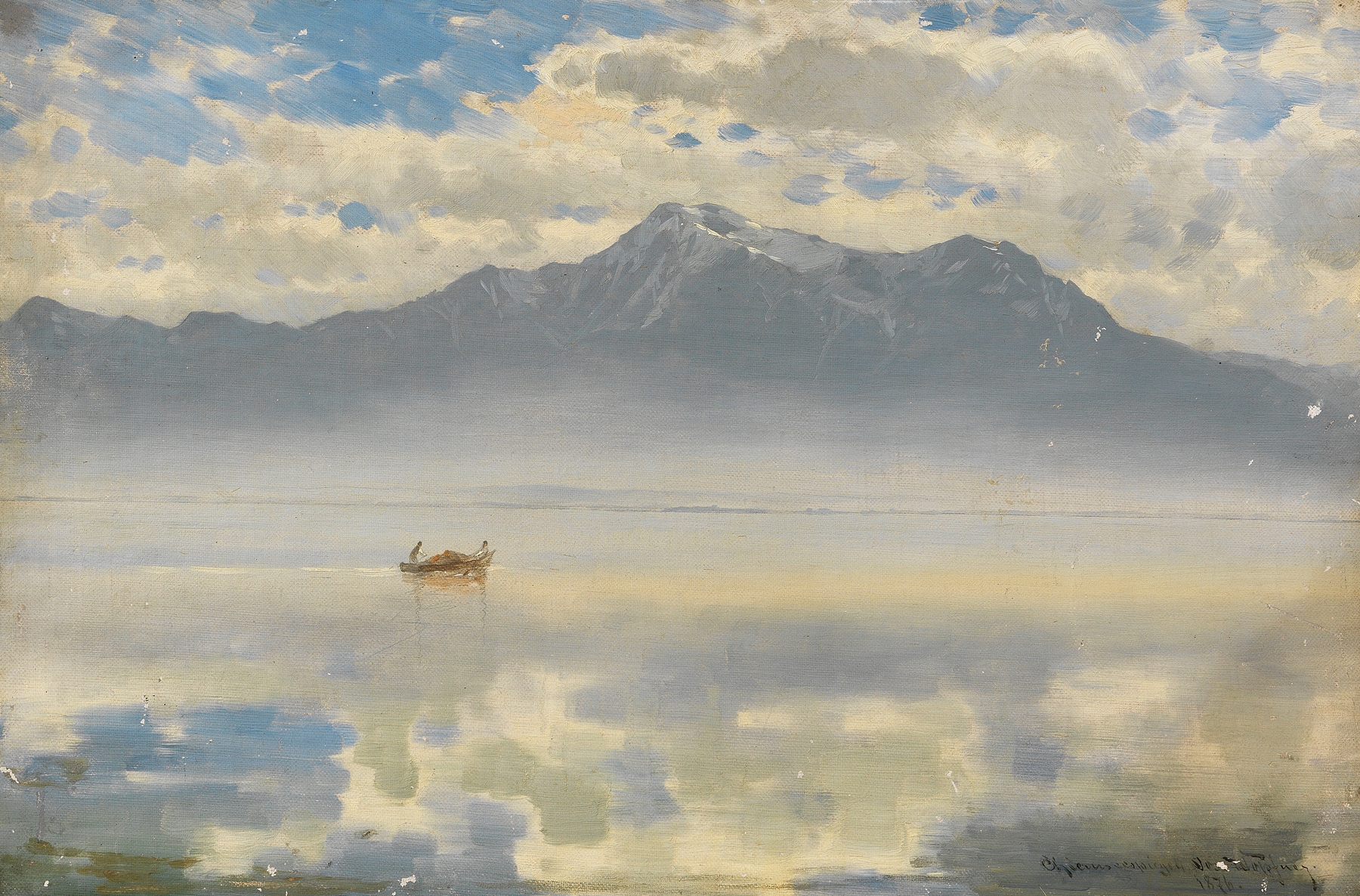
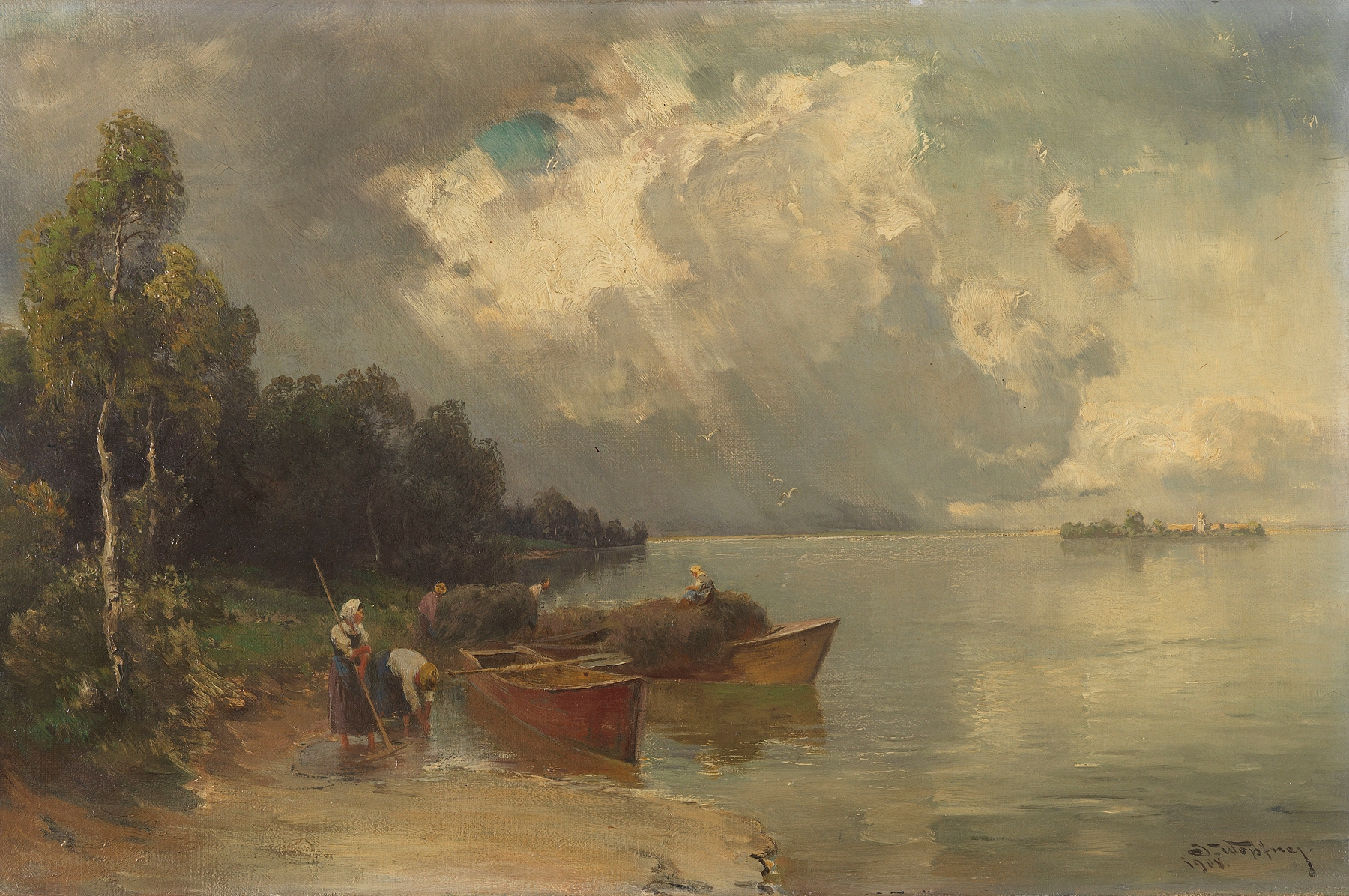
“Sometimes beauty is just pain, disguised in gold.” This sentiment resonates deeply in the contemplative landscape that unfolds before us, inviting an exploration of mortality amidst the serene. Look to the center of the canvas, where shimmering waters reflect a soft, golden light, lending a sense of tranquility to the scene. The gentle ripples suggest life and movement, yet the stillness of the surrounding mountains looms like the weight of time itself, creating a delicate balance between vibrancy and stillness. Notice how the lush greenery contrasts sharply with the cool tones of the water, suggesting the duality of existence—a celebration of life intertwined with the inevitability of decay.
The interplay of light and shadow reveals hidden emotions within the landscape. The golden hues, while illuminating the surface, also hint at the transient nature of beauty, reminding viewers that such splendor is often fleeting. The expansive horizon, seemingly inviting, simultaneously evokes a sense of isolation, as if the viewer is reminded of their own solitude in the face of nature’s grandeur. In this way, Wopfner masterfully captures the essence of life's beauty and the quiet pain of its impermanence.
Painted in a time when artistic expression was shifting towards Romantic ideals, Wopfner’s work reflects the complexities of his era. Details about his life remain scarce, but it is known that he created Am Chiemsee during a period marked by a growing interest in nature and emotional depth within art. This was a time when artists sought to express the depth of the human experience, navigating the fine line between joy and sorrow—a theme that resonates profoundly in this tranquil landscape.