An Amsterdam East Indiaman — History & Analysis
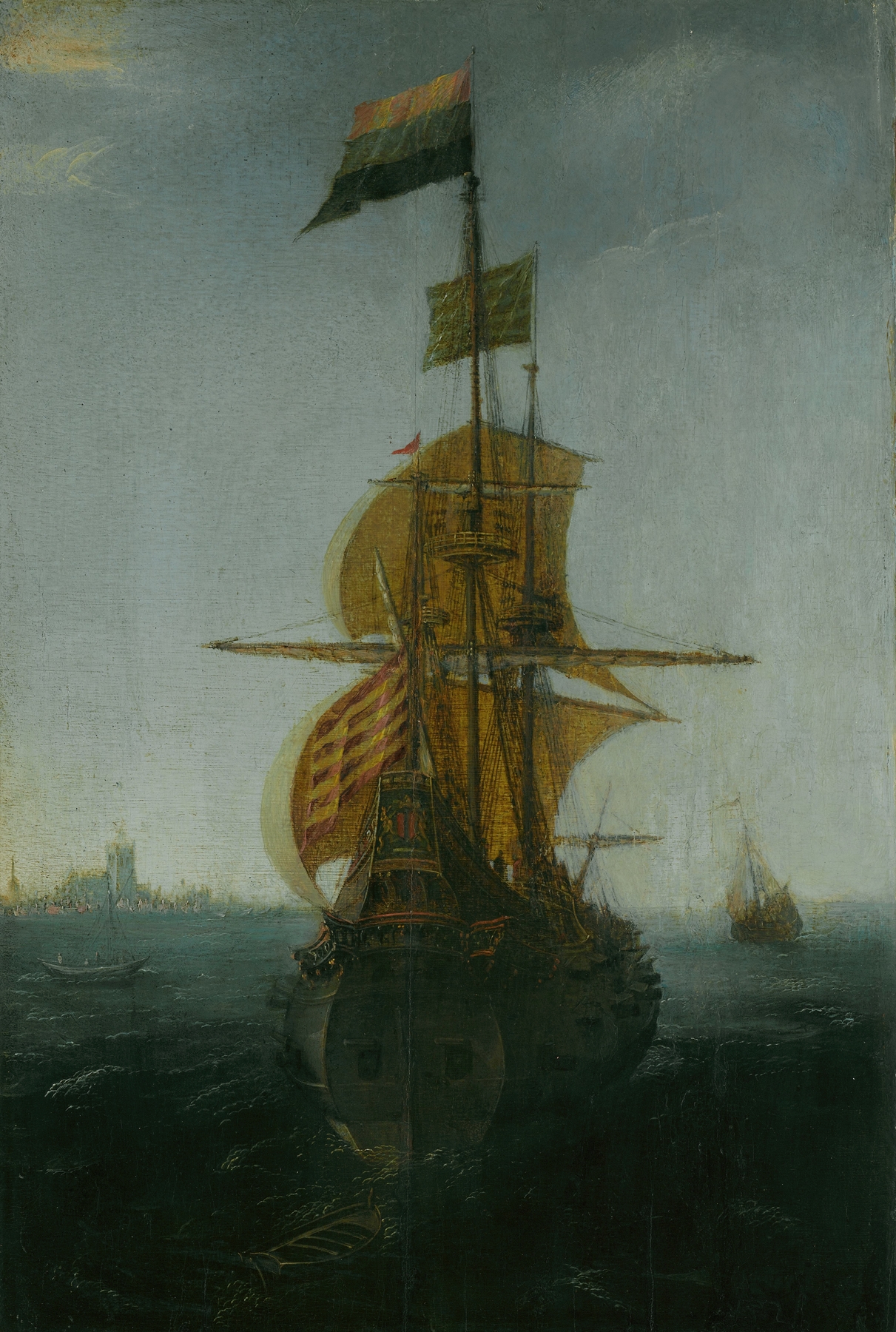
What if silence could speak through light? In *An Amsterdam East Indiaman*, the dim glow that envelops the vessel conveys a quiet history, whispering of trade routes and lost treasures amidst the decay of time. Look to the left at the meticulously rendered ship, its sails unfurling like ghosts against a muted skyline. The artist’s brush captures a vessel caught between the grandeur of commerce and the inevitability of deterioration. Notice how the light falls upon the weathered wood, accentuating both the strength of the structure and the fragility of its existence. Each ripple in the water mirrors the ship's journey, inviting contemplation on the passage of time. Beneath the surface, there lies a tension between prosperity and decline. The vibrant colors of the vessel contrast starkly with the subdued palette of the background, embodying the duality of success and the creeping embrace of decay. The choice of a serene harbor setting speaks to a moment of pause, as if the ship is both at rest and on the brink of its next voyage into uncertainty. Each detail serves as a reminder that glory is often accompanied by a quiet decay, a cycle both beautiful and melancholic. During the years around 1625 to 1650, Abraham de Verwer painted this piece while navigating the tumultuous waters of the Dutch Golden Age. At this time, the Netherlands was achieving unprecedented wealth through trade, yet the art world was shifting, grappling with changing tastes and emerging styles. De Verwer's work reflects both the optimism of this era and an awareness of the ephemeral nature of success, capturing the essence of a moment that was both fleeting and enduring.