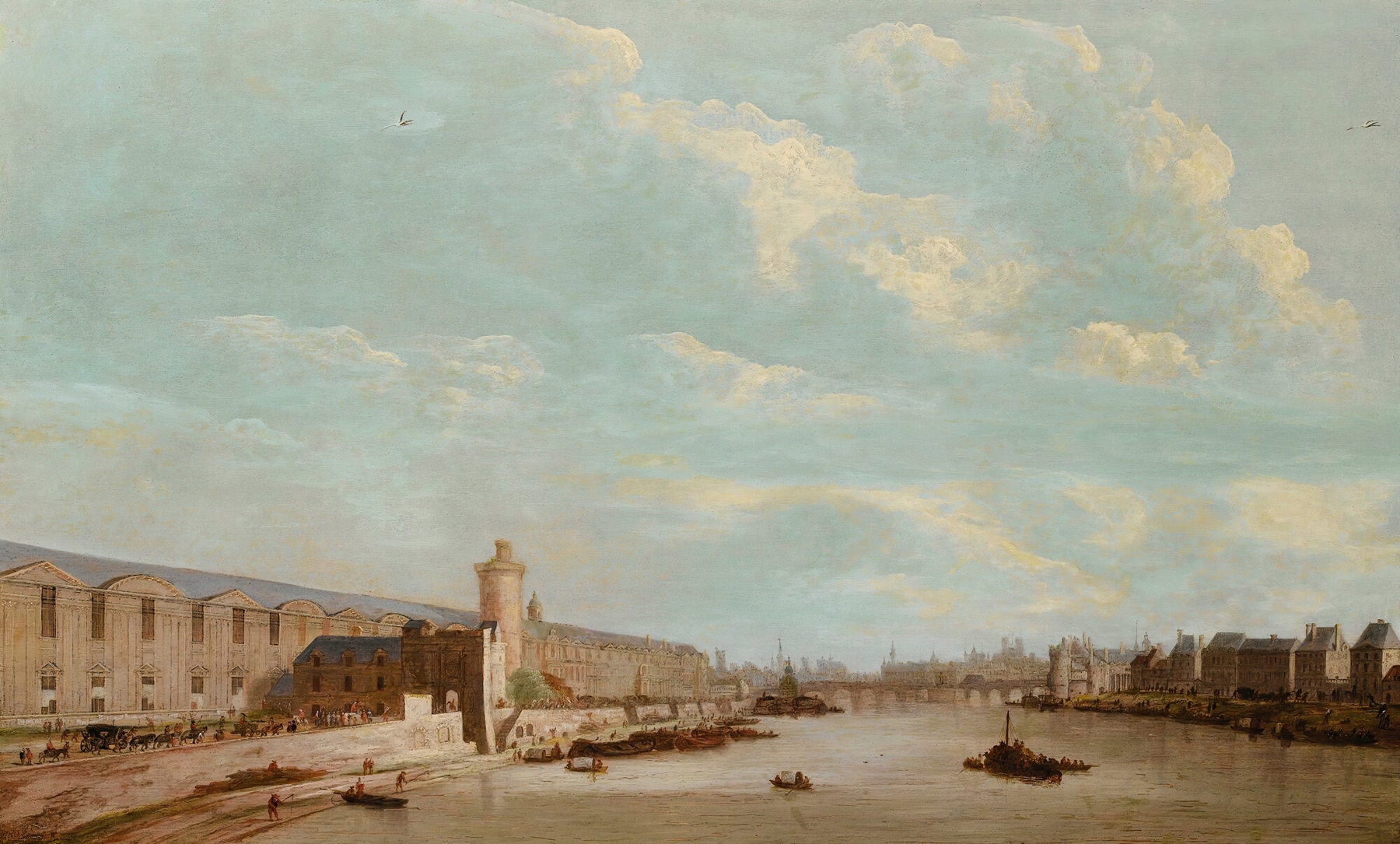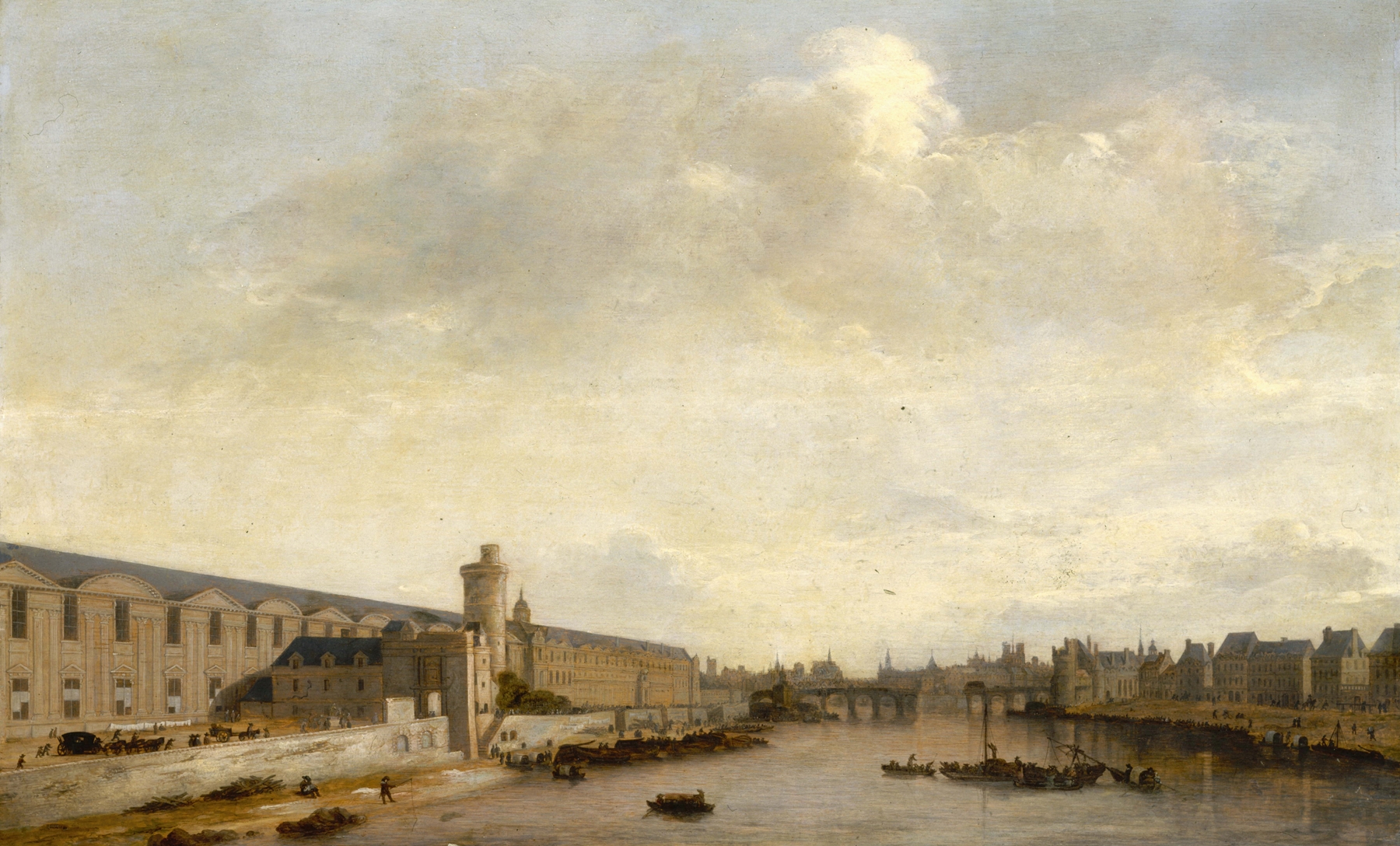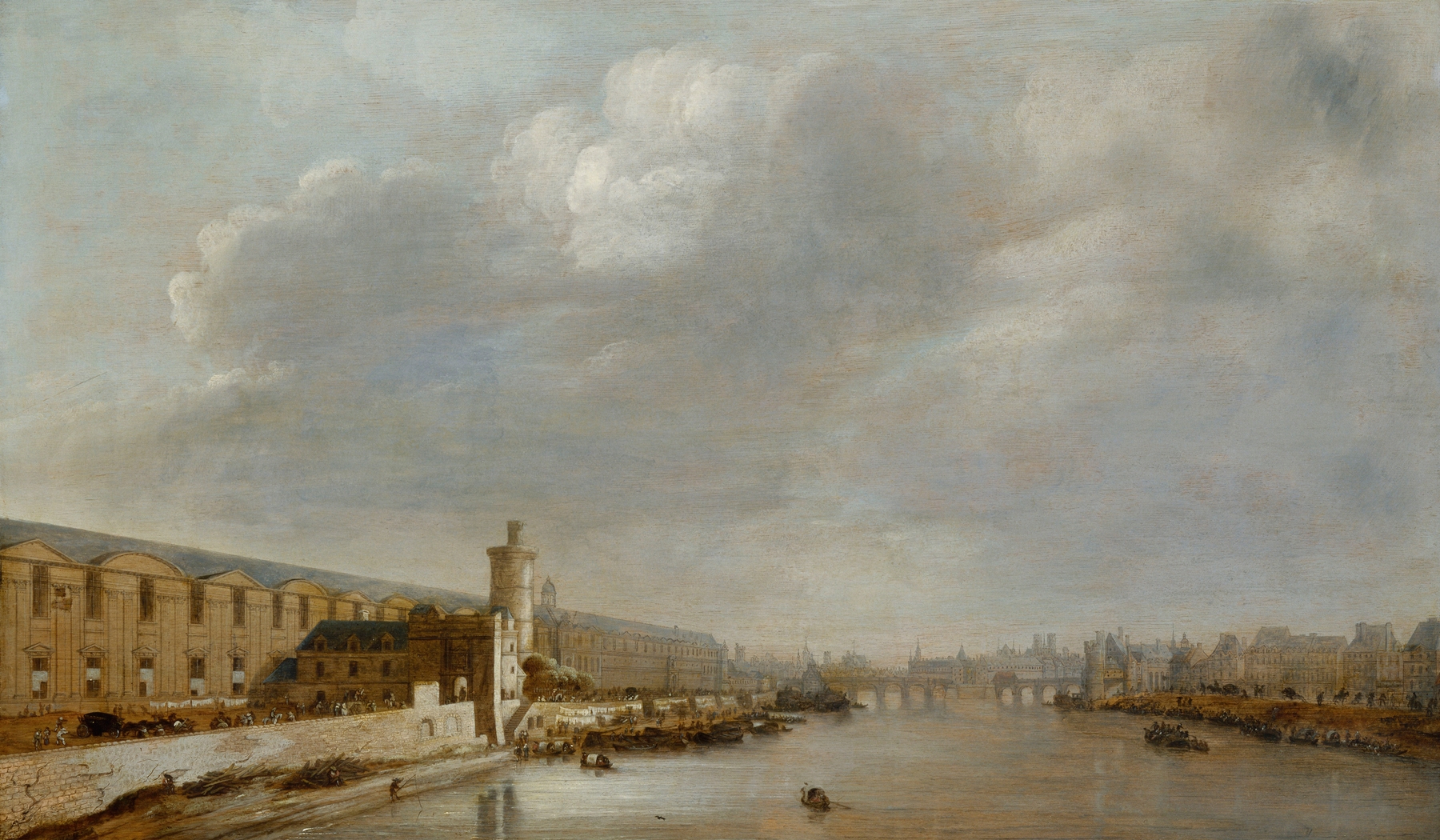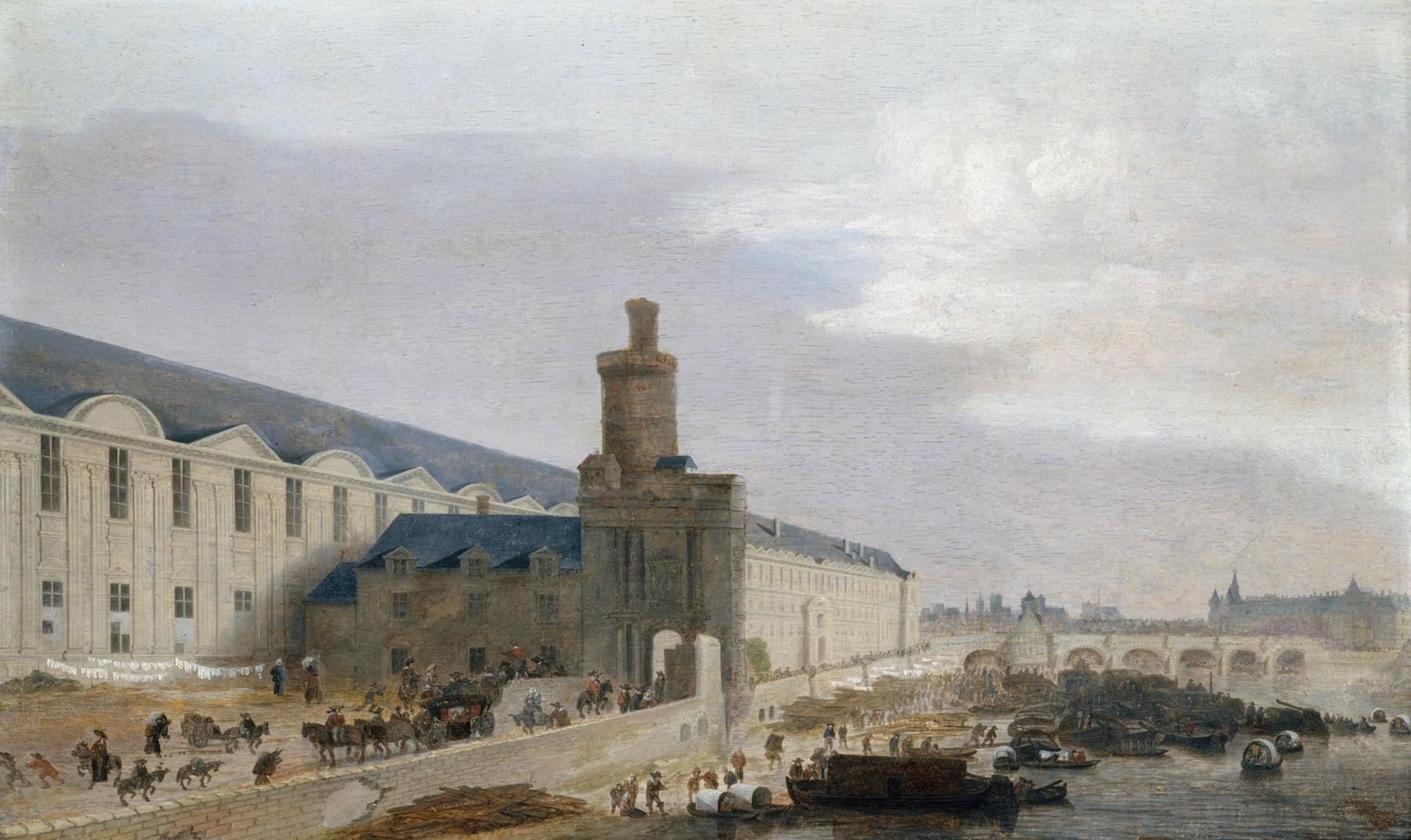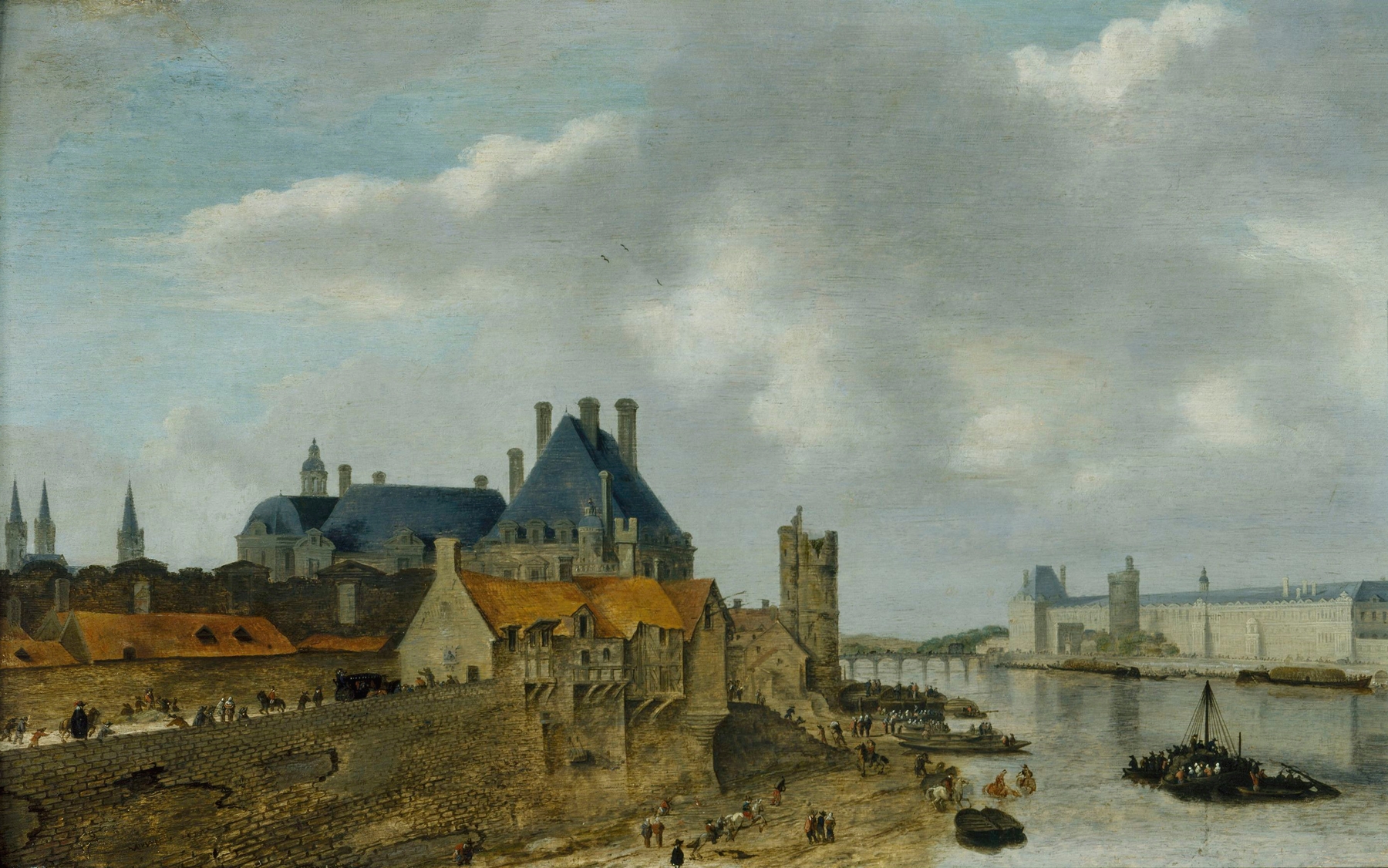
Le quartier du Petit Nesle avec l’Hôtel de Nevers, la tour de Nesle, la Grande Galerie du Louvre et le pont Royal (en bois), vus du Pont-Neuf. — History & Analysis
“Art reveals the soul when the world turns away.” In this exquisite tableau, the artist captures not just the physical landscape, but the beating heart of a city that thrives with life and intrigue. Each detail whispers of a deeper obsession—the eternal dance between humanity and its creations. Look to the left, where the soft golden light blankets the Hôtel de Nevers, its façade alive with a riot of colorful brushstrokes. The bridge, a wooden sentinel, draws the eye across the Seine, inviting you to traverse the space. Notice how the Grand Galerie stands proud, its architectural elegance contrasting with the lively bustle depicted on the Pont-Neuf.
De Verwer’s meticulous technique immerses the viewer in the moment, each layered stroke revealing the artist’s devotion to the rhythm of urban life. As you delve deeper, the painting reveals the tension between nature and civilization. The serene water reflects the grandeur of the structures above, encapsulating the transient beauty of both. Yet, the shadows cast by the buildings hint at an underlying loneliness, an obsession with grandeur that distances one from the vibrant life below.
The figures moving across the bridge evoke a sense of fleeting connection, underscoring the perpetual search for meaning amid the hustle of the Parisian scene. In 1637, when this work was created, Abraham de Verwer was navigating the artistic currents of a Europe in transformation. Living in the Netherlands, he experienced the rich exchanges of the Baroque era, while Paris was blossoming into a cultural hub. This period was marked by a growing focus on individualism and representation, reflecting a world where both art and life were increasingly intertwined.