An English Frigate Under Sail Firing A Gun, With Shipping At Anchor And Under Sail — History & Analysis
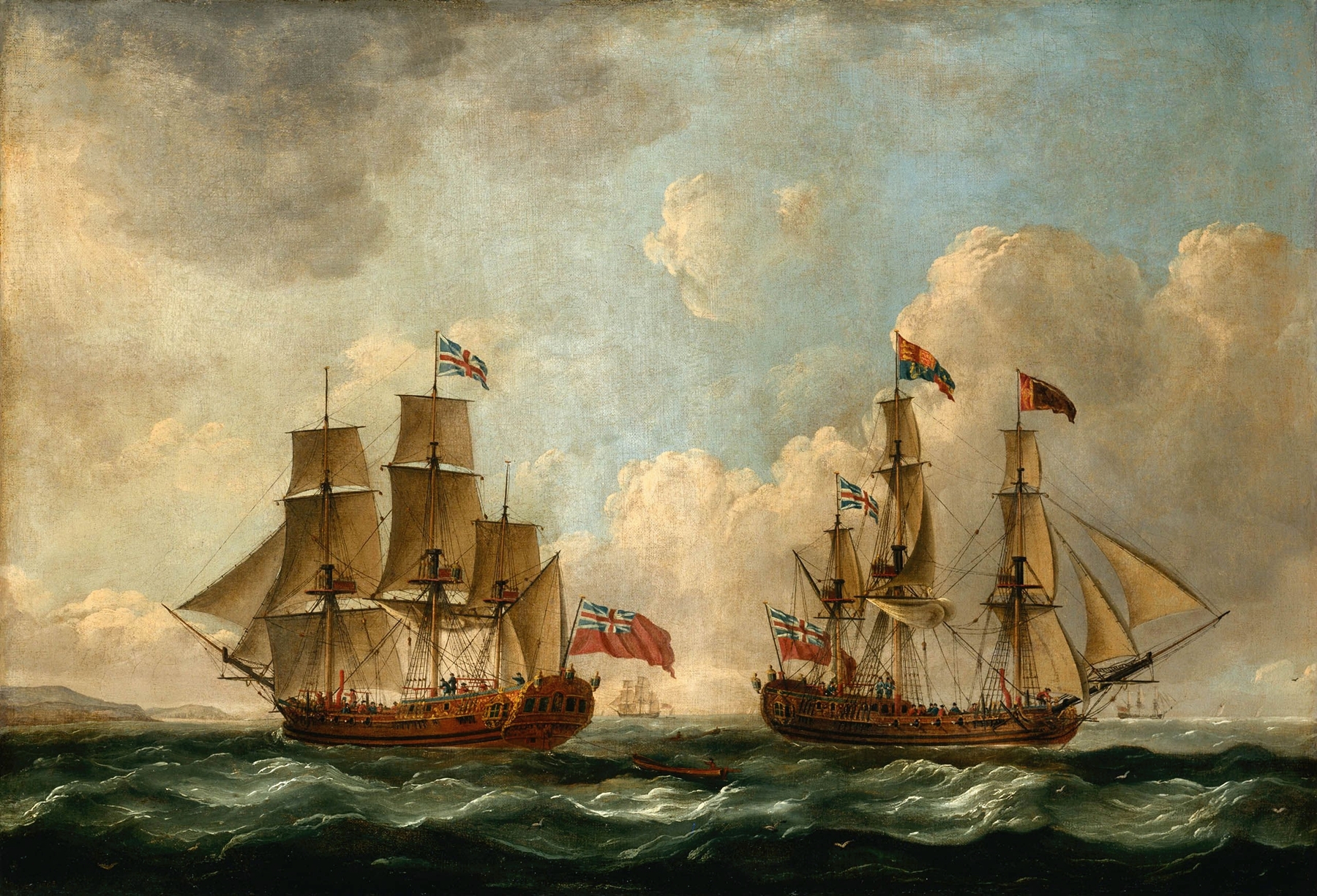
Who listens when art speaks of silence? In An English Frigate Under Sail Firing A Gun, With Shipping At Anchor And Under Sail, the stillness of the ocean contrasts with the explosive action of the ship, inviting contemplation beyond the canvas. Look to the left of the composition where the frigate emerges, its white sails billowing gracefully against a muted sky. The crisp, defined lines of the ship's hull draw the eye, while soft ripples of blue and green waters lead us toward the anchored vessels, creating a sense of depth and movement.
The billowing smoke of the cannon fire, a juxtaposition of chaos within an otherwise tranquil setting, frames the scene with a palpable tension that whispers of history. Beneath the surface, the painting articulates a dialogue between power and stillness. The act of firing the gun serves as a proclamation of strength, yet around it, the neighboring ships remain eerily calm, embodying the weight of anticipation and the heavy silence of potential conflict. Each small detail—like the fluttering flags and the distant horizon—imbues the work with a sense of time standing still, where the quietude amplifies the reverberations of what has just transpired.
John Cleveley the elder painted this work during a period when maritime exploration and naval power were at their zenith in the 18th century. Working primarily in London, he sought to document not only the majesty of ships but also the stories woven into their sails. The era was marked by maritime conflict and trade expansion, influencing his focus on the intricate relationship between sea and society.