An English man-o-war in choppy waters — History & Analysis
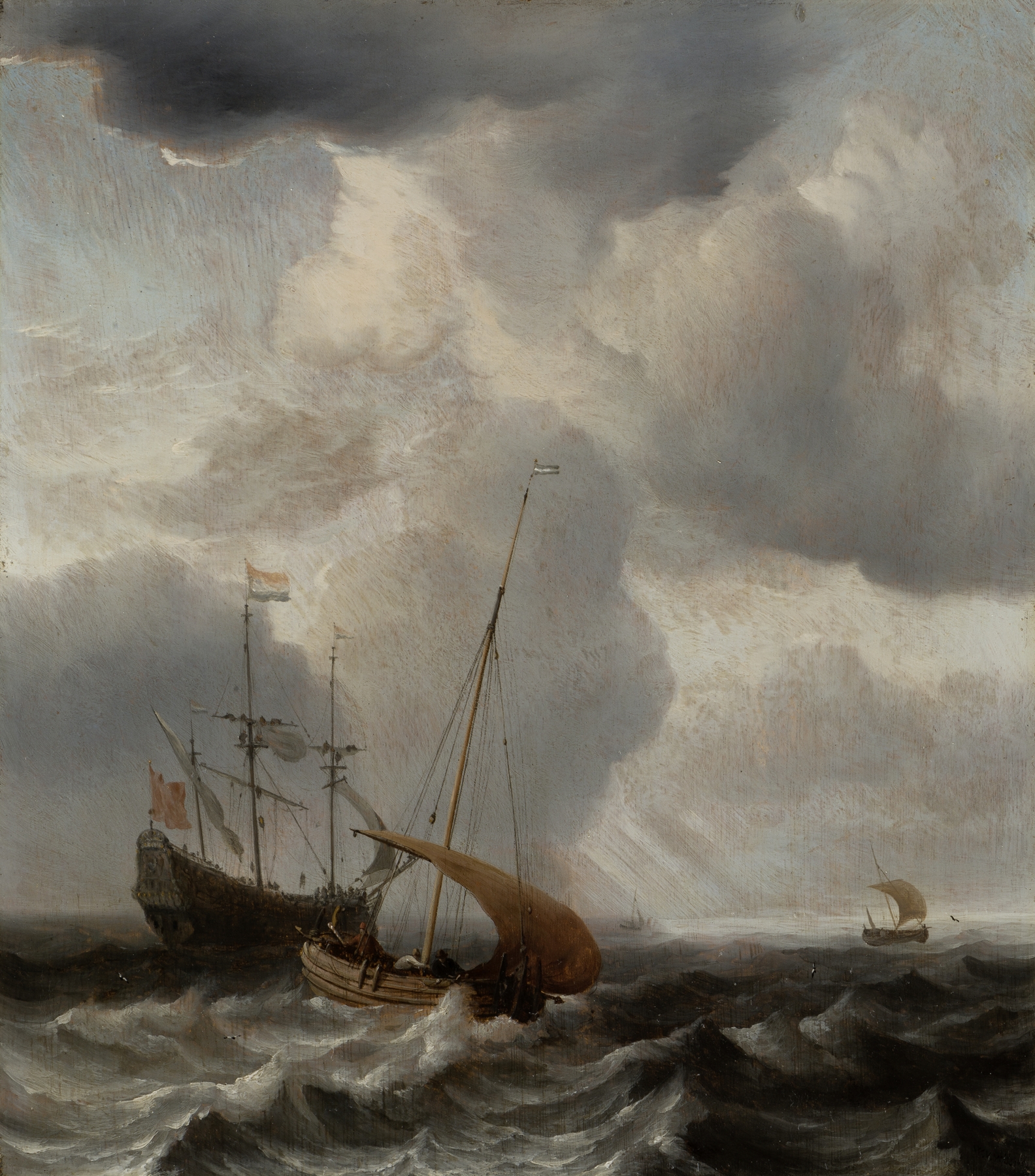
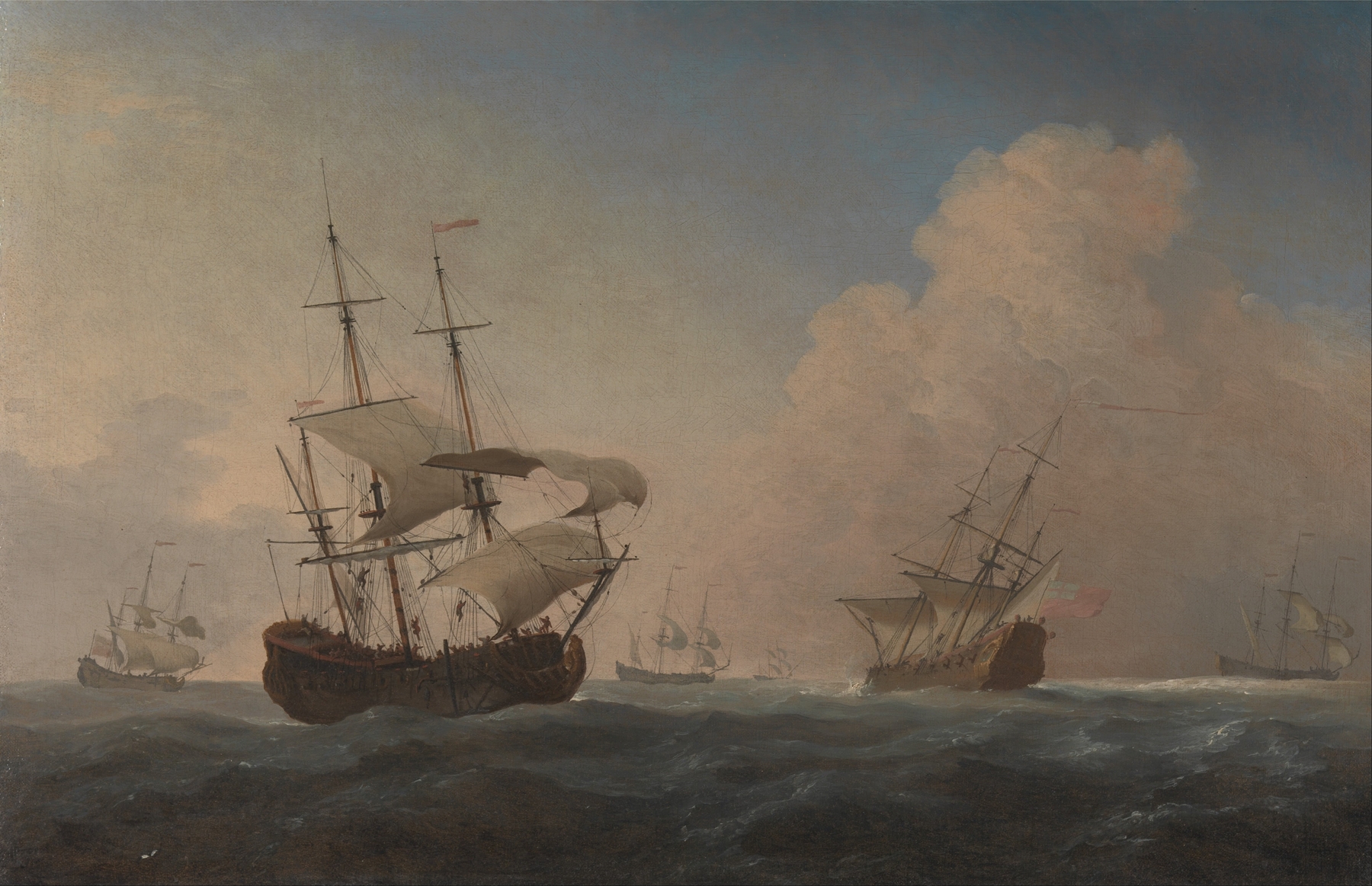
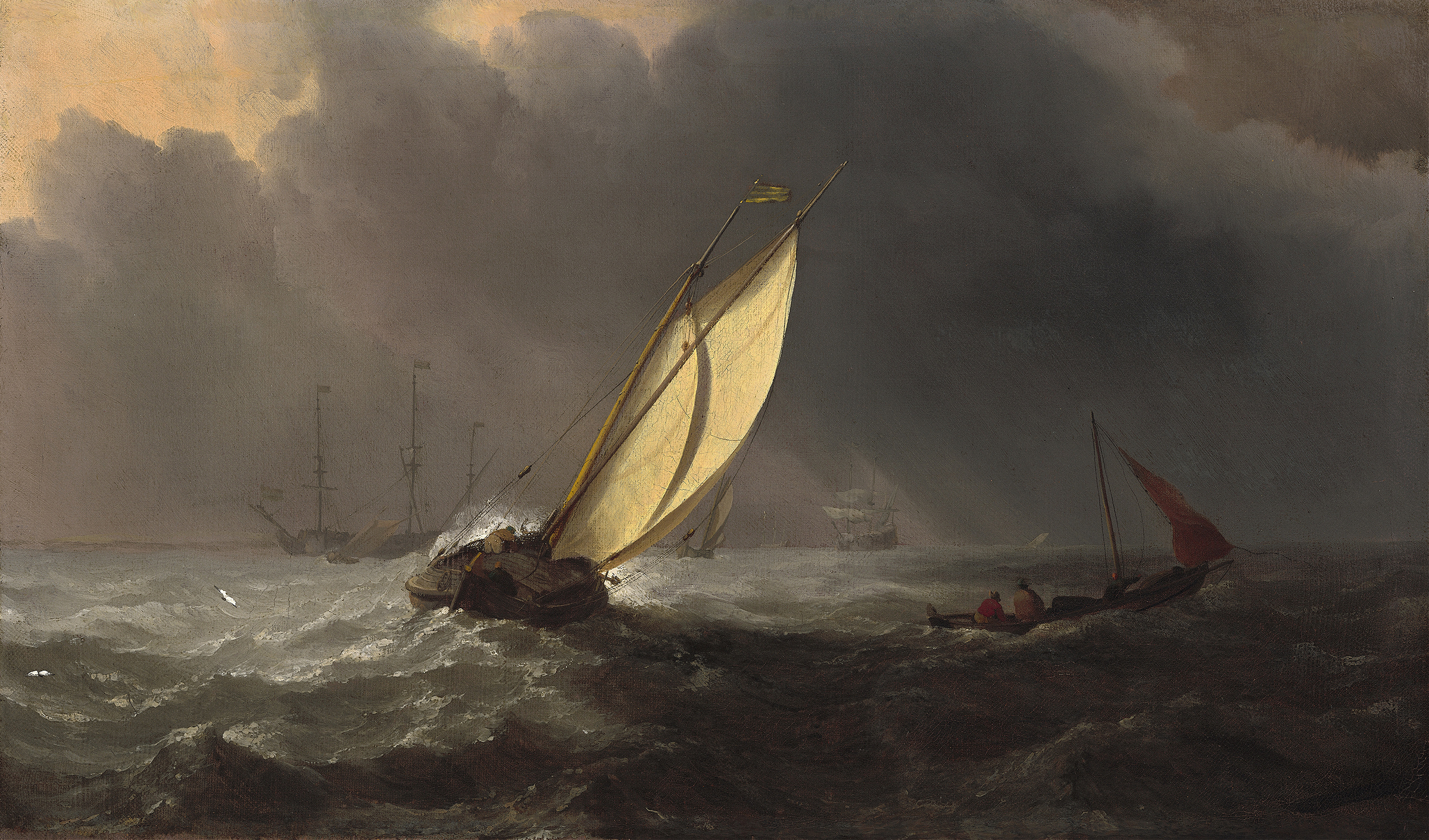
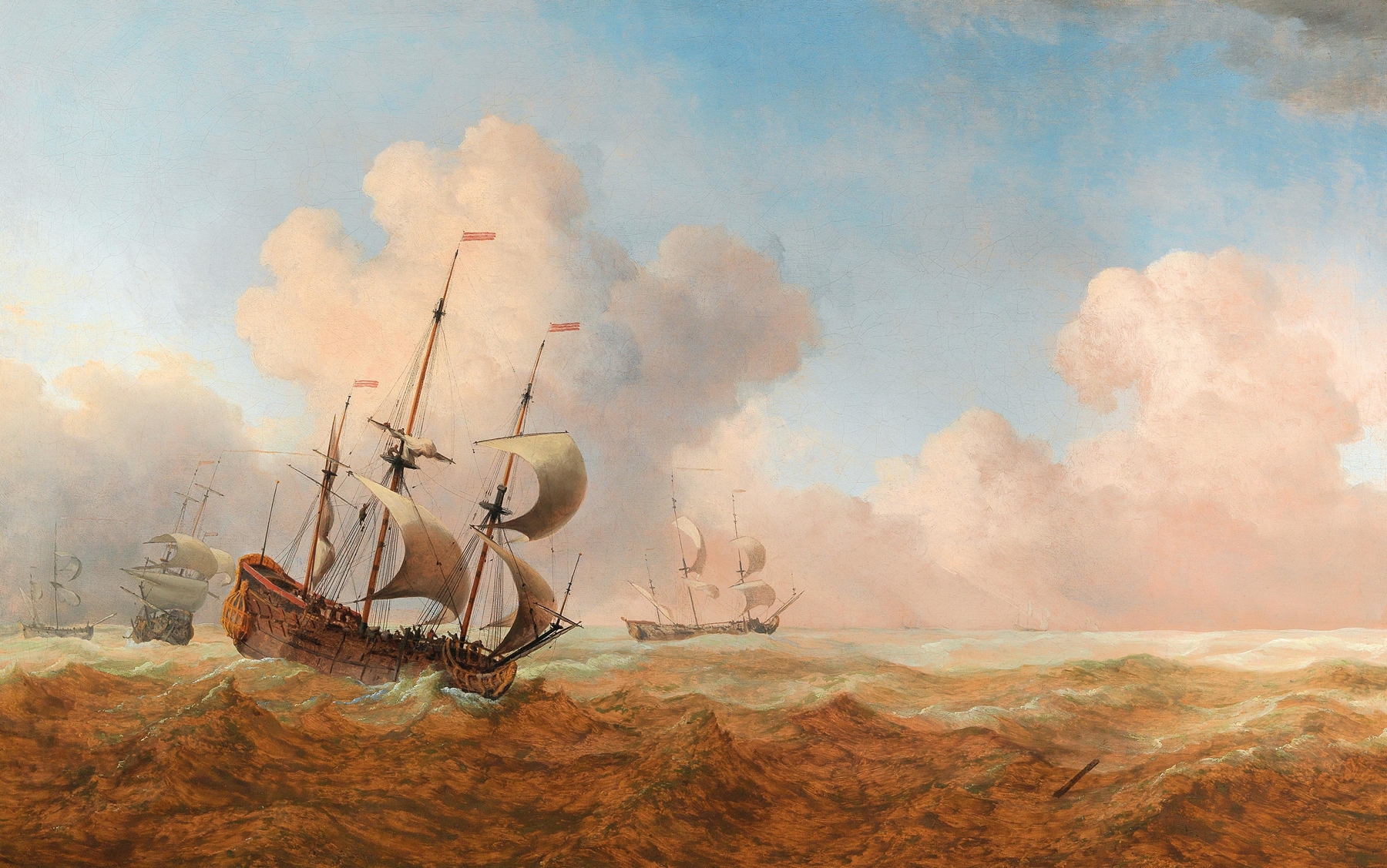
Could beauty survive in a century of chaos? This question lingers like a specter over the turbulent waves of an artwork that captures both struggle and elegance. The scene unfolds before us, where the relentless sea seems almost alive, and the resolute ship stands as a defiant beacon in a world fraught with instability. Look to the center of the canvas, where the English man-o-war dominates the scene, its sails billowing with an urgency that reflects the chaos of the choppy waters. The artist's mastery of light draws your attention first to the ship, with the golden hues illuminating its hull contrasting sharply against the deep blues and grays of the tumultuous sea.
Notice how the swirling brushstrokes capture not only the energy of the waves but also an almost palpable sense of movement, making you feel as though you might be tossed by the very current that surrounds the vessel. In this composition, the contrast between the majestic ship and the tumultuous waters symbolizes resilience amidst adversity. The man-o-war, a representation of naval power and human ingenuity, faces the wild sea—a metaphor for the uncertainties of life itself. The light that bathes the ship offers a glimmer of hope, suggesting that even in the face of chaos, there is beauty and strength to be found.
The tension between stillness and movement evokes a deep emotional response, inviting viewers to reflect on their own struggles and triumphs. Willem van de Velde the Younger painted this work likely in the late 17th century, a period marked by the rise of maritime powers and the complexities of naval warfare. Working from his home city of Amsterdam, he documented the naval battles and ships of his day, capturing the spirit of an age increasingly defined by exploration and competition. This canvas not only embodies the technical skill characteristic of his time but also reflects the artist's personal engagement with the shifting tides of history.