An Overshot Mill — History & Analysis
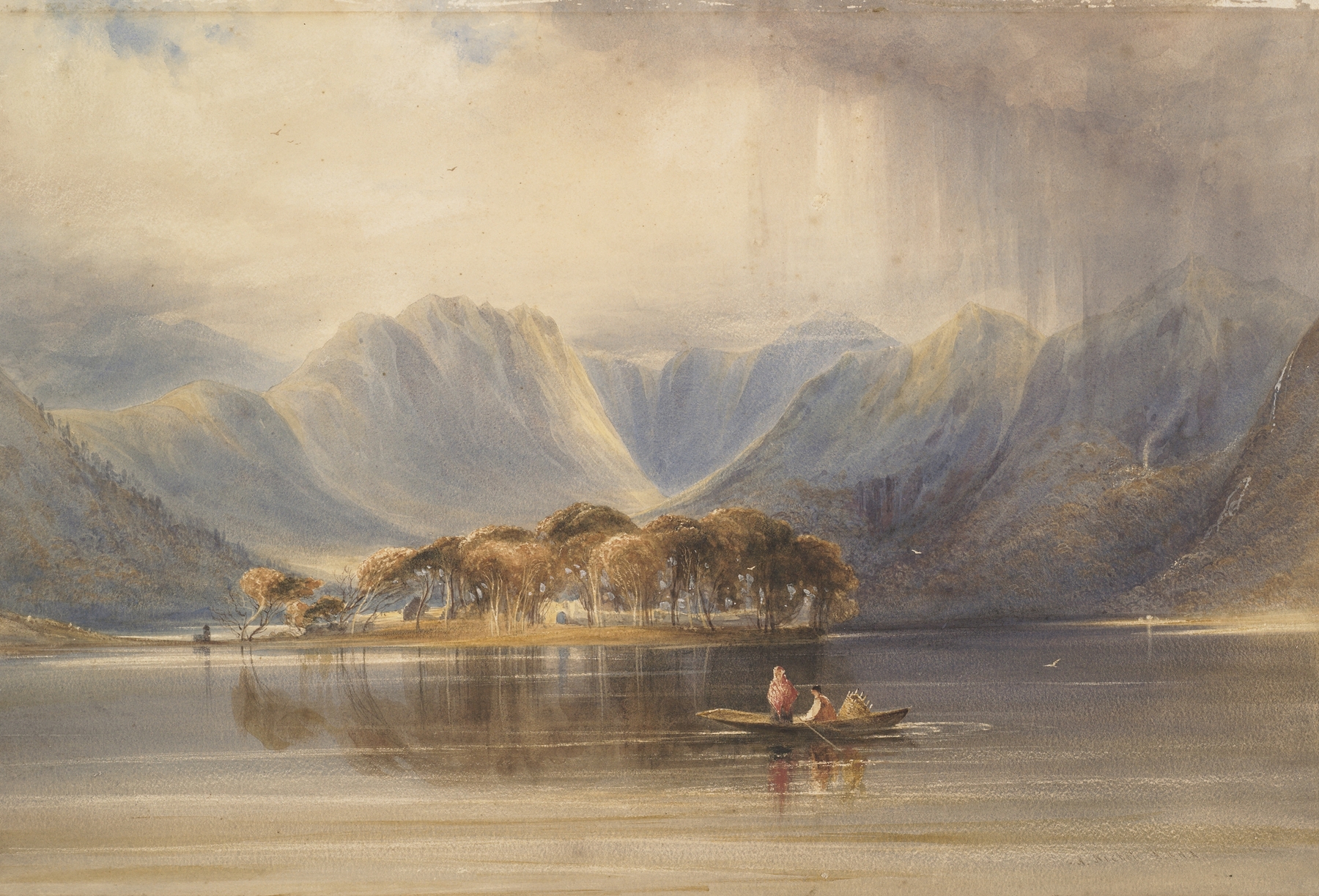
Can paint confess what words never could? In An Overshot Mill, this question hangs heavy in the air, urging us to explore the layers of memory entwined within the brushstrokes. Look to the left at the mill's weathered wheel, its wooden slats dulled by time and elements. The artist employs a rich palette of earthy browns and muted greens, invoking a sense of tranquility yet hinting at decay. Notice how the gentle rippling of the stream reflects soft light, casting flickers that animate the scene, while distant hills cradle the mill like a forgotten treasure.
The composition invites the viewer to meander through the landscape, guided by the natural flow of the water and the inviting presence of the structure. Within this idyllic setting, tension brews in the contrast between man-made and nature, an echo of nostalgia for a simpler existence. The mill stands resilient yet abandoned, suggesting both industry and tranquility, while the creeping vines hint at nature’s relentless reclamation. What stories linger in the air, beneath the surface of the still water?
Here, one senses the weight of memories left behind, and a longing for a connection that once thrived. During the time Andrew Nicholl painted this piece, likely in the mid-19th century, he was immersed in the Romantic movement, which emphasized the beauty of nature and the sublime. Living in England, amidst an era of industrial change, he sought to capture the balance between human innovation and the encroaching wilderness, reflecting a contemporary tension within the world of art. This canvas stands as a testament to that dichotomy, inviting viewers to ponder what has been lost in the rush of progress.