
The Coast of Antrim — History & Facts
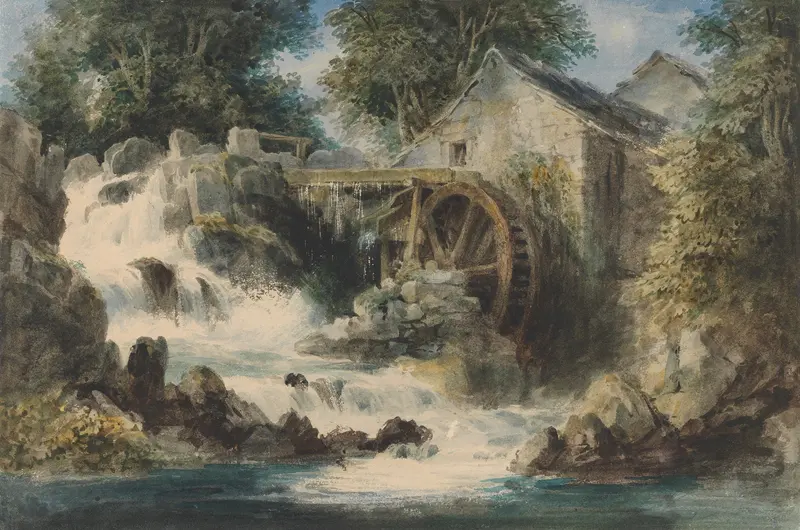
In the delicate interplay of paint and canvas, movement transcends time, capturing the essence of a place that feels both familiar and ephemeral. Look to the horizon where colors melt into one another; the soft blues and greens of the sea vividly contrast with the warm ochres and burnt siennas of the land. As you gaze at the dynamic sky, notice how wispy clouds seem to dance above the rugged cliffs, while waves, brushed with vibrant whites, churn with a subtle urgency. Each stroke is deliberate, flowing with a sense of rhythm that invites you to explore deeper into the scene’s tranquil yet spirited landscape. Within this lively tableau, there’s a delicate balance between stability and chaos.
The cliffs stand resolutely, embodying permanence, yet the crashing waves hint at the relentless passage of time and nature's power. Each reflection in the water suggests a deeper emotional resonance—the tranquility of the coast juxtaposed against the ever-changing dance of the tide. It’s a moment frozen in time, where serenity and dynamism coexist. At the time this work was created, Andrew Nicholl was exploring the scenic beauty of the Irish coast, reflecting his deep appreciation for nature.
He painted during an era when landscape painting was gaining prominence in the art world, emphasizing a romantic connection to the sublime. Nicholl’s keen observation of light and movement influenced many artists of his time, marking his contributions as significant in the evolution of landscape art.
More Artworks by Andrew Nicholl

More Landscape Art

Starry Night
Vincent van Gogh

View of Delft
Johannes Vermeer

Water Lilies
Claude Monet

The Grand Canal, Venice, looking north-west from the Ca' Corner to the Ca' Contarini degli Scrigni, with the campanile of Santa Maria della Carità
Canaletto

Windsor Castle
Canaletto

The Grand Canal looking North-East from the Palazzo Dolfin-Manin to the Rialto Bridge
Canaletto