Back of the Mills — History & Analysis
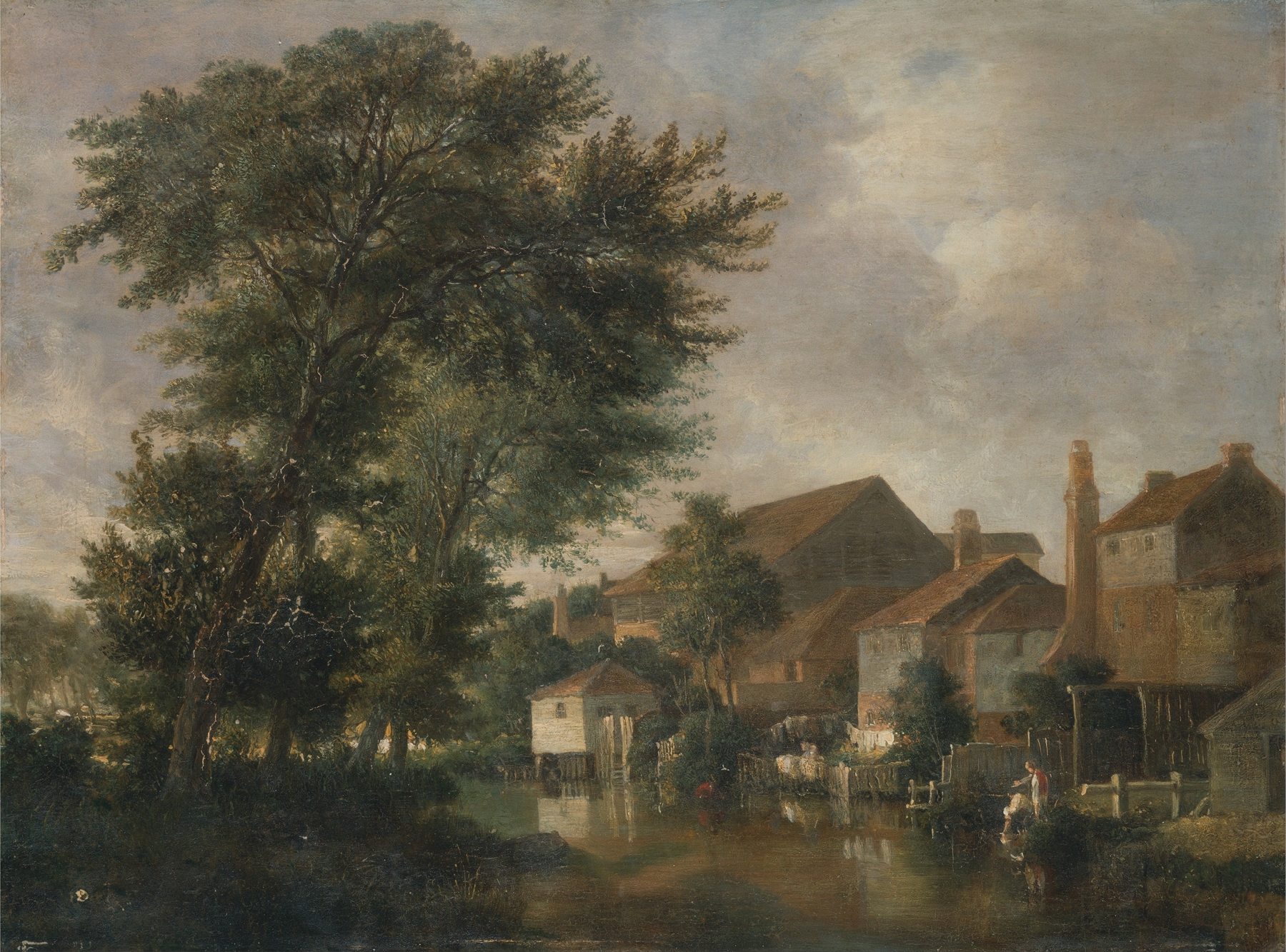
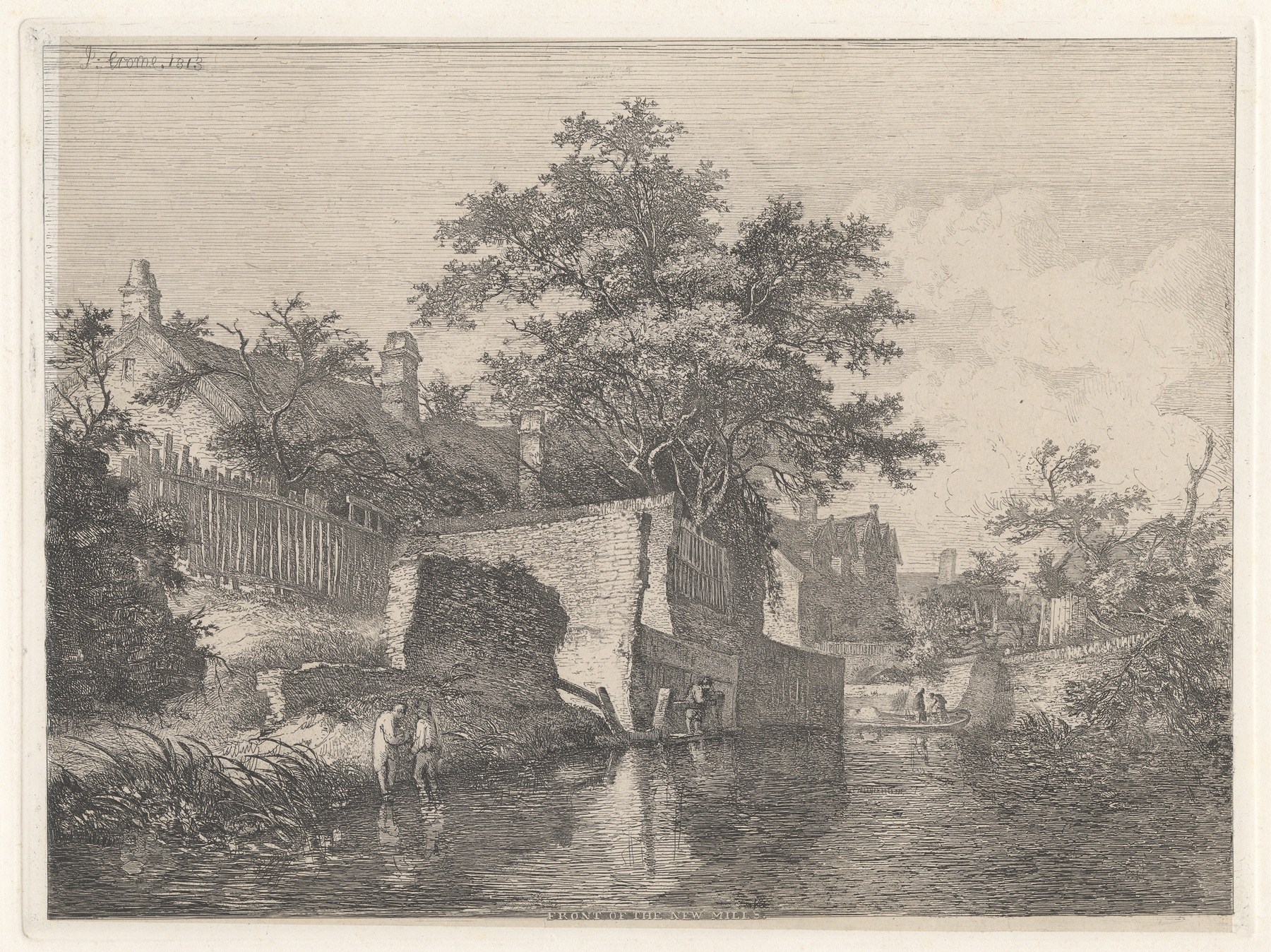
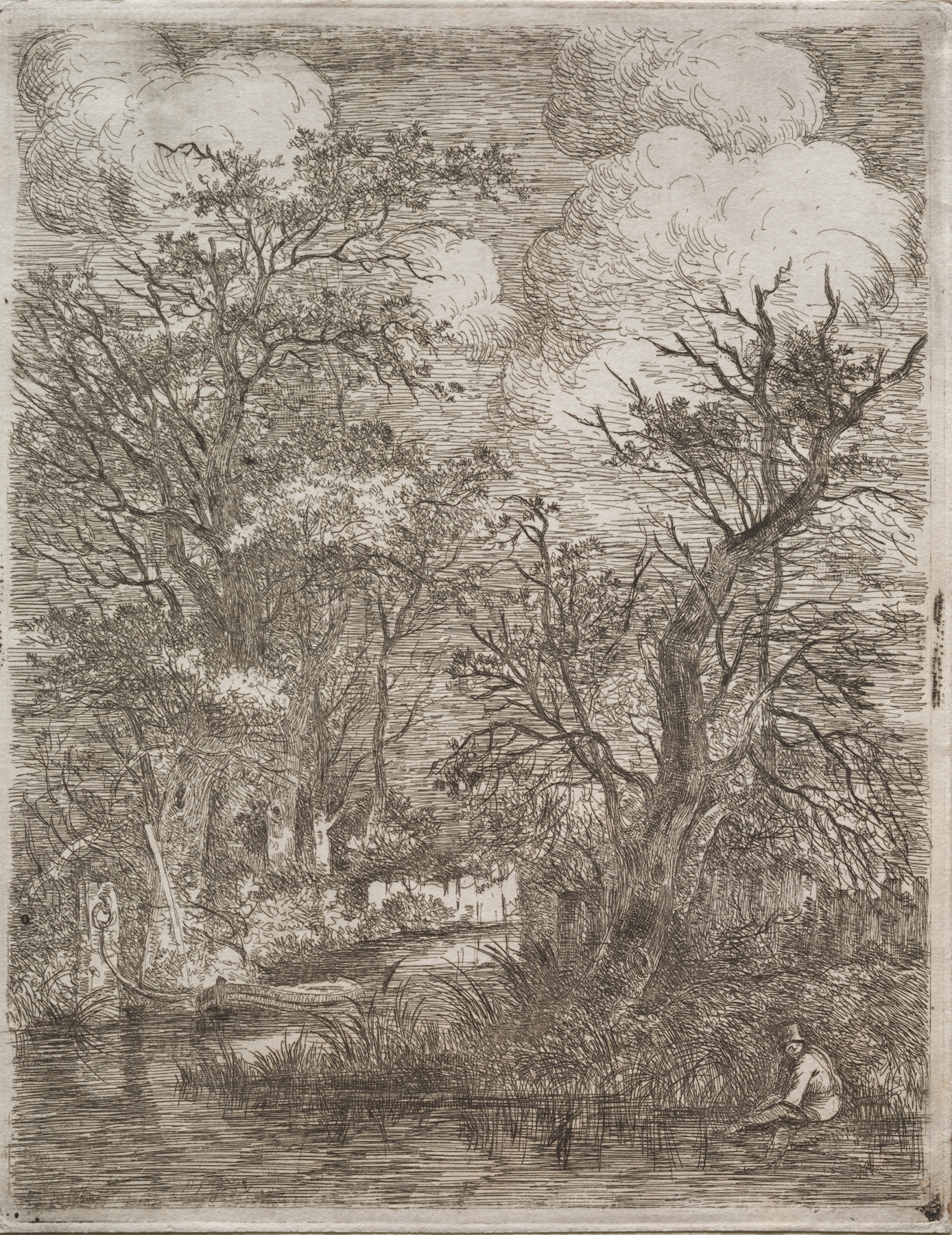
Can paint confess what words never could? In John Crome's Back of the Mills, color vibrantly speaks the unspoken, inviting contemplation on the nature of industry and the passage of time. Look to the left at the smoky hues of the mills, where muted browns and blacks blend to create a somber yet rich atmosphere. The light, filtered through a heavy overcast sky, casts a diffused glow on the scene, revealing the industrious details of the structures that loom like sentinels over the landscape.
Notice how the verdant greens of the surrounding trees offer a stark, almost rebellious contrast to the mechanical presence of the mills, suggesting a dialogue between nature and human endeavor. Hidden within the seemingly straightforward composition lies a profound meditation on progress and its costs. The way the mills dominate the horizon hints at the relentless advance of industrialization, while the calm waters reflect not just the surroundings, but the tensions between human innovation and the tranquility of the natural world. Small elements, like the subtle ripples in the water, symbolize the disturbances that progress can bring, echoing the emotional weight of transformation.
Crome painted this piece during a time when England was undergoing significant industrial changes, around 1812-1813. As a leading figure in the Norwich School of painters, he sought to capture the local landscape within the context of these developments. The work reflects both his love for the countryside and a recognition of the shifting realities brought by industry, encapsulating a moment in art history where nature and industry were in constant conversation.