Behangselschildering van een Hollands landschap met een zandweg — History & Analysis
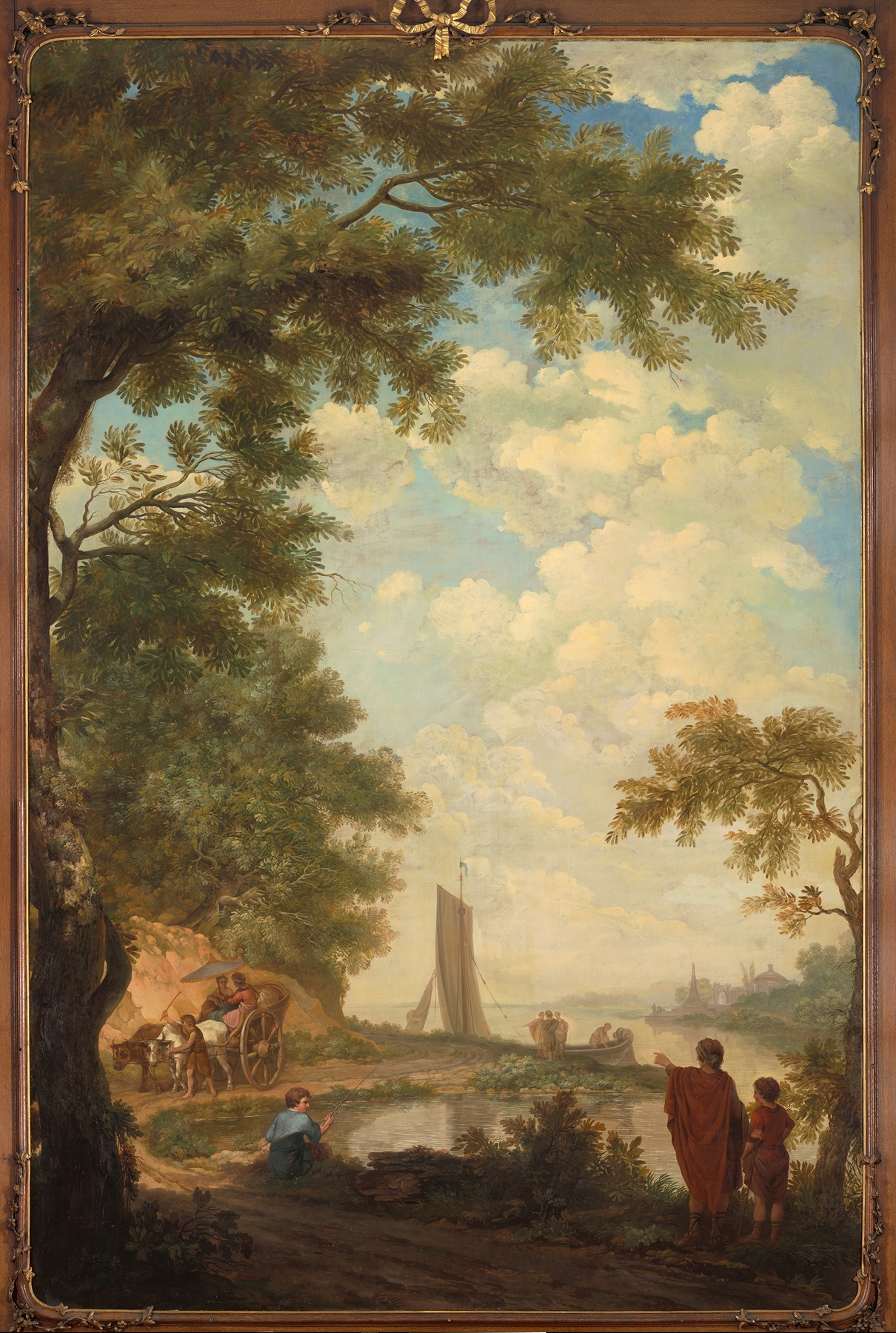
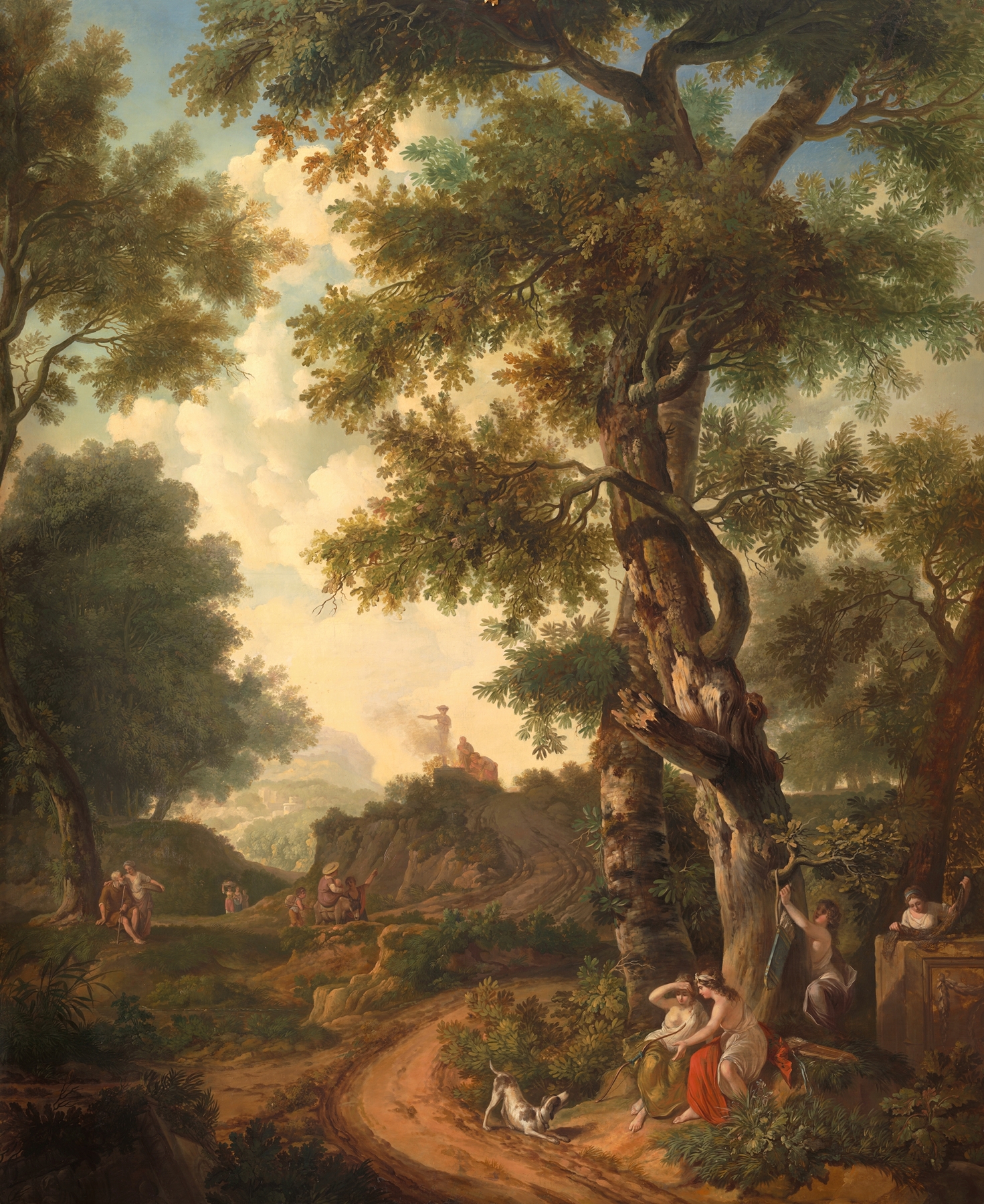
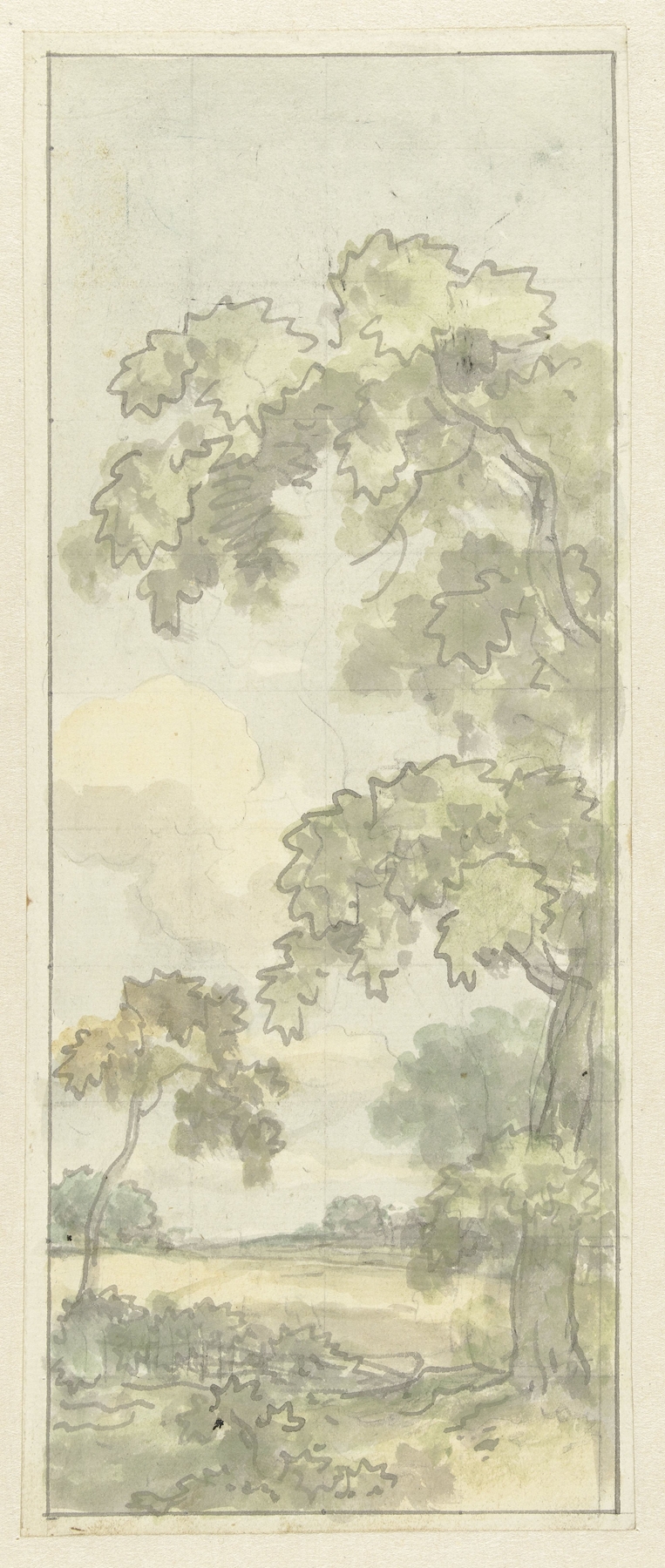
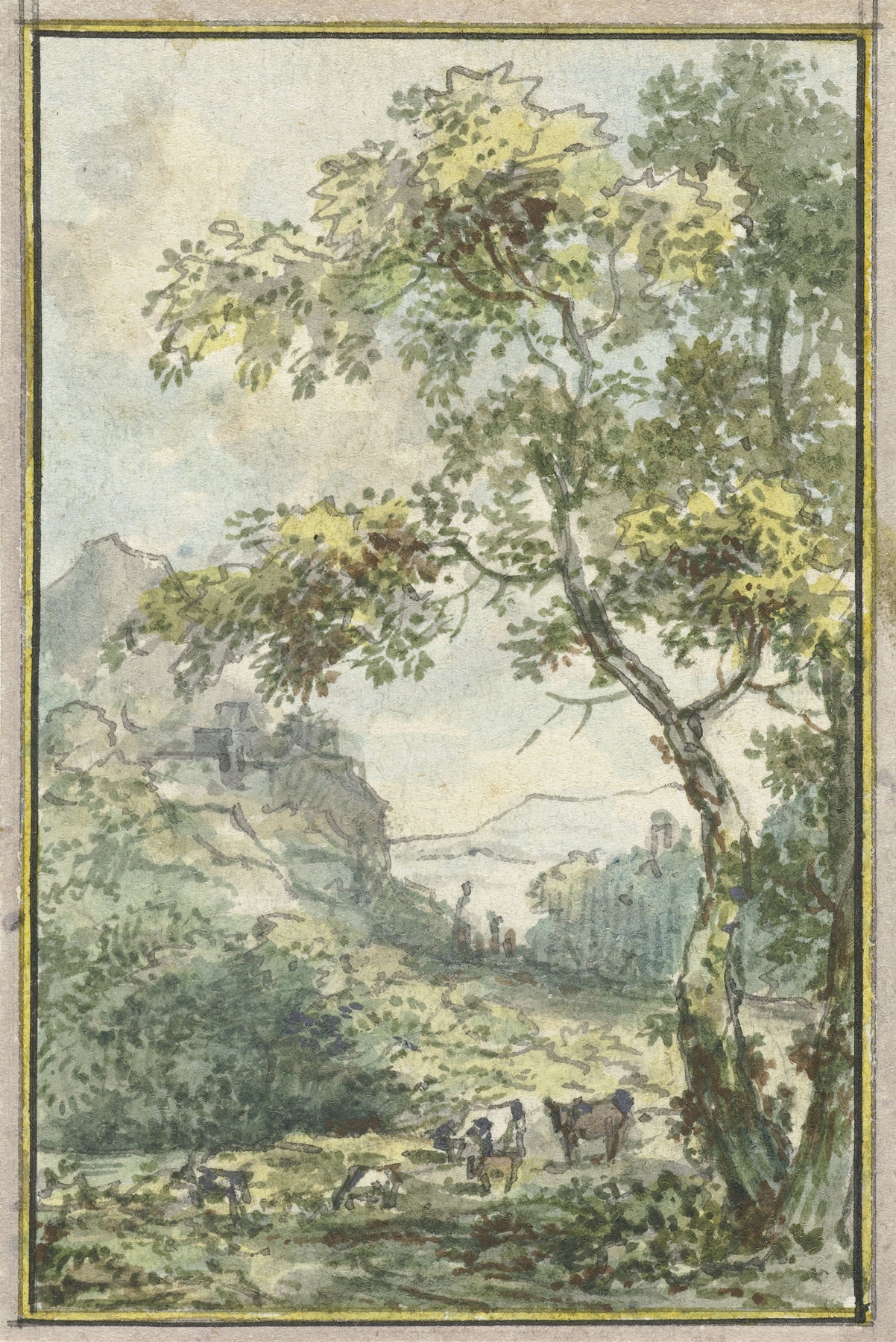
Can beauty exist without sorrow? Jurriaan Andriessen's Behangselschildering van een Hollands landschap met een zandweg offers a poignant exploration of this question, encapsulating the delicate balance between innocence and the inevitable passage of time. Look to the left at the gently winding sandy path, where it beckons viewers into a serene Dutch landscape. The lush greens and soft blues dominate the canvas, their vibrancy underscored by patches of earth tones that ground the scene.
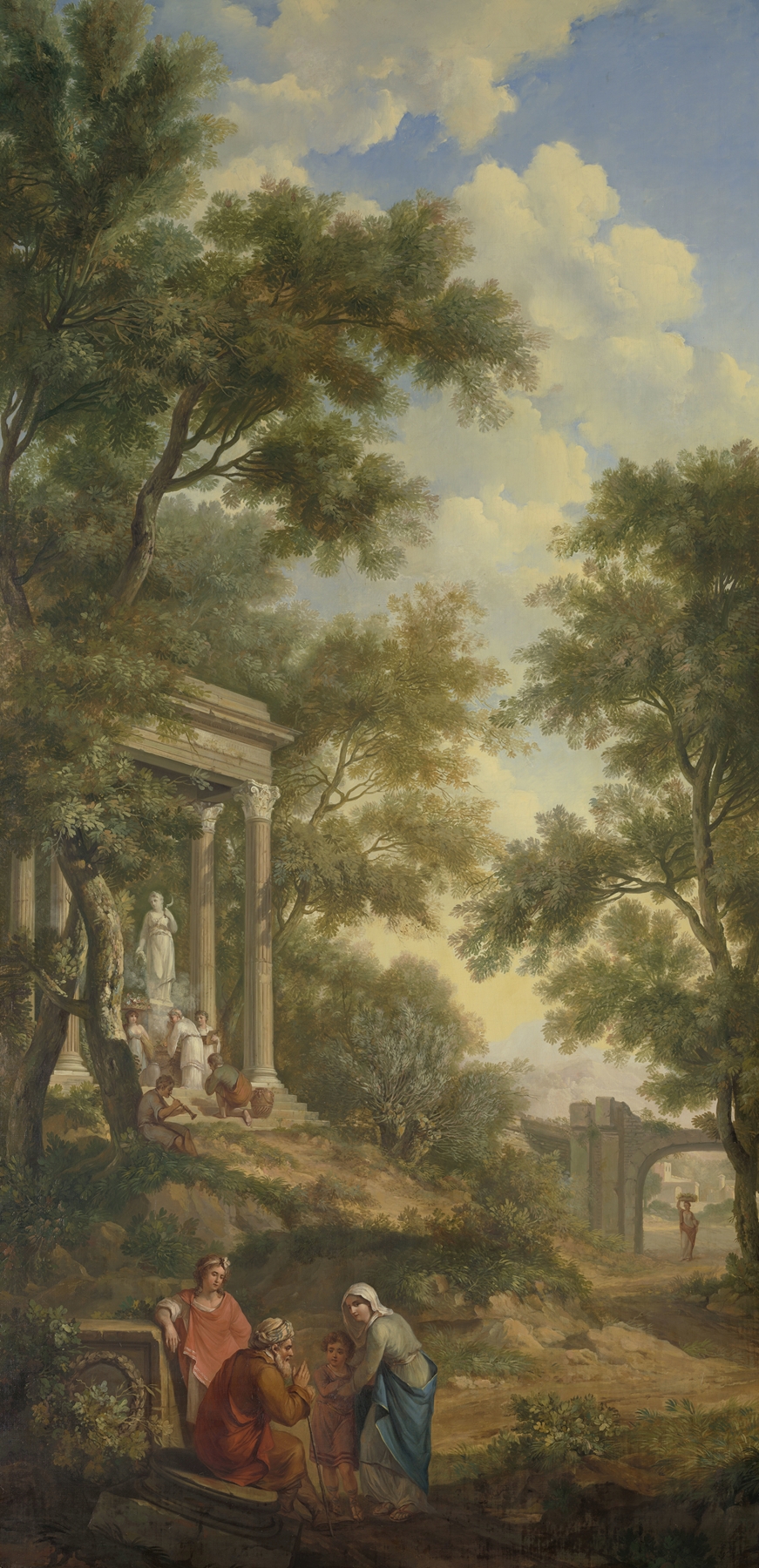
Notice how the light plays upon the gentle undulations of the fields, creating a sense of depth that invites contemplation. The use of soft brushstrokes evokes an air of tranquility, while the placement of trees framing the scene adds a sense of harmony and seclusion. In this idyllic setting, we find contrasts woven into the fabric of the landscape: the path, while inviting, hints at journeys untaken and memories lost. Each blade of grass and each shadow cast by the trees resonates with a silent story of innocence, longing, and reflection.
The emptiness of the scene speaks volumes, suggesting that even in beauty, there resides an undercurrent of melancholy, a reminder of the fleeting nature of existence. Andriessen painted this work around 1776, during a period when Dutch art was evolving, influenced by both the Enlightenment and Romantic ideals. It reflects his masterful technique and keen sense of observation in a time when artists were beginning to explore the emotional landscapes of their subjects. During this era, he engaged with a world shifting towards new ideas, yet rooted in the rich traditions of his homeland, representing a bridge between past and future in Dutch landscape painting.