Binnenplaats van het Oost-Indische Huis aan de Oude Hoogstraat te Amsterdam — History & Analysis
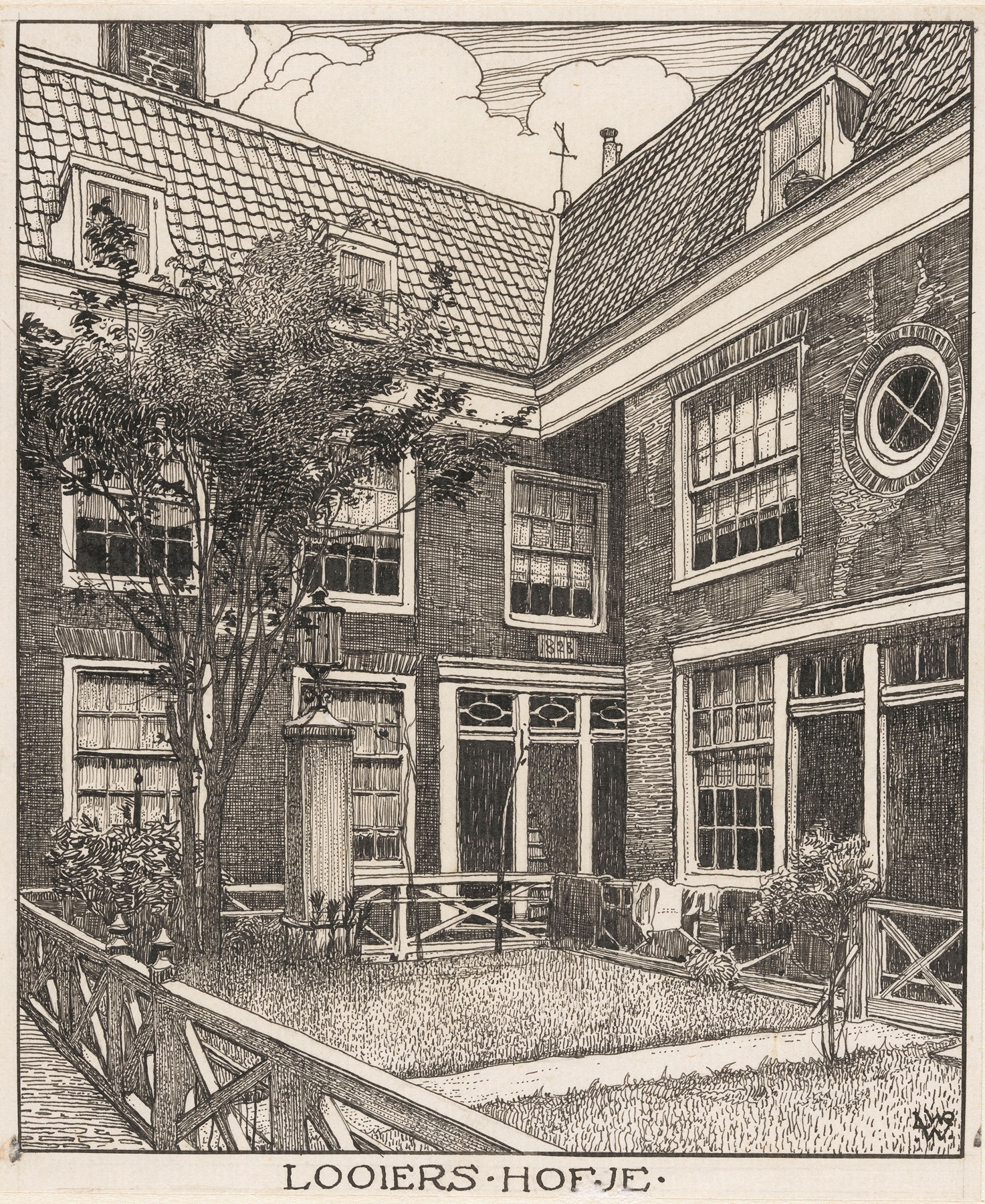
Is this a mirror — or a memory? The boundaries between the sacred and the mundane dissolve in the quiet embrace of a courtyard that beckons us to pause and reflect. Look to the foreground where delicate arches frame the courtyard, their intricate patterns creating a rhythm that guides the eye inward. Notice how the pale sunlight dances on the cobblestones, imbuing them with a warmth that invites you closer.
The soft hues of ochre and azure contrast with the deep shadows, establishing an interplay of light that highlights the architectural beauty of this historic space. Amidst this serenity, whispers of history linger in the air. The juxtaposition of the weathered stones against the vibrant greenery underscores the passage of time, suggesting both decay and renewal. The composition exudes a sense of calm divinity, as if the courtyard itself is a sanctuary for quiet contemplation, inviting viewers to explore the echoes of stories long past.
Each corner seems to hold a secret, urging one to reflect on the layers of life that have unfolded here. Willem Wenckebach created this piece in the 20th century, capturing the essence of Amsterdam’s rich architectural heritage during a time when modernism was beginning to challenge traditional forms. His works often engage with themes of memory and place, reflecting a personal journey that intertwines with the broader narrative of art’s evolution. In this tranquil courtyard, he invites us to connect with the past while contemplating our place within it.