Blumengarten und Fischer auf der Fraueninsel — History & Analysis
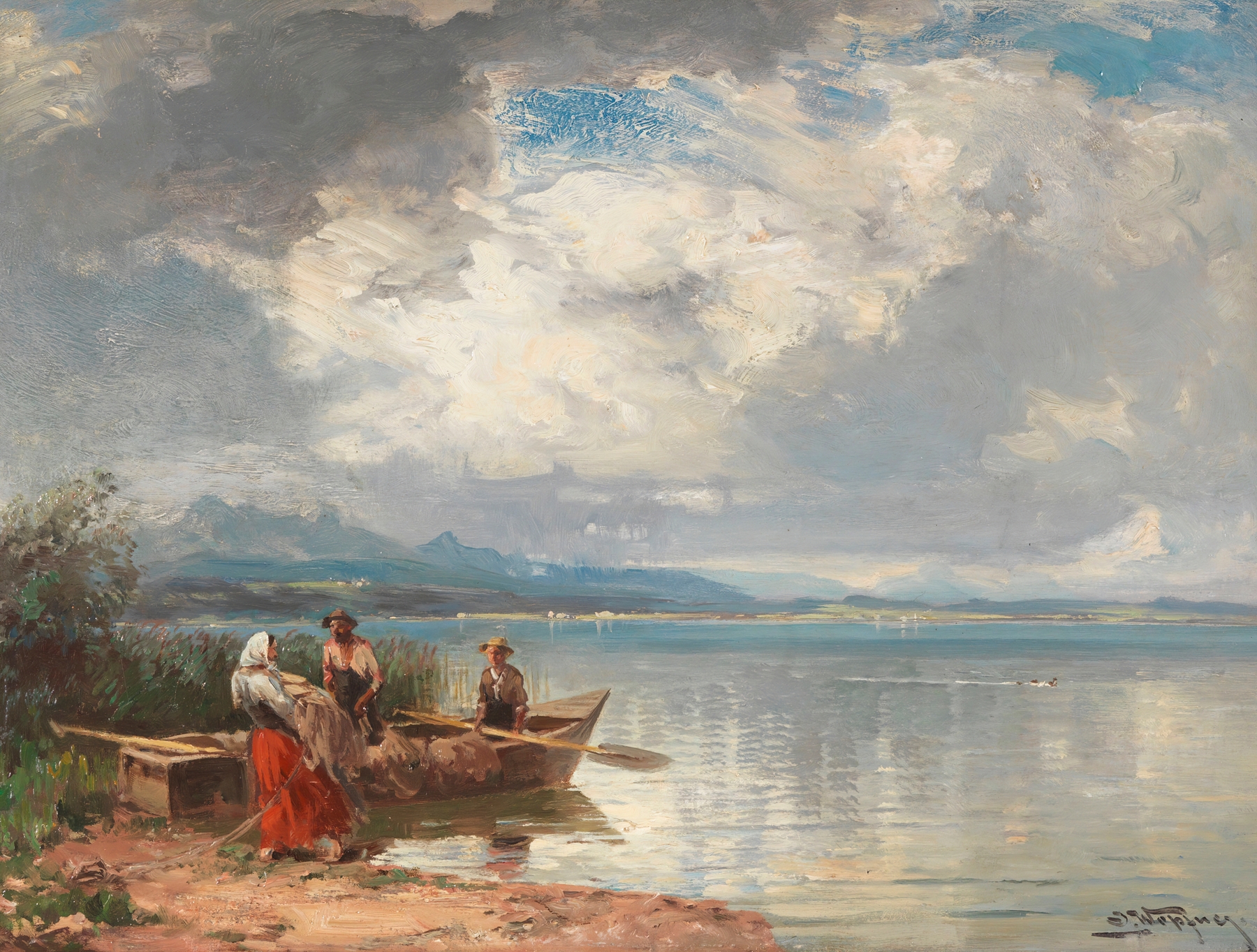
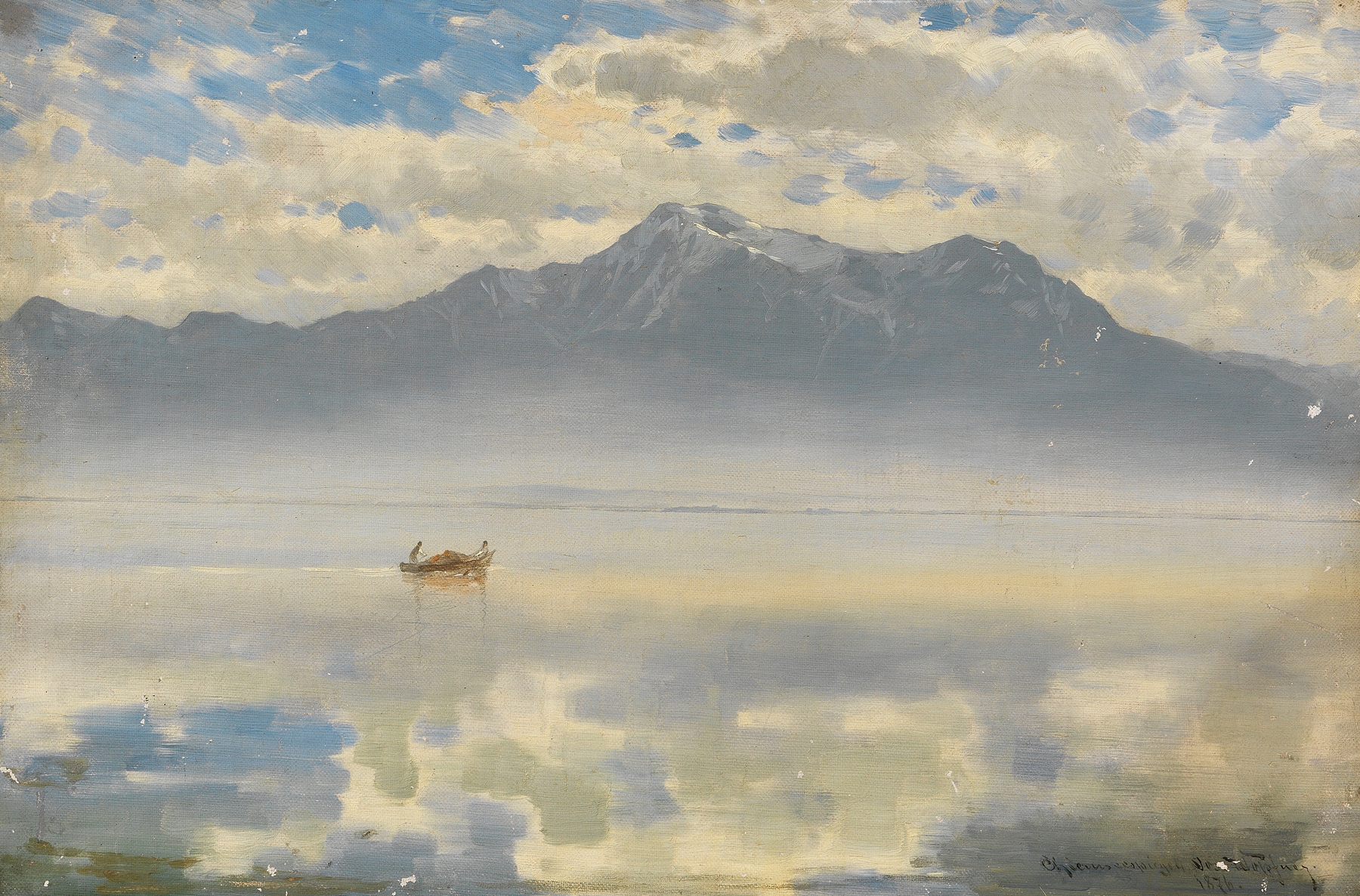
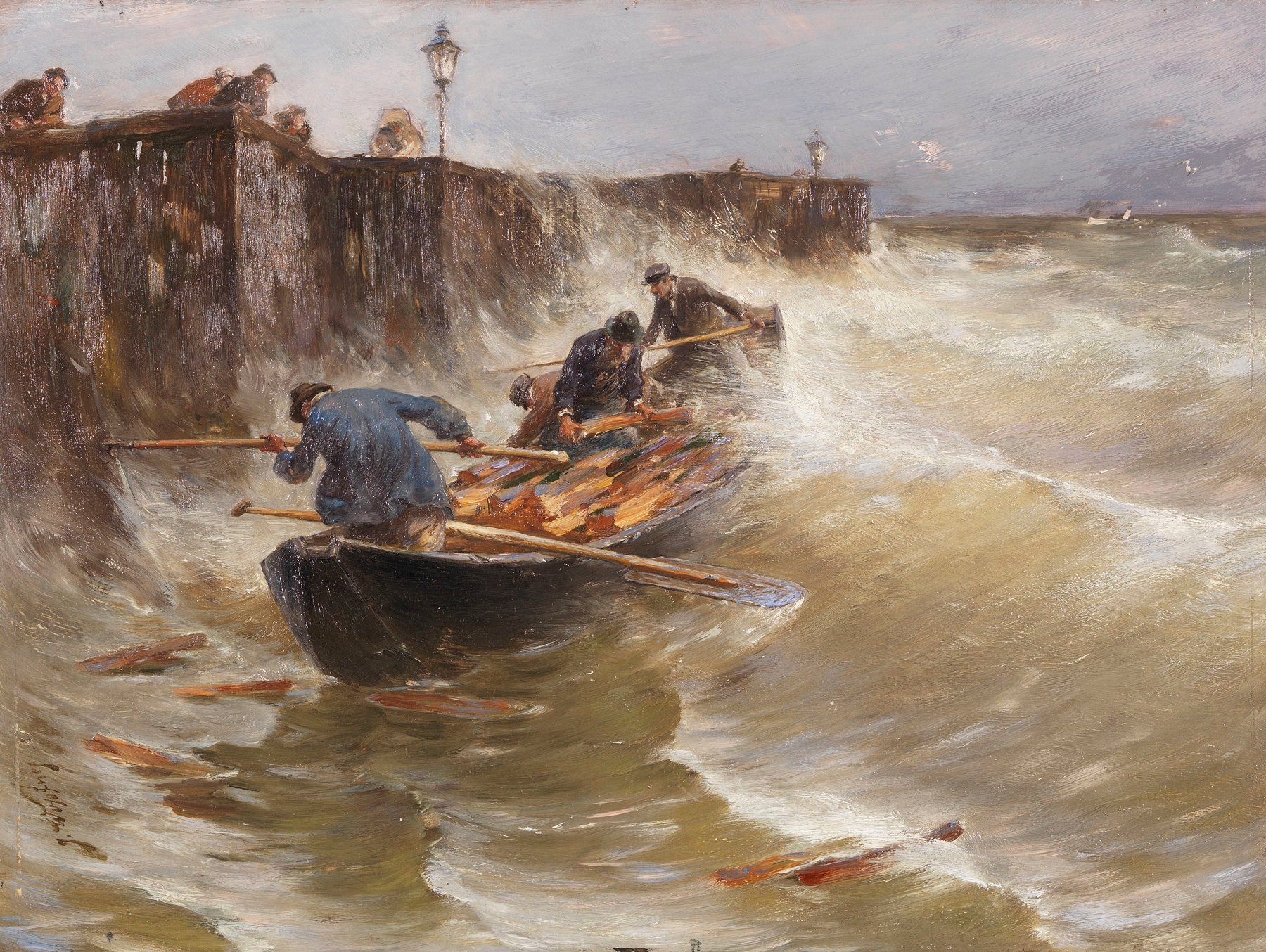
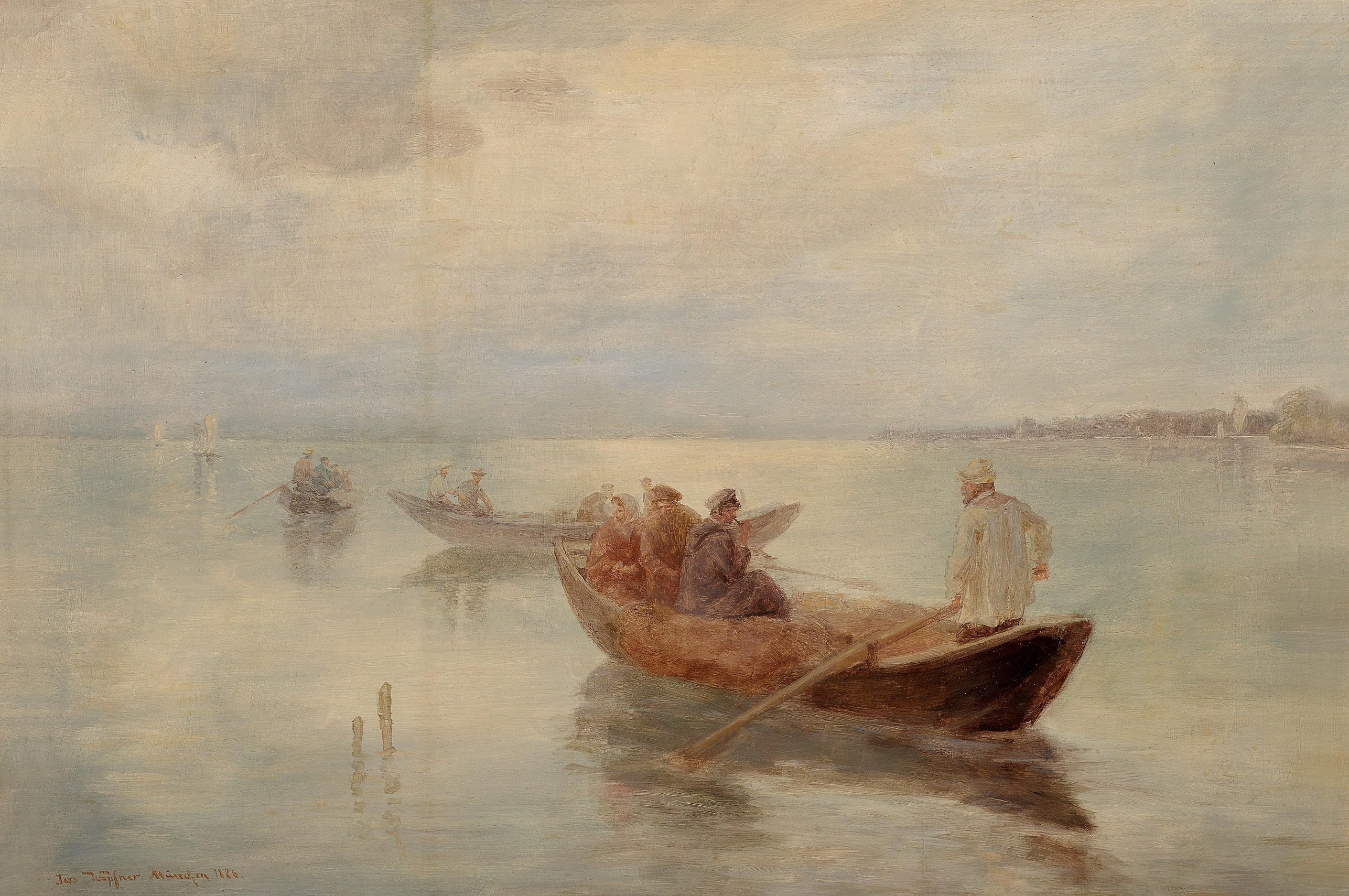
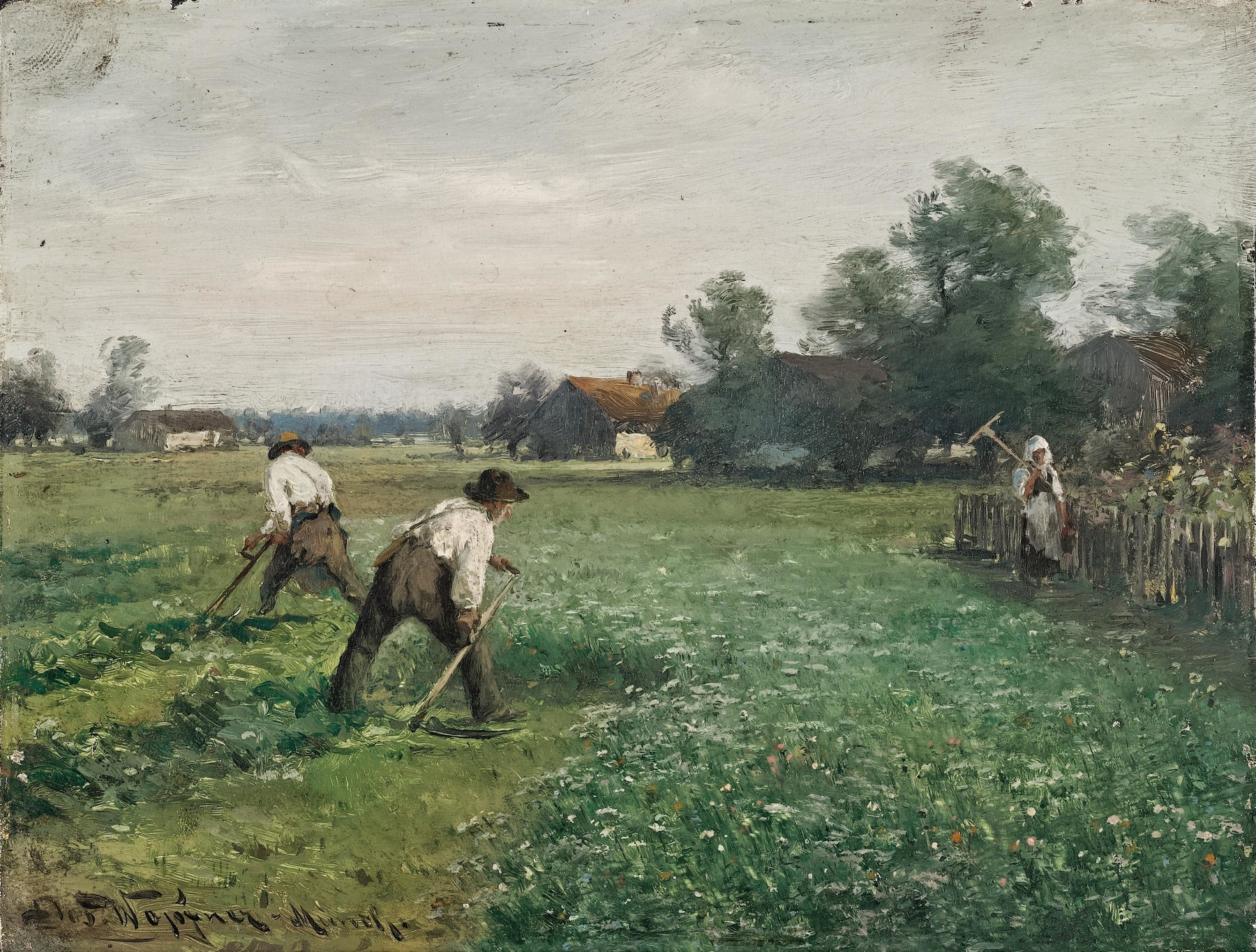
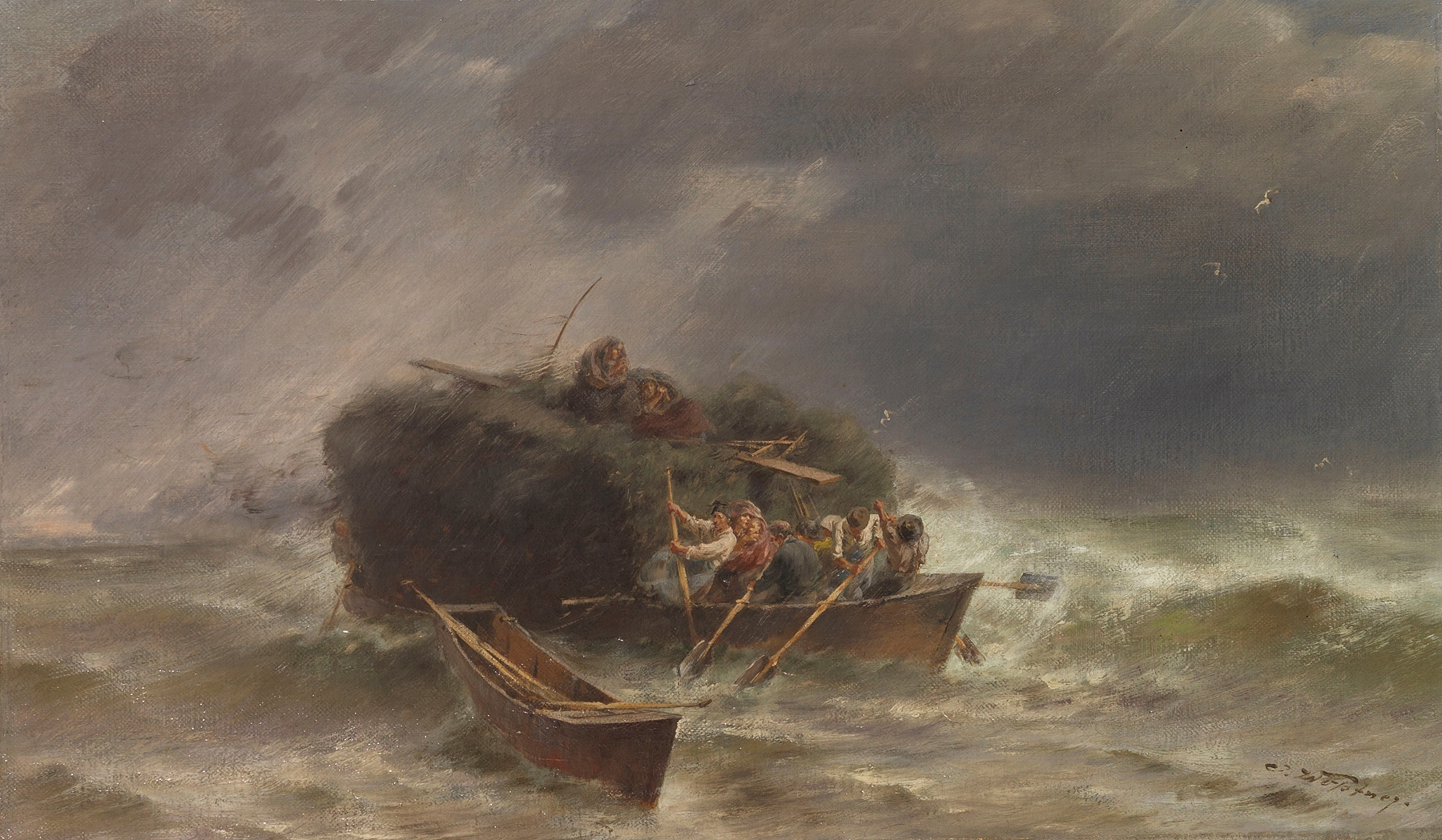
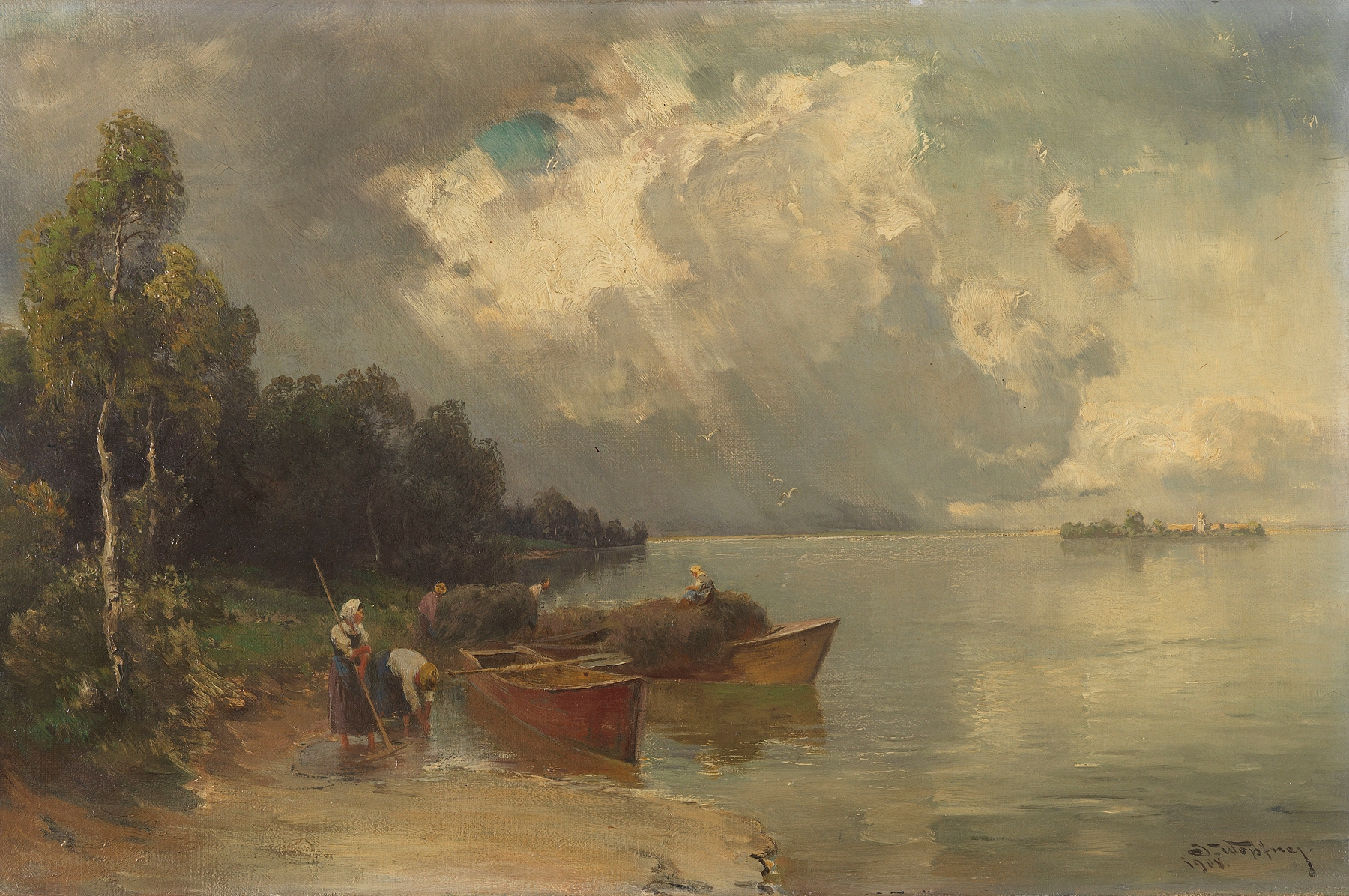
What secret hides in the quiet of the canvas? In Blumengarten und Fischer auf der Fraueninsel, the stillness resonates, inviting introspection and revealing the hidden narratives of nature and humanity’s gentle interplay. Look to the lower left, where a vibrant bloom bursts forth, its petals almost tangible against the deep greens of the garden. The vivid colors form a striking contrast with the muted, serene waters nearby, where a lone fisherman casts his line. Notice the brushwork, where Wopfner’s delicate strokes breathe life into the flora, while the fisherman stands still, a figure of contemplation amidst the lush vibrancy.
Light dances softly across the scene, illuminating the flowers and casting gentle shadows that create an intimate atmosphere of tranquility. Beneath the surface, the painting speaks of the delicate balance between life and livelihood. The flowers symbolize nature’s abundance, while the solitary fisherman embodies solitude and the pursuit of sustenance. This divergence captures a moment where existence converges with labor, evoking the tension between nature's gifts and the human quest for survival.
The composition, rich with color and detail, emphasizes the harmony and fragility of the world—a fleeting moment preserved forever on the canvas. In 1884, Joseph Wopfner painted this piece while living in Bavaria, a region experiencing a cultural renaissance. The era was marked by a growing appreciation for natural beauty and rural life, as artists sought to capture scenes that resonated with nostalgia. Wopfner, influenced by this movement, focused on the intimate relationship between man and nature, creating a work that reflects both his personal journey and the broader currents of his time.