Boating — History & Analysis
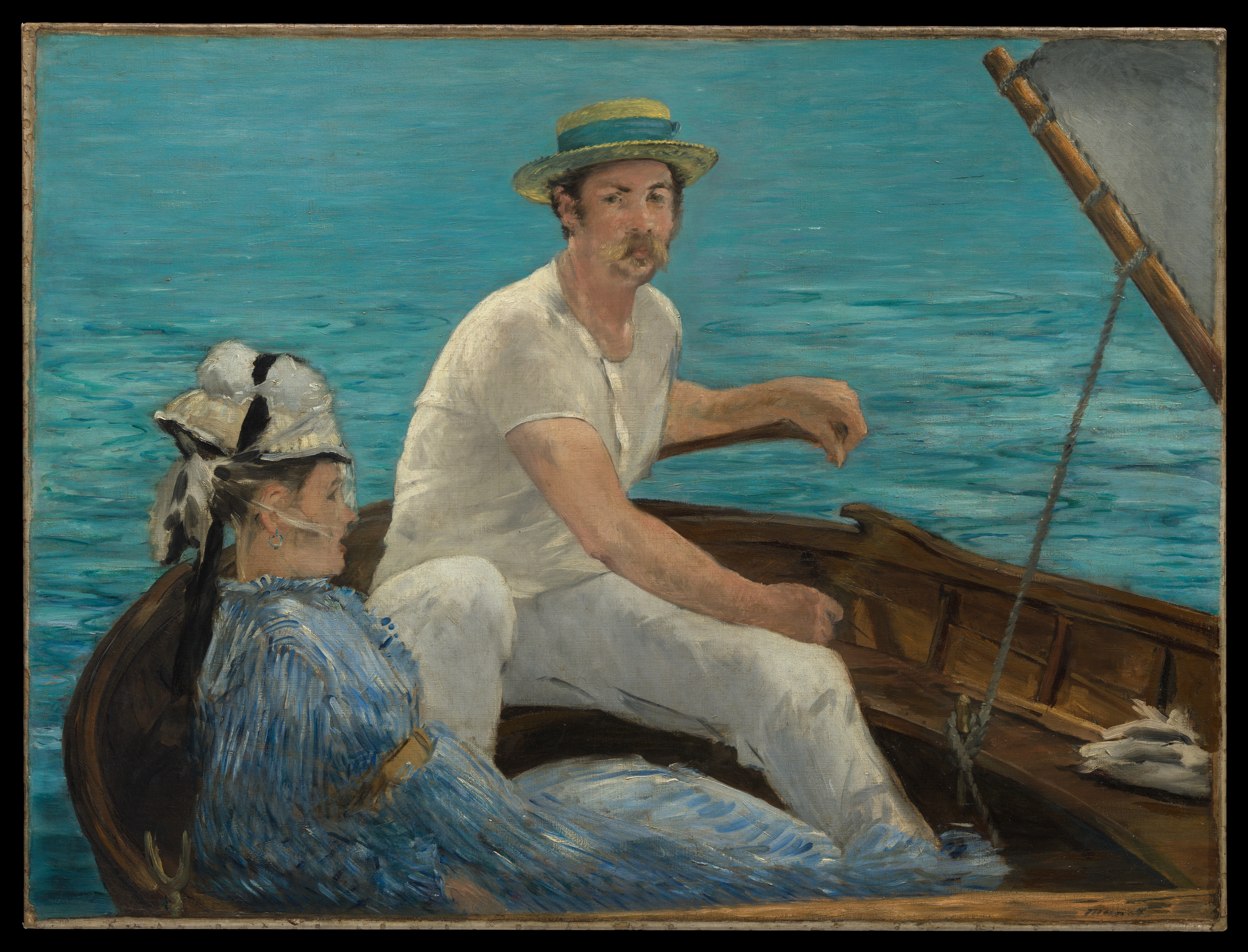
Did the painter know this moment would outlive them? In Boating, an ephemeral scene of leisure punctuated by the gentle sway of the water, Manet captures the fleeting joys of life, hinting at the inevitable loss that shadows every joyful experience. It reminds us that while moments pass, art can crystallize them into eternity. Look to the left at the vibrancy of the boat’s red and white sail, a stark contrast against the lush greens of the surrounding landscape. The figures sit relaxed yet animated, their postures expressing camaraderie and the carefree spirit of summer.
Notice how the sunlight dances on the water, creating reflections that ripple with every movement, inviting the viewer into this tranquil moment. Manet’s brushwork is loose but deliberate, infusing life into the scene while evoking a sense of nostalgia for what is transient. Beneath the surface of leisurely enjoyment lies a tension between the vibrancy of life and the specter of loss. The figures' expressions, while joyful, also whisper of a shared knowledge—moments like these are fleeting.
The gentle ripples of the water mirror the passing of time, suggesting that even in joy, there is an undercurrent of poignancy, a reminder that such moments will eventually fade into memory. In 1874, the artist created Boating during a period of artistic evolution, embracing modern themes and techniques. Living in France amid the Impressionist movement, Manet was reshaping the boundaries of traditional painting, striving for a new visual language. As he navigated personal struggles and the shifting landscape of the art world, this piece emerged as a testament to both the beauty and transience of life, leaving a lasting impact that resonates through the ages.