Executie van keizer Maximiliaan — History & Analysis
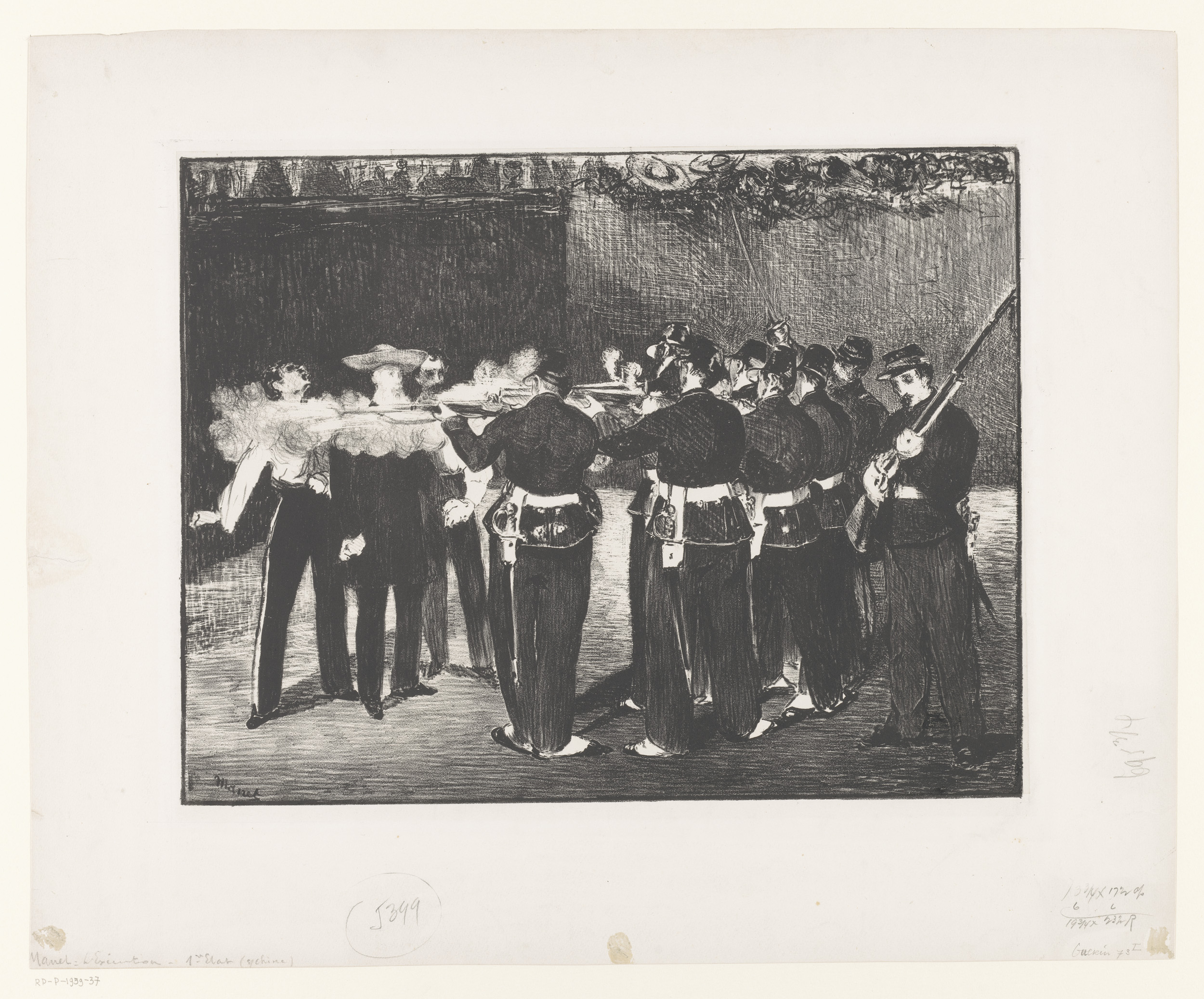
“The canvas doesn’t lie — it simply waits.” In the stillness of a moment, we confront the stark reality of decay and mortality, embodied in the events that unfold before our eyes. Focus on the center of the composition, where figures clad in dark garb converge around the lifeless body of the emperor. The sharp contrasts of light and shadow create a haunting atmosphere, accentuating the somber expressions and rigid postures. Notice how the background fades into an indistinct haze, heightening the emotional weight of the scene, while the somber palette of browns and blacks evokes a sense of foreboding that grips you.
As you delve deeper into the painting, you'll find the unsettling juxtaposition of human grief and historical inevitability. The raw tension between the onlookers’ expressions—some filled with anguish, others detached—reflects the moral complexities of justice and power. The ominous presence of the gallows at the edge of the scene looms large, symbolizing not just the end of a life but the decay of an entire regime, echoing the cyclical nature of history.
In 1868, Edouard Manet painted this work during a period marked by societal upheaval and artistic innovation in France. While grappling with his own struggles for recognition, he explored themes of societal decay and the human condition, reflecting the shifting tides of a world caught between tradition and modernity. This painting serves as a poignant reminder of the often brutal realities of power, captured through the lens of a masterful artist in his prime.