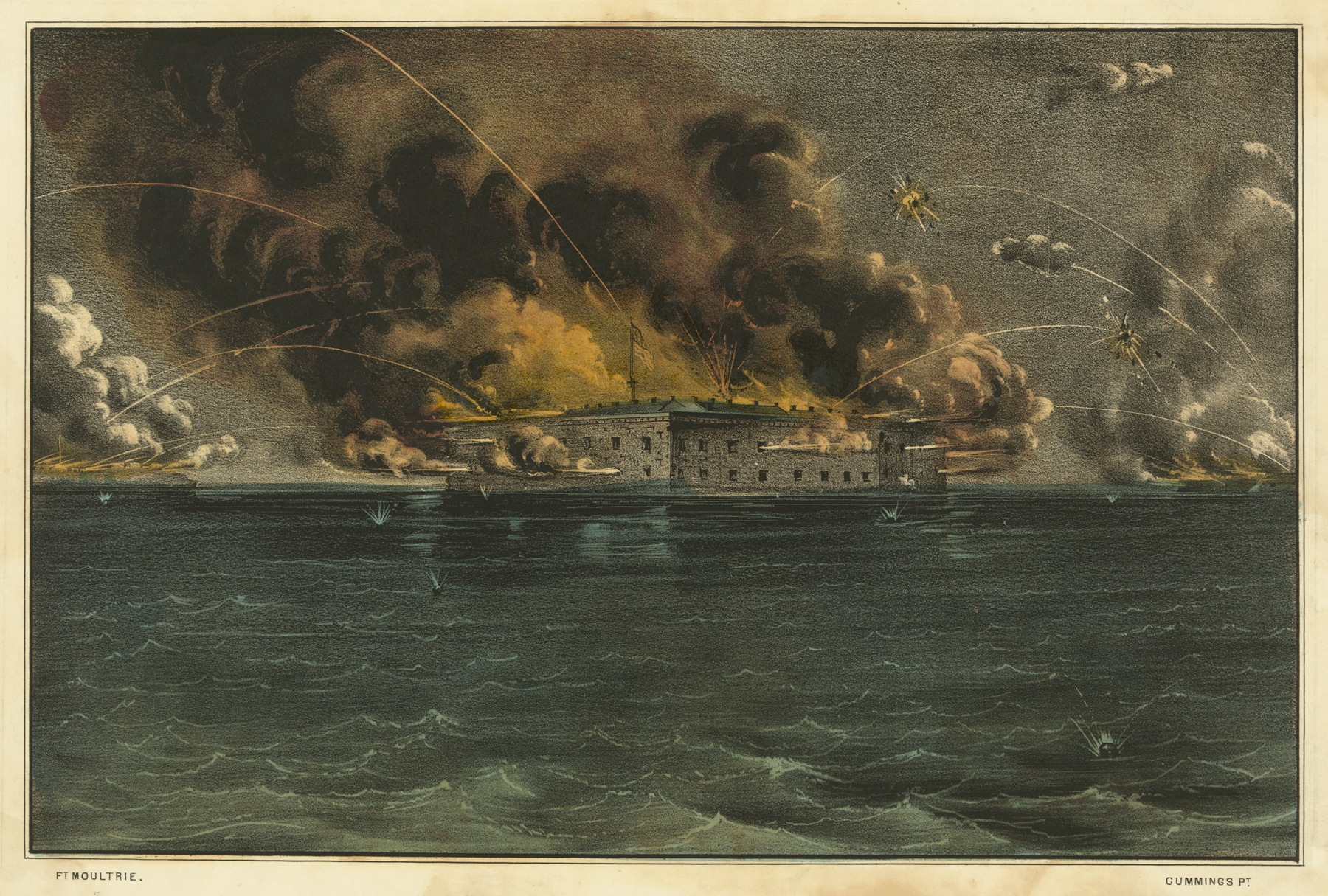
Bombardment of Fort Sumter, Charleston Harbor; 12th & 13th of April, 1861 — History & Analysis
Where does light end, and longing begin? The Bombardment of Fort Sumter, Charleston Harbor captures a moment where history and emotion intertwine, revealing the fragility of peace on the brink of war. Look to the foreground, where the fort stands resolute, silhouetted against an ominous sky. The meticulous detail of the cannons, their cold steel glinting in the fading light, draws the eye first. Notice how the smoke curls upward, mingling with the clouds, blurring the distinction between earth and sky, a visual metaphor for the chaos that war brings.
The composition balances tension with symmetry, as the bold colors of the cannons contrast sharply with the muted blues and greys of the sea, evoking a sense of foreboding. Beyond the immediate spectacle lies a deeper narrative. The contrasting elements of light and shadow reflect not only the physical conflict but also the emotional strife of a nation divided. The stark landscape serves as a canvas for the longing for unity, with each cannon blast echoing a cry for something lost.
In the distance, faint silhouettes of ships suggest an ever-looming presence, perhaps symbolizing the imminent arrival of chaos, as if the sea itself is holding its breath. In 1861, at a time when the United States was on the cusp of a Civil War, Currier & Ives captured this scene amidst a whirlwind of political tension. Operating out of New York, the printmakers aimed to document significant events of their time, leveraging the popularity of lithography to share history with a broad audience. This work stands as a poignant reminder of both the artistic spirit and the tumultuous reality of a nation facing its most defining conflict.