The Great East River Bridge. To connect the cities of New York & Brooklyn — History & Analysis
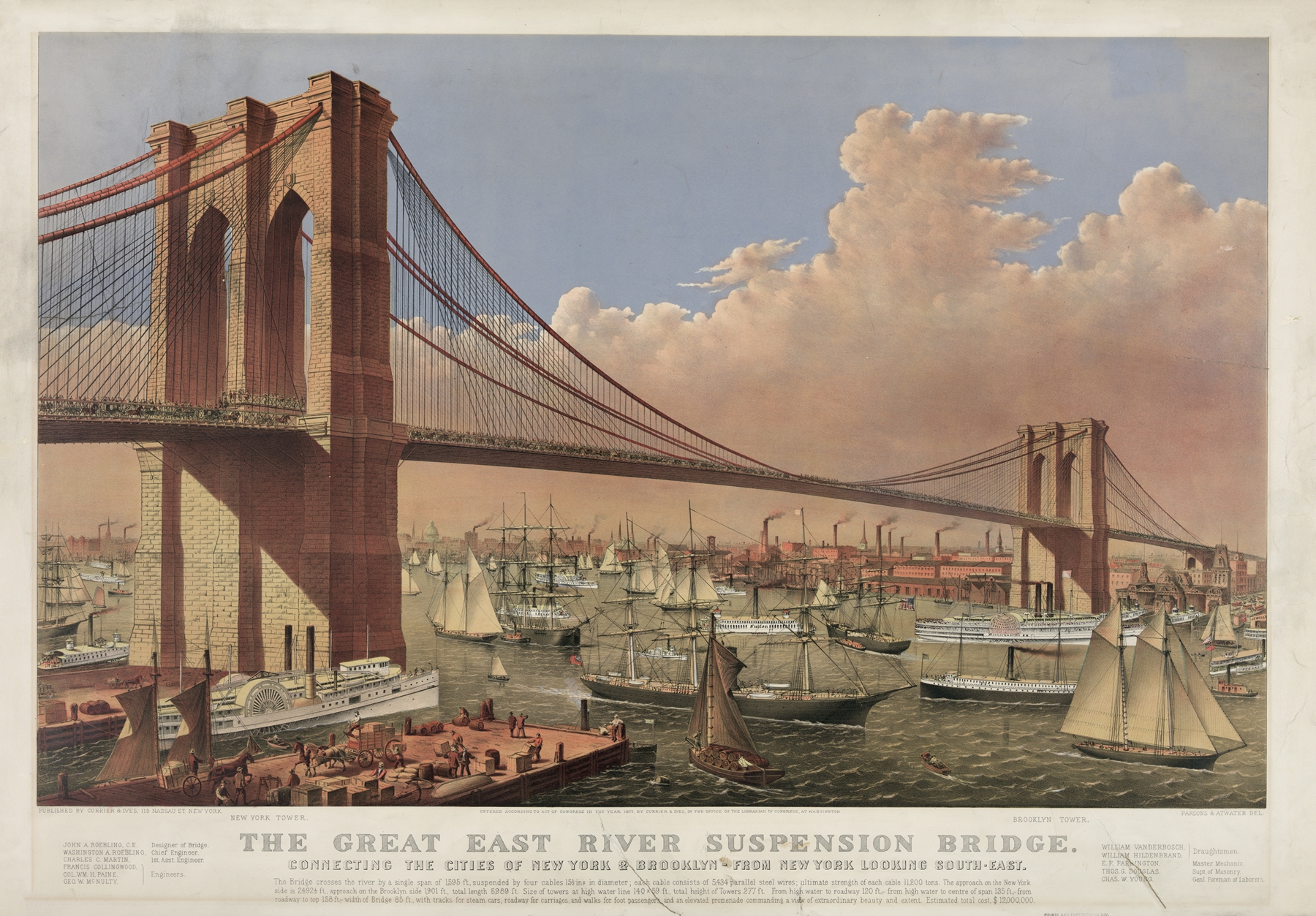
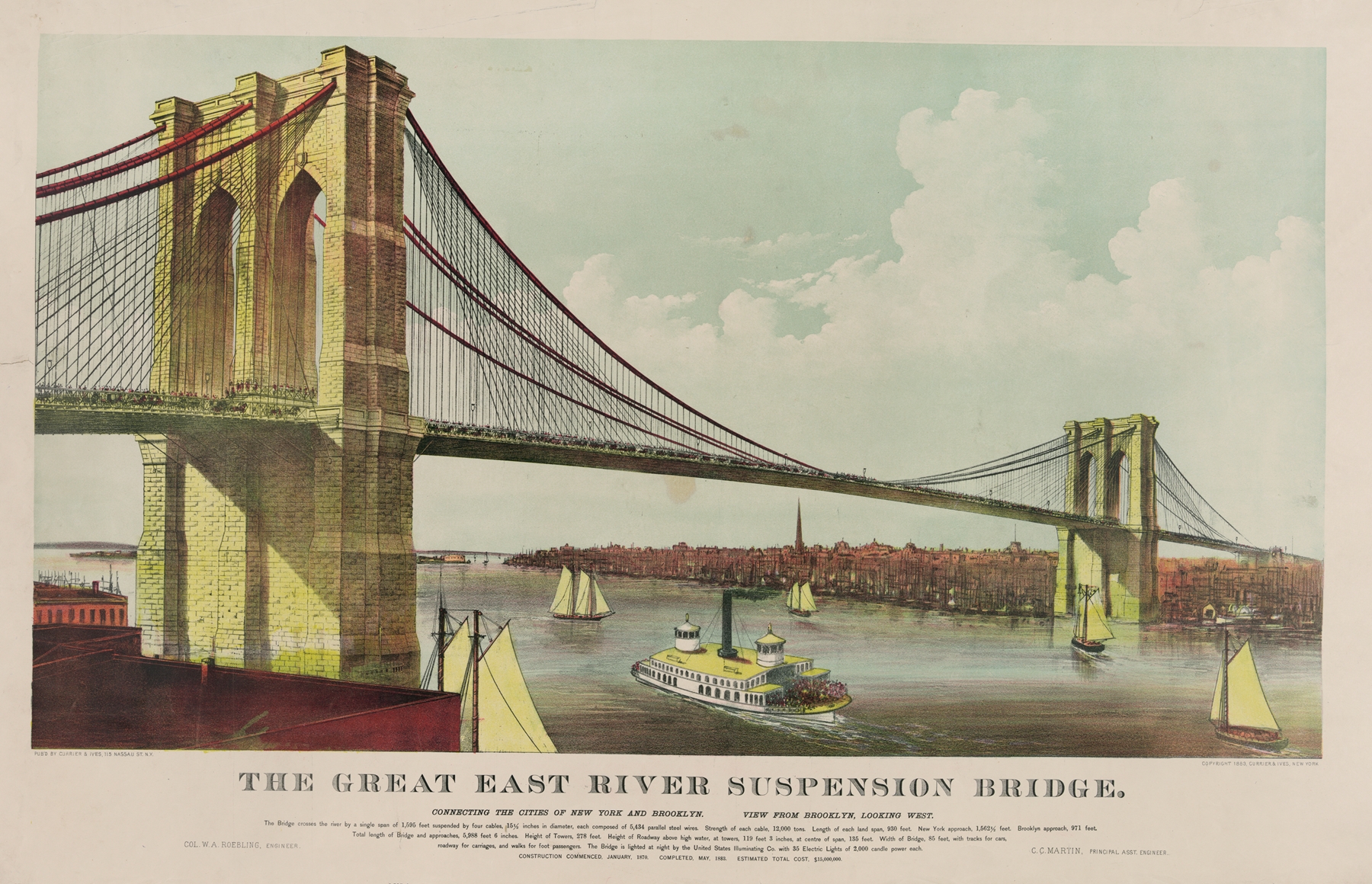
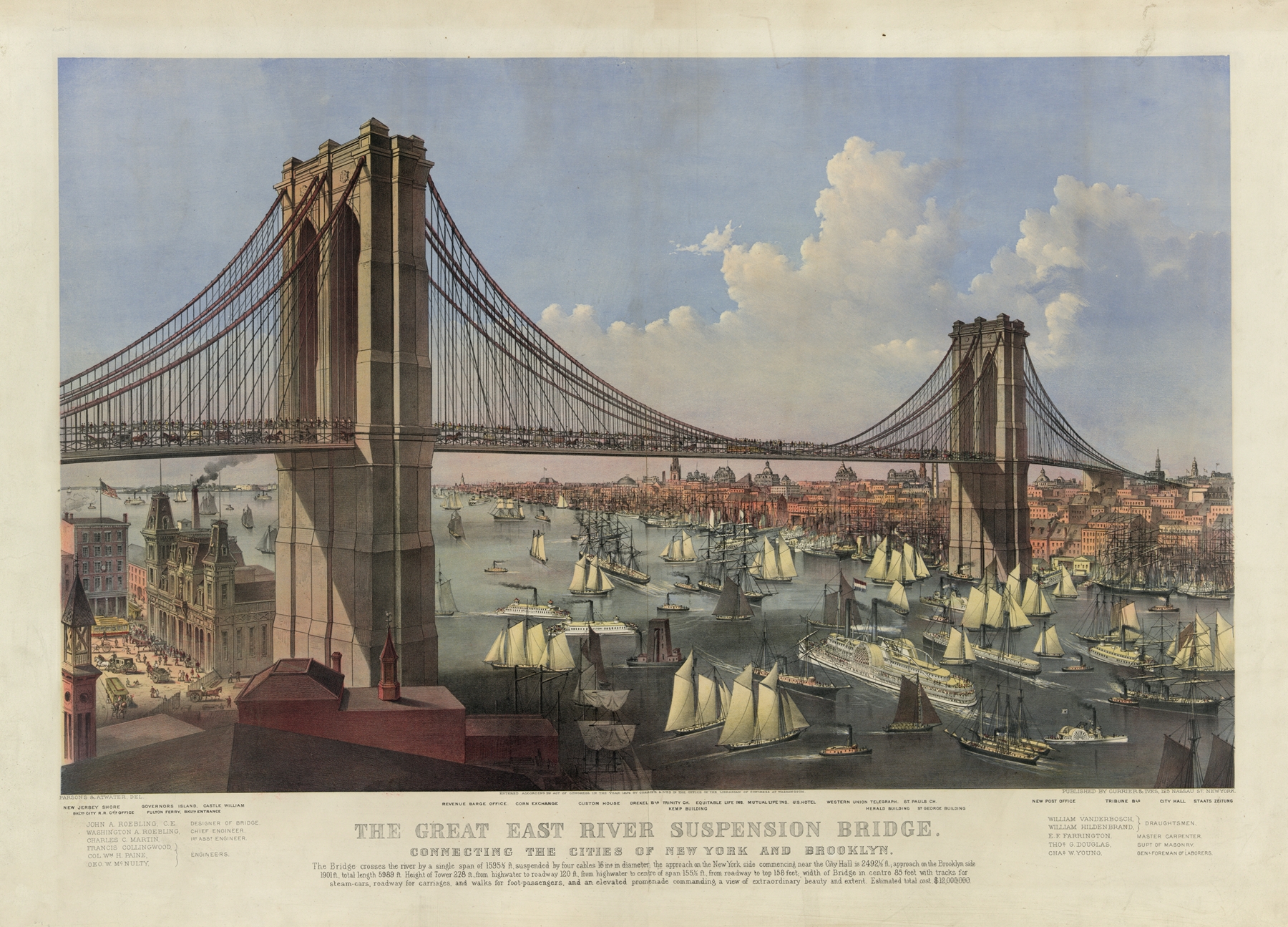
What if beauty was never meant to be finished? In the relentless pursuit of progress, a bridge becomes a symbol of both connection and obsession — a dream stretching across the East River. Look closely at the intricate details that define the composition. The sweeping curves of the bridge dominate the scene, inviting your gaze to traverse from one end to the other. Notice the rhythmic repetition of arches, each one meticulously crafted, reflecting the ambition of the time.
The palette of soft blues and muted earth tones harmonizes with the wispy clouds above, evoking a sense of hopeful potential, while the bustling figures below suggest the frenetic energy of two great cities yearning for unity. Yet, beyond its grandeur, the painting speaks to a deeper emotional tension. The bridge, an engineering marvel, also captures the fragility of human ambition, hinting at the challenges faced during its construction. The tiny boats navigating the water beneath represent both opportunity and risk, mirroring the duality of progress — the excitement of innovation tempered by the fear of failure.
This interplay of hope and anxiety encapsulates the era’s obsession with industrial advancement, forever balancing on the brink of success and collapse. Created in 1872, this work emerged during a transformative period for America, as urbanization and industrialization reshaped the landscape. Currier & Ives, a prominent printmaking firm, sought to capture the spirit of the nation through their vivid depictions of contemporary life. Amidst economic growth and social change, this piece stands as a testament to the era's aspirations, reflecting a society captivated by its own potential.