Der Ätna im Abendlicht — History & Analysis
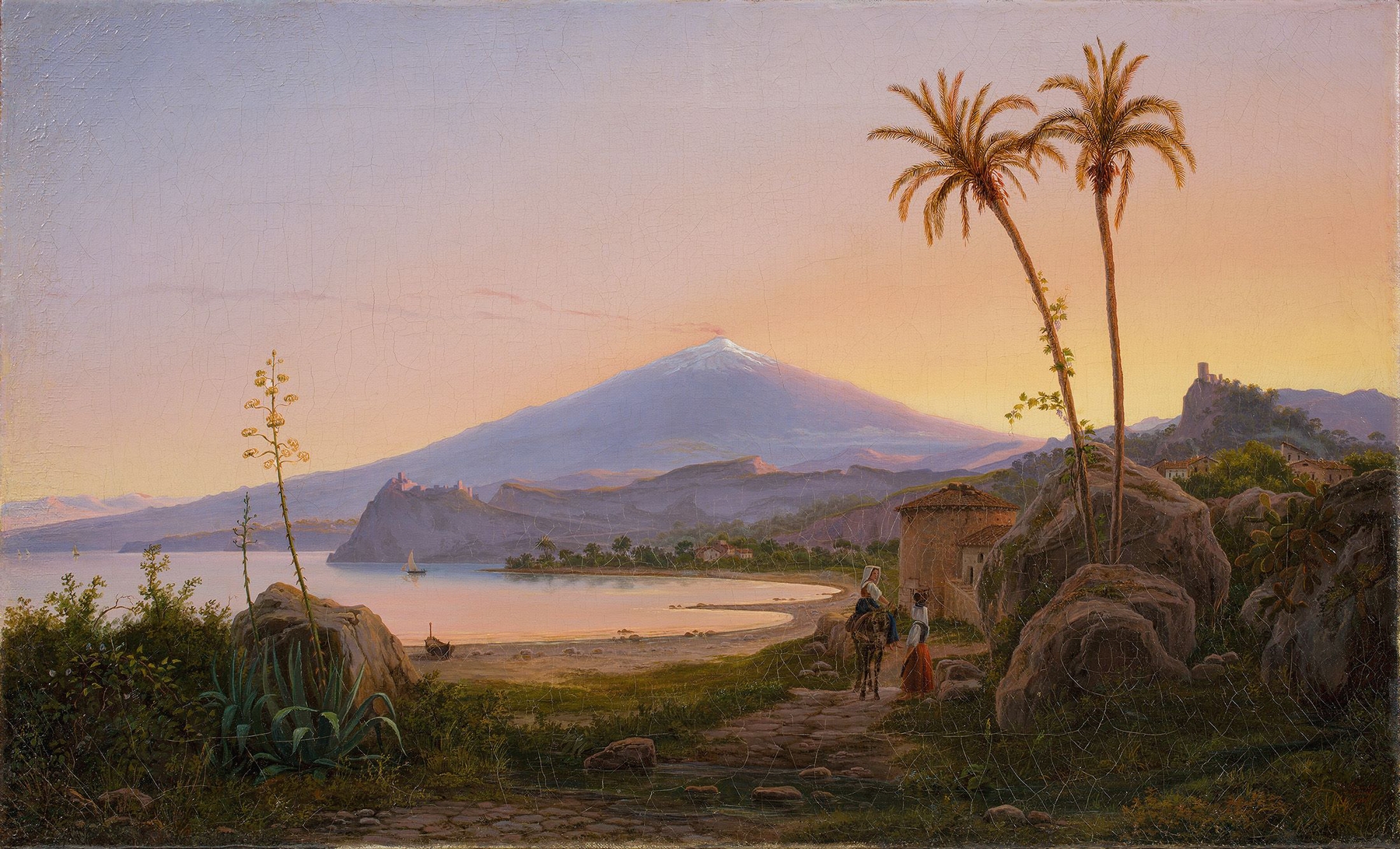
“Under the brush, chaos becomes grace.” In the delicate interplay of colors and forms, we find an invitation to reflect on the transient nature of beauty and the inevitable weight of loss. Look to the center, where the majestic silhouette of Mount Etna rises, its peak kissed by the setting sun. The warm hues of orange and yellow play in stark contrast to the cool blues of the sky, creating a vibrant tapestry that draws the eye. Notice how the soft strokes of the foreground foliage cradle the mountain, its rugged edges softened by the embrace of twilight.
The meticulous detailing of the clouds reveals the artist’s mastery of light, each stroke evoking an ethereal quality that hovers between reality and reverie. Amidst the luminous beauty, there lies a profound sense of melancholy. The juxtaposition of the volcano, a symbol of potential destruction and rebirth, speaks to the duality of nature. The fading daylight mirrors the fleeting moments we hold dear, suggesting an impending loss of warmth as night approaches.
Additionally, the serene landscape contrasts with the chaotic eruptions that Etna is known for, hinting at the unpredictability of life itself. Eugène von Guérard painted this piece in 1839 during his travels in Italy, a time when Romanticism flourished, celebrating nature's grandeur and its emotional resonance. At this point in his career, he was deeply influenced by the sublime landscapes of his surroundings, striving to capture both beauty and the underlying turmoil of nature. His experiences in this vibrant artistic climate shaped his vision, allowing him to transform the chaos of natural phenomena into a graceful contemplation of existence.