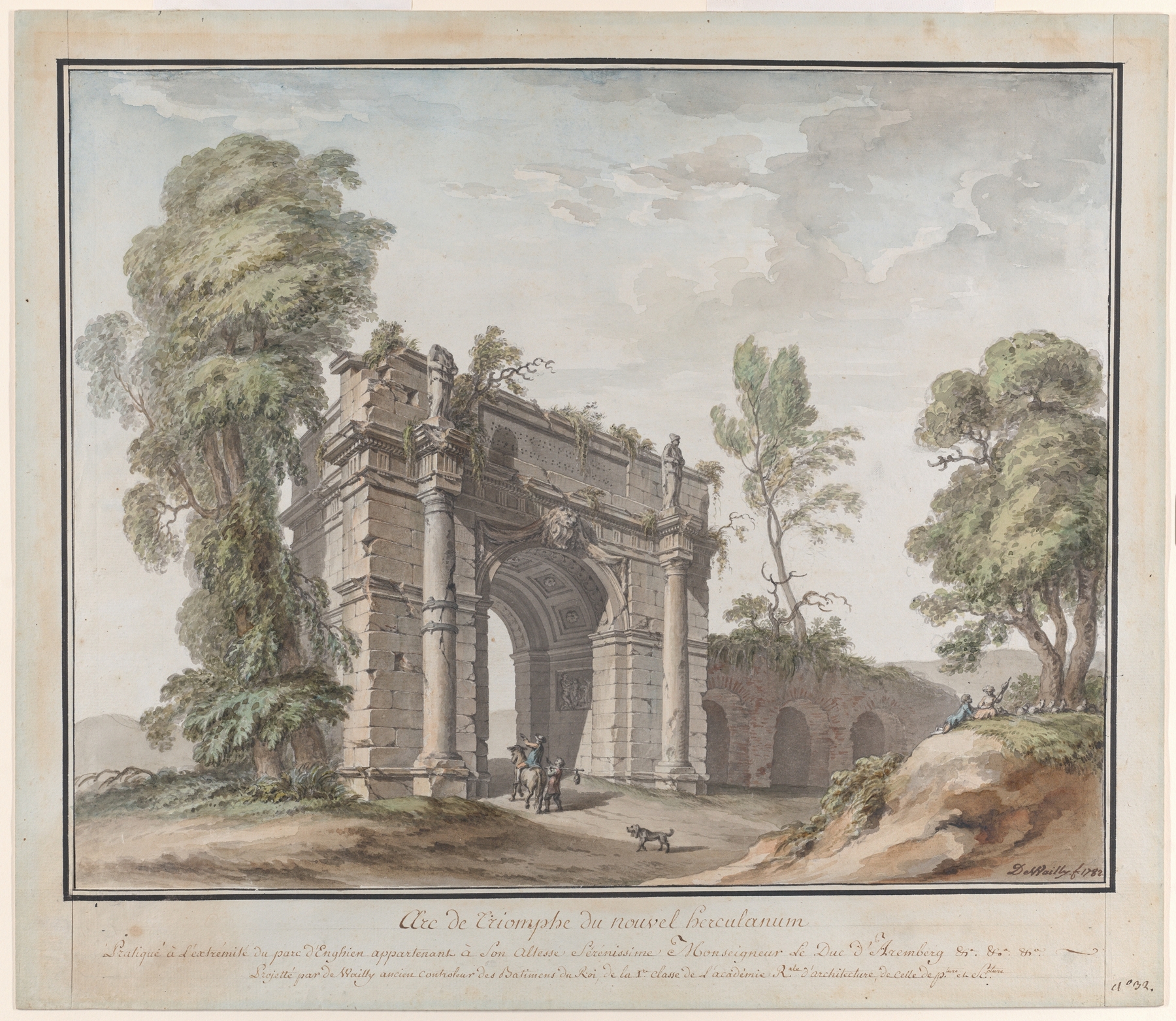
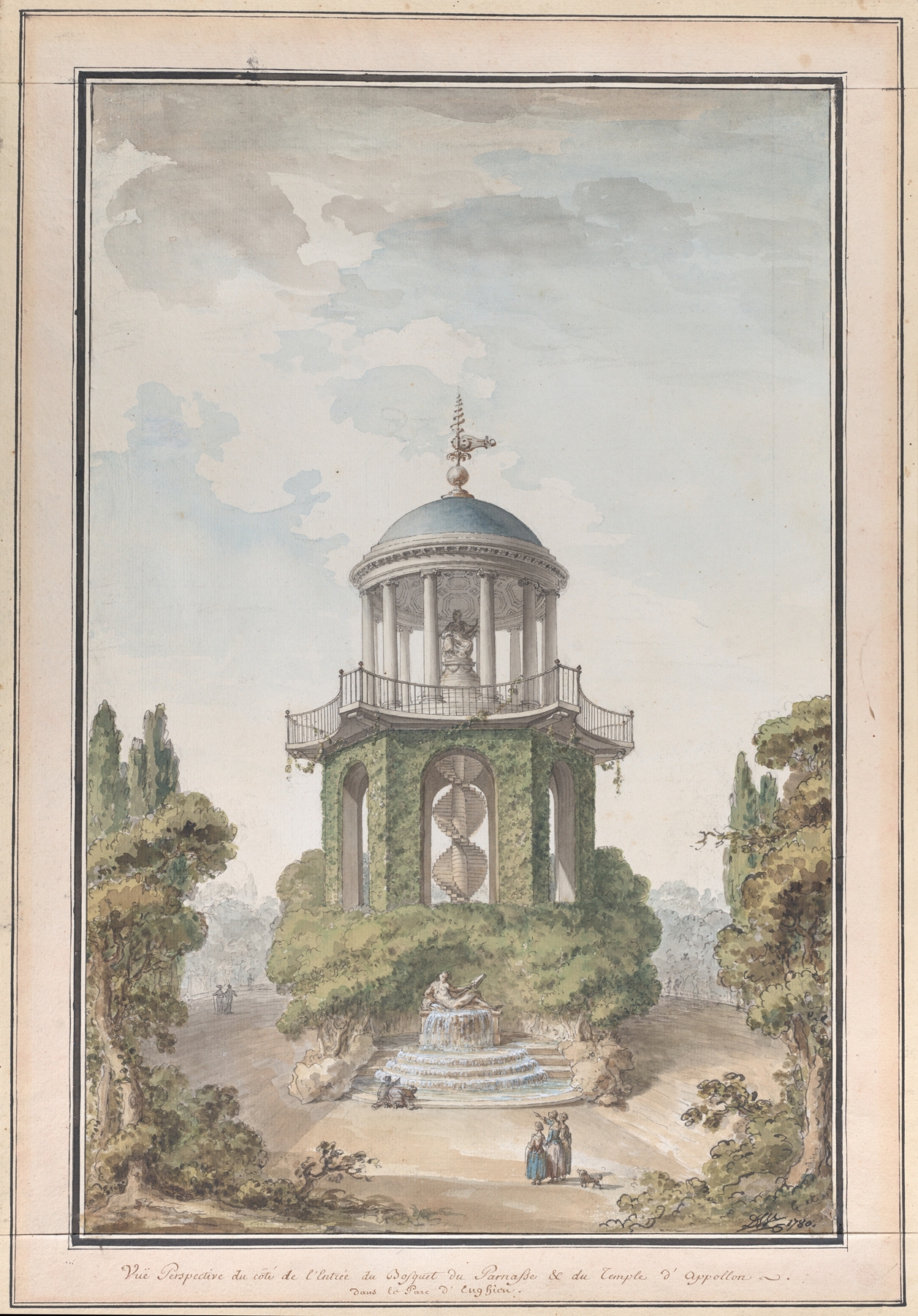
Design for a Naumachia, in the gardens at Chateau d’Enghien, Belgium — History & Analysis
In a sun-drenched garden, vibrant greenery encircles a grand arena of water, where the joyous laughter of children mingles with the whispers of the breeze. The serene reflections on the surface of the water dance as enthusiastic figures, clad in ancient Roman attire, engage in a playful mimicry of naval battles. Light spills across the scene, illuminating the innocence of youth amidst the grandeur of the classical design, creating a moment that feels suspended between history and fantasy. Look to the foreground at the meticulously crafted amphitheater, where tiered seating invites spectators to witness the spectacle.
Notice the delicate architecture that frames the scene, with its elegant columns and intricately designed arches, all rendered in a palette of pastel hues that evoke a sense of warmth and nostalgia. The composition balances nature and man-made beauty, inviting the viewer to explore the harmonious relationship between the two. Beneath the surface of this idyllic recreation lies an exploration of innocence intertwined with the echoes of grander battles. The contrast of playful engagement against the backdrop of historical significance suggests a yearning to capture fleeting moments of joy, while the water itself—a symbol of both life and death—hints at the duality of existence.
The vibrant energies of the figures reflect not only youthful vigor but also the ephemeral nature of play, reminding us of the purity found in these brief moments. In 1782, Charles de Wailly created this design during a period when neoclassicism was in full bloom, emphasizing the revival of ancient ideals. Living in France during the dawn of political upheaval, his work reflected an aspiration for beauty and order amidst a changing world. Influenced by his travels and the rich history surrounding him, de Wailly's innovative design techniques used in this piece demonstrated his commitment to merging art with architecture, leaving a lasting imprint on European garden design.