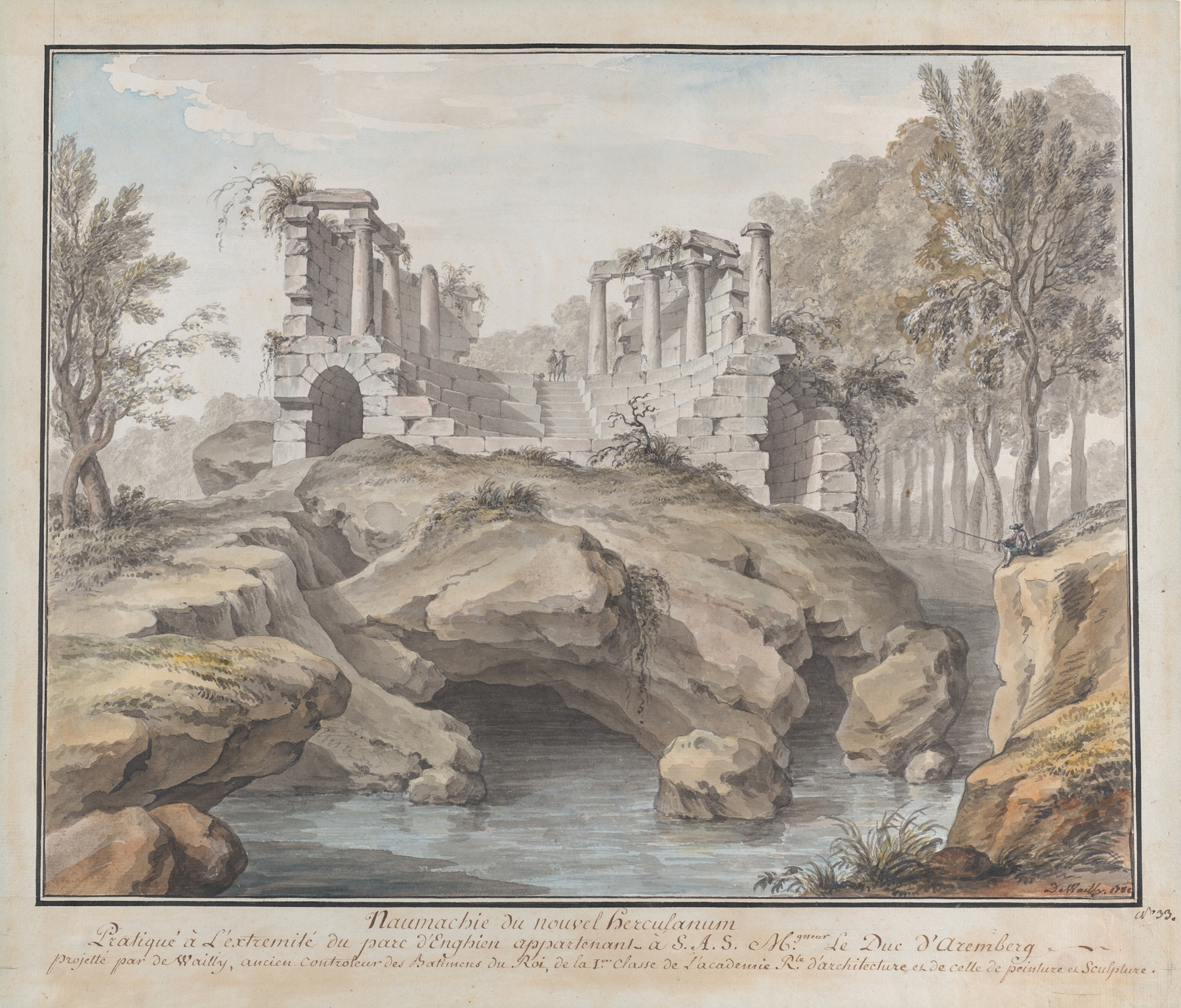
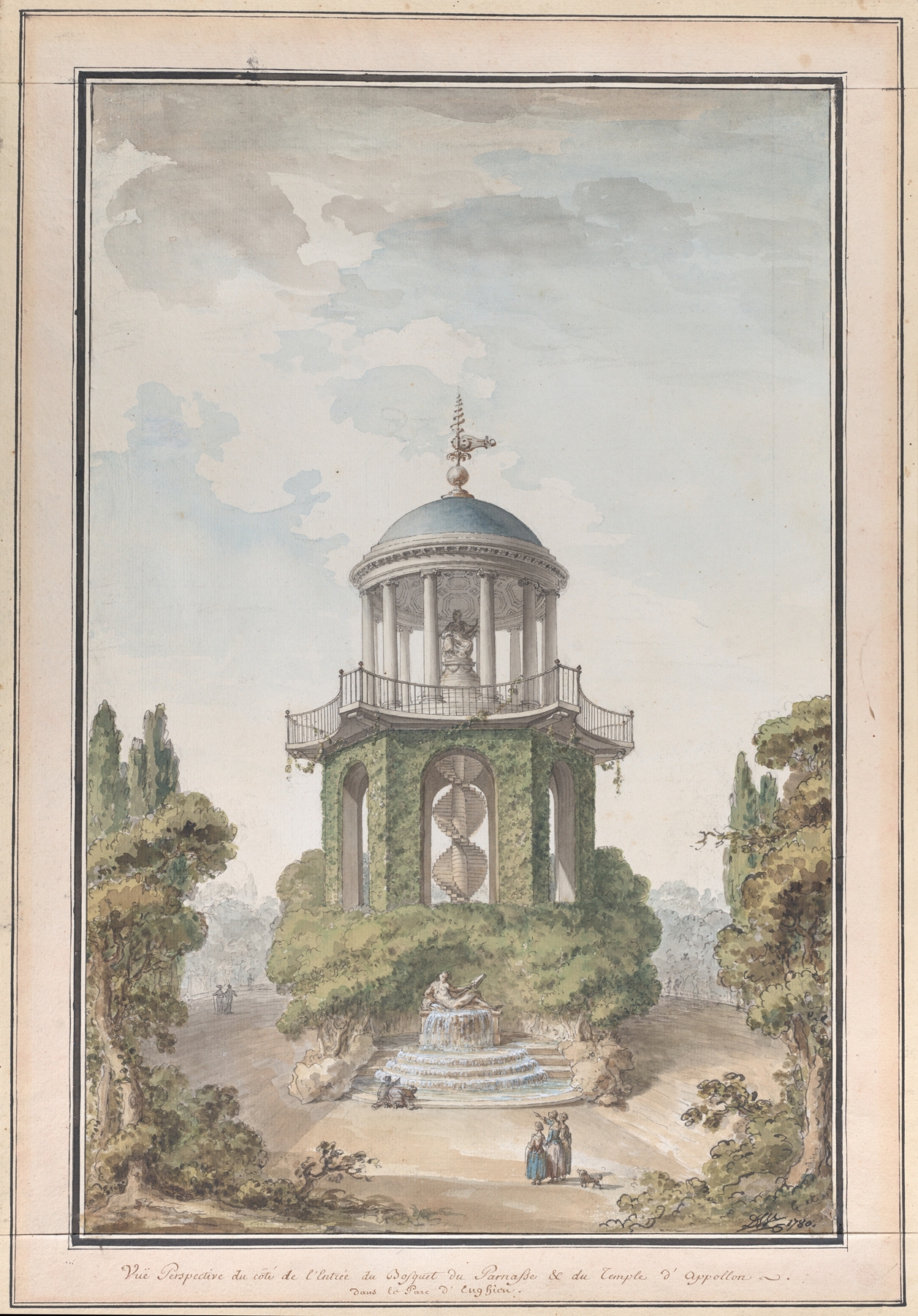
Design for a Triumphal Arch for the Gardens at Chateau d’Enghien, Belgium — History & Analysis
Beneath a sky brushed with the soft hues of dawn, a grand archway stands poised at the threshold of the gardens. The air is thick with anticipation, and the faint sound of footsteps echoes as nobles and dignitaries gather, their silks and satins shimmering in the early light. Sunlight cascades through the delicate columns, casting elegant shadows that dance along the cobblestones, as if heralding a new era of elegance and grandeur. Look to the right at the intricate carvings that adorn the arch’s façade. Each motif tells a story, rich with history and aspiration, inviting the eye to trace the delicate lines of flora and fauna.
Notice how the light falls upon the perfect symmetry of the structure, highlighting the harmonious proportions that reflect the ideals of neoclassicism. The use of soft pastels against the stone creates a sense of tranquility, balancing the imposing nature of the arch with an air of majesty. As you delve deeper, the juxtaposition of nature and artifice reveals an underlying tension. The arch serves not only as a gateway but as a monument to triumph and fleeting legacy, celebrating both human achievement and the natural beauty that surrounds it.
The figures of cherubs, poised in celebration, remind us of the transient nature of joy, as history marches onward, leaving behind both memory and the weight of expectation. In 1782, when the design for this monumental arch was conceived, Charles de Wailly was immersed in the bustling artistic environment of France. Influenced by the Enlightenment's ideals, he sought to blend beauty and functionality in his structures, reflecting the taste of an aristocracy eager to leave a lasting legacy. The gardens at Chateau d’Enghien, a symbol of luxury and power, became the perfect canvas for his vision, embodying the spirit of an era on the brink of transformation.