Die Wasserfälle von Terni — History & Analysis
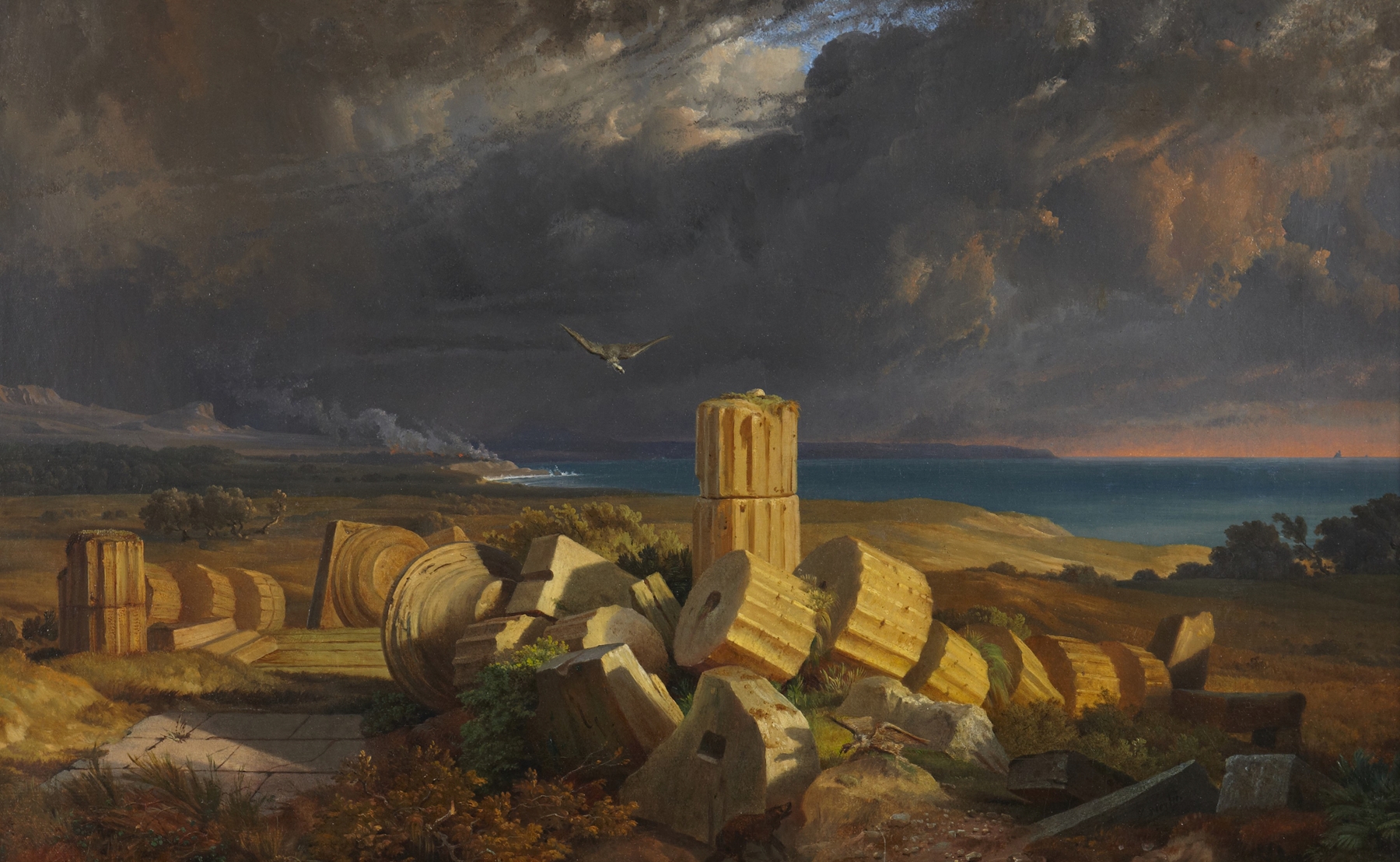
What secret hides in the quiet of the canvas? Beyond the cascading waterfalls, a profound sense of emptiness lingers, inviting contemplation and yearning. Look to the left at the sweeping arcs of water tumbling gracefully over rugged rocks, their movement captured with both fluidity and precision. The artist employs a muted color palette, emphasizing the cool blues and silvery grays of the water, while warm earth tones ground the scene, creating a stark contrast.
Notice how the light filters through the mist, reflecting a soft glow that illuminates the surrounding foliage, enhancing the ethereal quality of the landscape. Delve deeper into the painting's emotional core, where solitude emerges from the beauty of nature. The tranquil scene suggests a fleeting moment suspended in time, evoking feelings of isolation amidst grandeur. Each element—the towering cliffs, the rushing water, and the delicate trees—whispers of a fragile harmony, yet hints at an unseen tension, a longing that transcends the picturesque.
In 1834, while Friedrich von Nerly painted this serene landscape, he found himself in a Europe undergoing rapid change, as Romanticism began to flourish. Living in Italy, he was influenced by the sublime beauty of the environment around him, capturing not just the physical landscape but also the emotional resonance of nature. His works often reflected a deep introspection, portraying nature as both a refuge and a mirror to the human soul’s complexities.