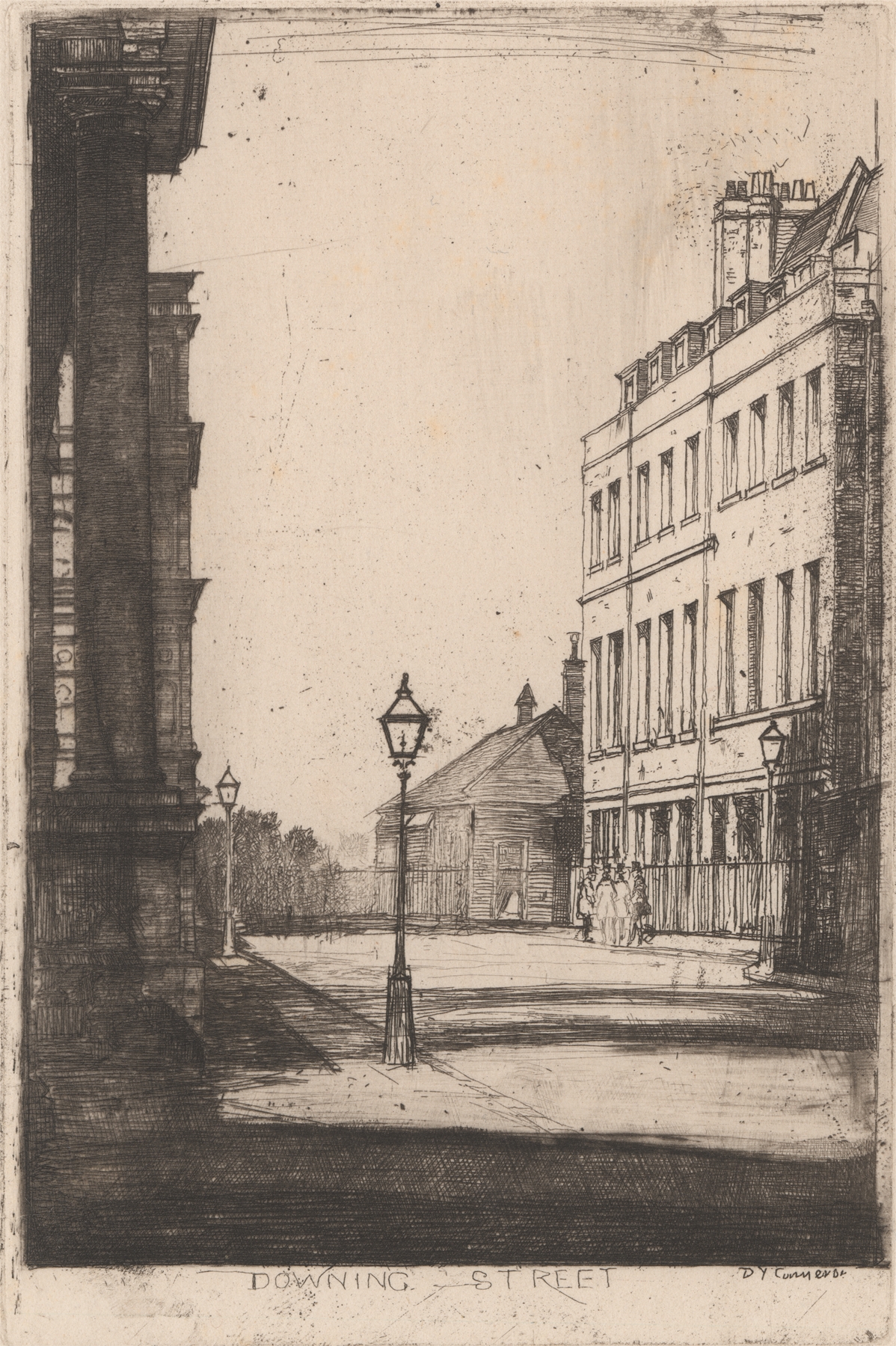
“Sometimes beauty is just pain, disguised in gold.” This profound sentiment encapsulates the essence of longing that permeates the canvas before us. Focus on the intricate play of light and shadow across the buildings. The soft glow that bathes the façade of Downing Street draws the eye, revealing the delicate details in the brickwork and iron railings. Notice how the color palette, with its muted earth tones, evokes a sense of nostalgia, inviting the viewer to linger in a moment suspended in time. The gentle contrasts highlight the scene's architectural elegance while hinting at the deeper emotional currents flowing beneath the surface. As you explore the painting further, subtle signs of life emerge: a solitary figure appears in the lower right corner, a reminder of human presence amidst the grandeur. This figure, almost lost within the surrounding architecture, embodies solitude and yearning, an embodiment of personal aspirations intertwined with the weight of history. The juxtaposition of the imposing structure and the diminutive human form speaks to a universal sense of longing, evoking the bittersweet nature of ambition and the isolation it can bring. In 1899, David Young Cameron was immersed in the vibrant art scene of Scotland, experiencing a resurgence of interest in Impressionism. His works from this period reflect both technical mastery and a deep emotional resonance, rooted in personal history and the socio-political climate of the time. Through *Downing Street*, he captures not only a physical space but also the intangible feelings that resonate within it, weaving a narrative that echoes beyond the canvas.