E. T. Compton – Gorge in the Bernina Pass — History & Analysis
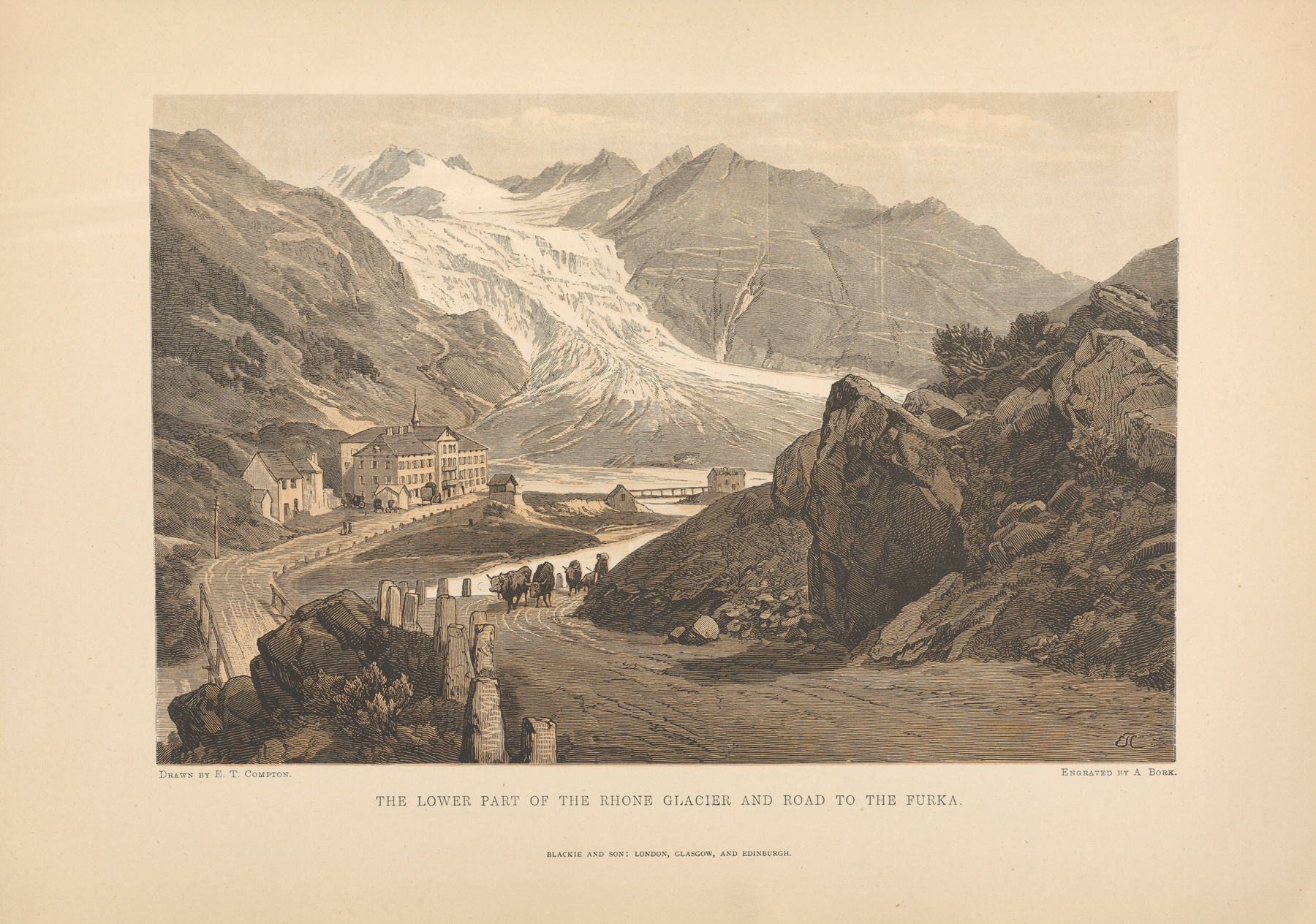
When did color learn to lie? In Gorge in the Bernina Pass, one is confronted with the deceptive beauty of a landscape where the vibrancy of nature masks the inevitability of decay. Look closely at the sweeping expanse of the canvas, where the jagged peaks rise dramatically against a cerulean sky. Direct your gaze to the left; observe how the sunlight dances upon the rocky surfaces, illuminating their textures with shades of ochre and grey. The cool blues of the shadowed valleys contrast starkly with the warm hues of the sun-kissed cliffs, creating a visual tension that invites you deeper into the scene.
The artist's brushwork captures not just the physicality of the landscape but its ephemeral essence, offering a moment frozen in time. Yet, hidden within this idyllic setting are whispers of decay. The crumbling rocks and the unyielding cliffs suggest that even the mightiest of nature's wonders are subject to erosion and change. The interplay of light and shadow serves as a reminder that beauty is often inextricably linked to impermanence.
With each glance, the viewer contemplates the fragility of this landscape, pondering how time quietly unfurls, even in the most majestic of places. In 1881, Theodor Gsell Fels painted this mesmerizing scene while immersed in the artistic fervor of Switzerland's natural beauty. At this time, artists were increasingly drawn to the interplay of light and color, seeking to capture fleeting moments in a rapidly modernizing world. The work reflects both a personal exploration of landscape and the broader movement toward Impressionism, capturing a moment that resonates with the themes of transience and decay.