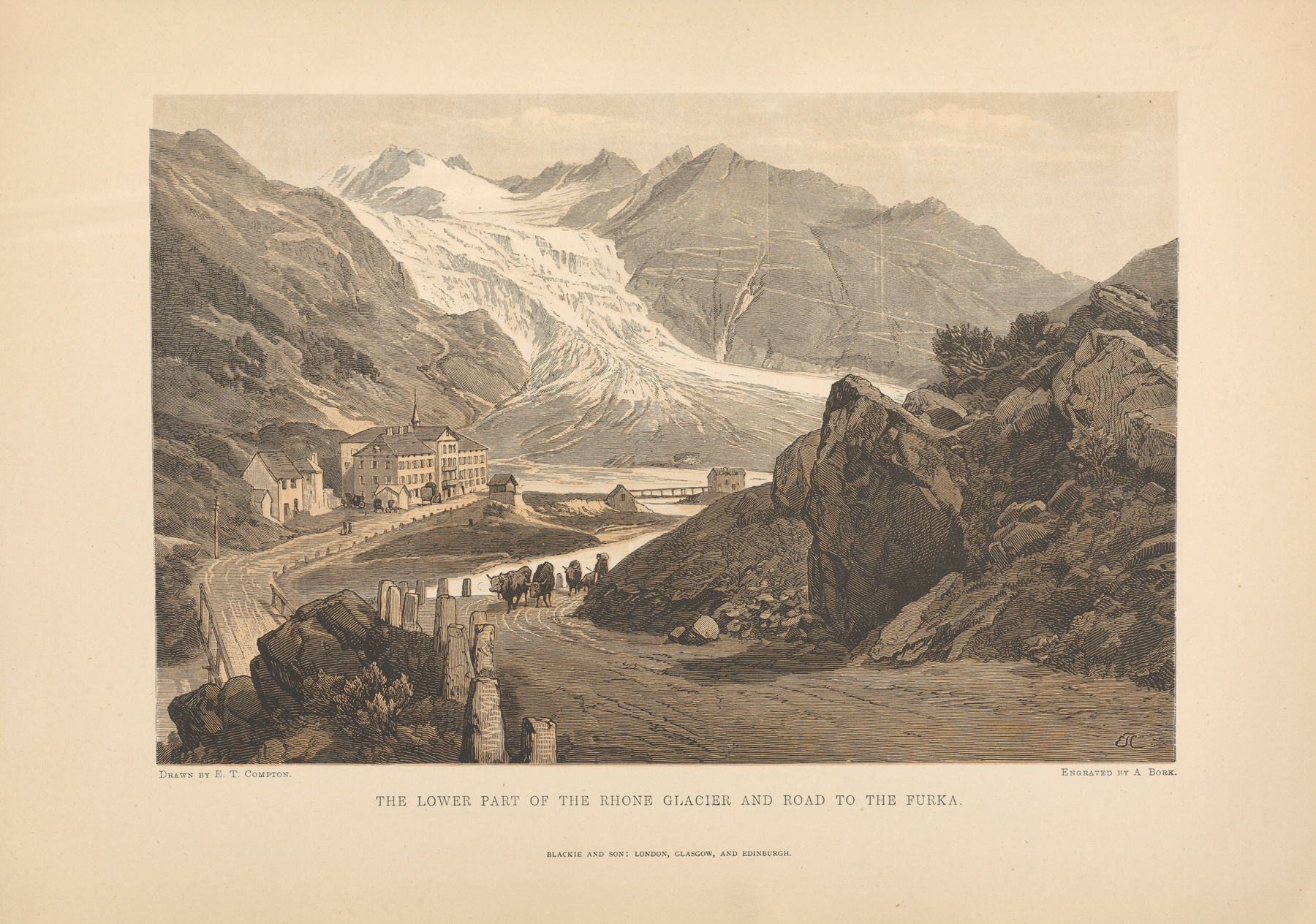
E. T. Compton – The Rosenlaui Glacier, between the Wellhorn and the Engelhorns — History & Analysis
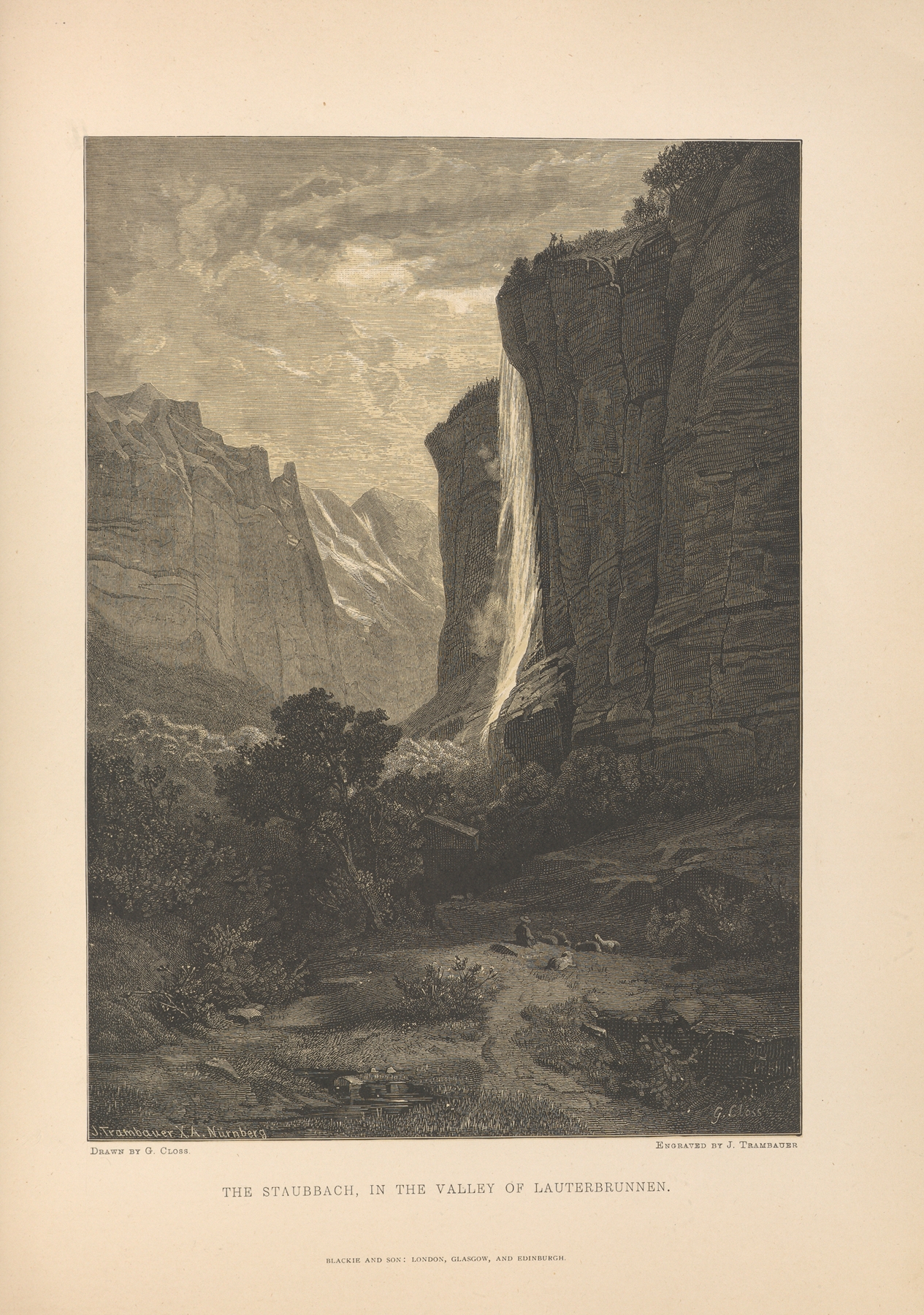
Is this a mirror — or a memory? The work invites you into a moment frozen in time, where the grandeur of nature meets the delicate touch of human contemplation. Look to the left at the towering peaks, their jagged silhouettes etched against a pale sky. Notice how the soft blues and whites blend seamlessly in the glacier, creating a chilling yet beautiful serenity.
The brushstrokes evoke the rugged texture of the rock faces, while a gentle gradient of light teases the edges, suggesting both dawn and dusk; a moment caught between endings and beginnings. There’s an emotional tension wrapped in the vastness of the landscape — the majestic mountains stand as guardians of time, while the expansive glacier seems to beckon with a bittersweet allure. The interplay of light and shadow draws you in, prompting reflections on the passage of time and the weight of solitude. Each fold and crevice in the ice holds whispers of history, evoking a longing for connection amid the grandeur of the natural world.
Theodor Gsell Fels painted this work in 1881, a time when the Romantic movement was giving way to a new appreciation for realism and nature in art. Situated in the Swiss Alps, he sought to capture not just the physical beauty of the glaciers but also the emotional depth they inspire. Fels was influenced by the exploration spirit of the era, showcasing the raw power of the landscape while reflecting personal introspections on the human experience within it.