Ely Cathedral — History & Analysis
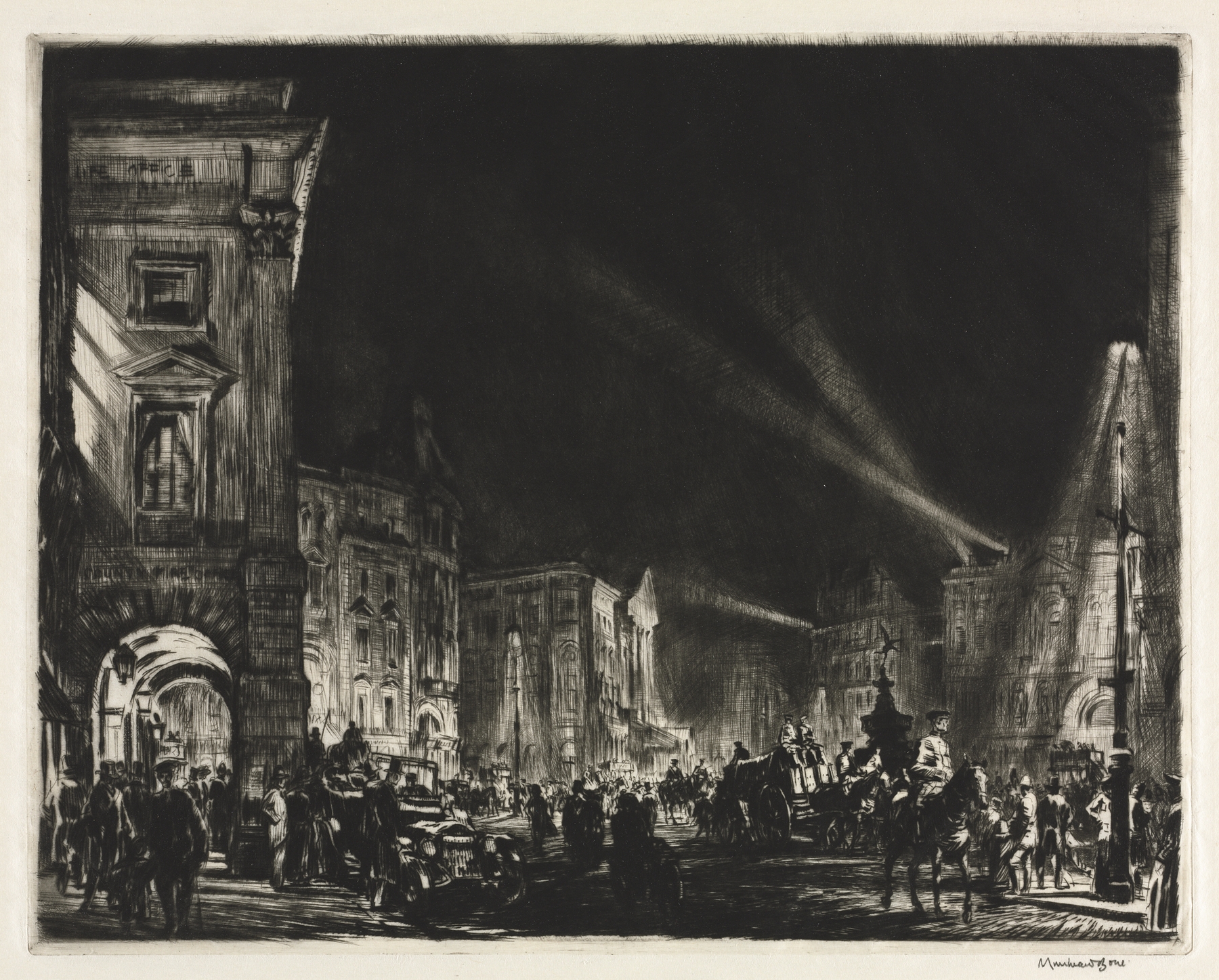
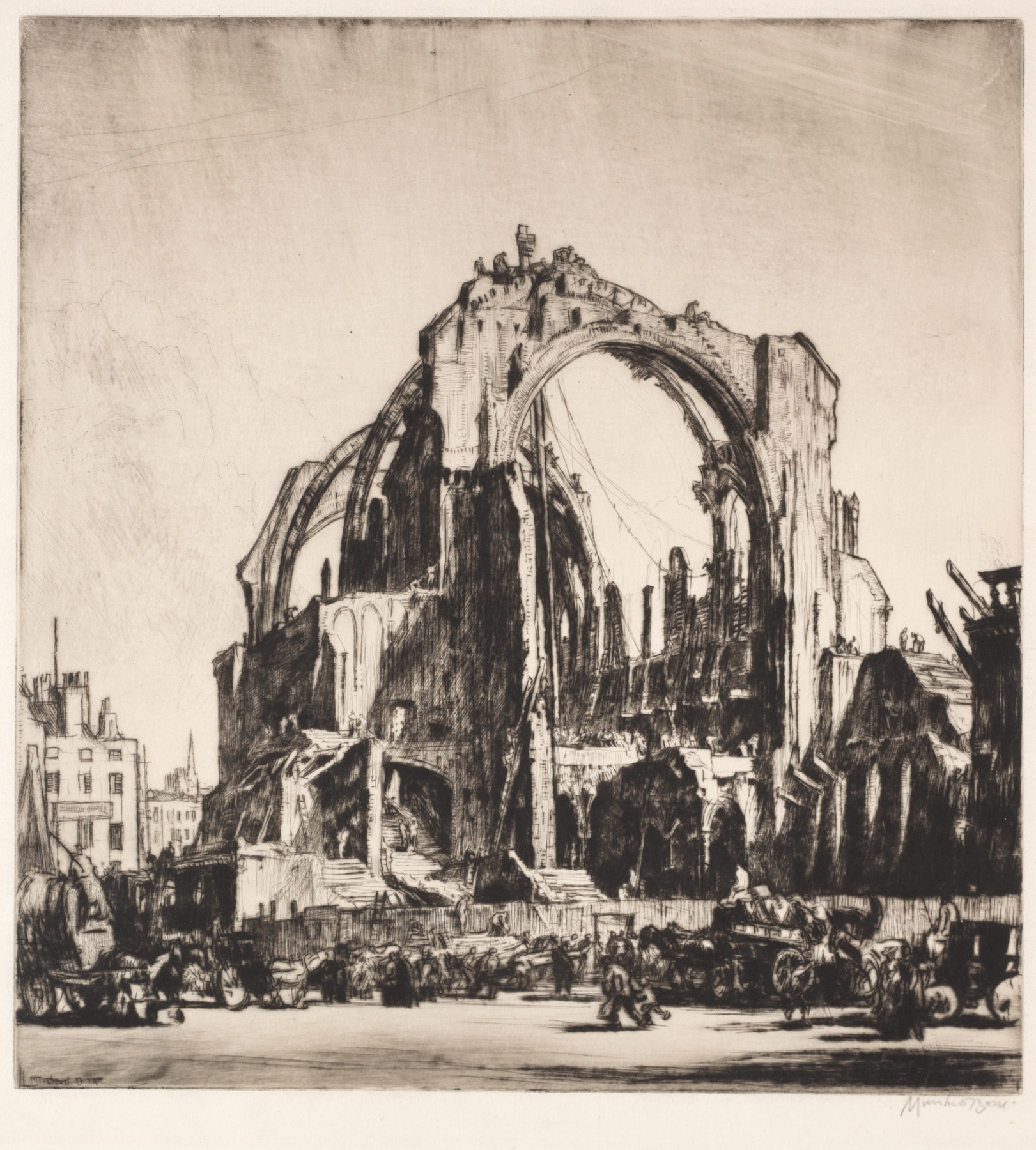
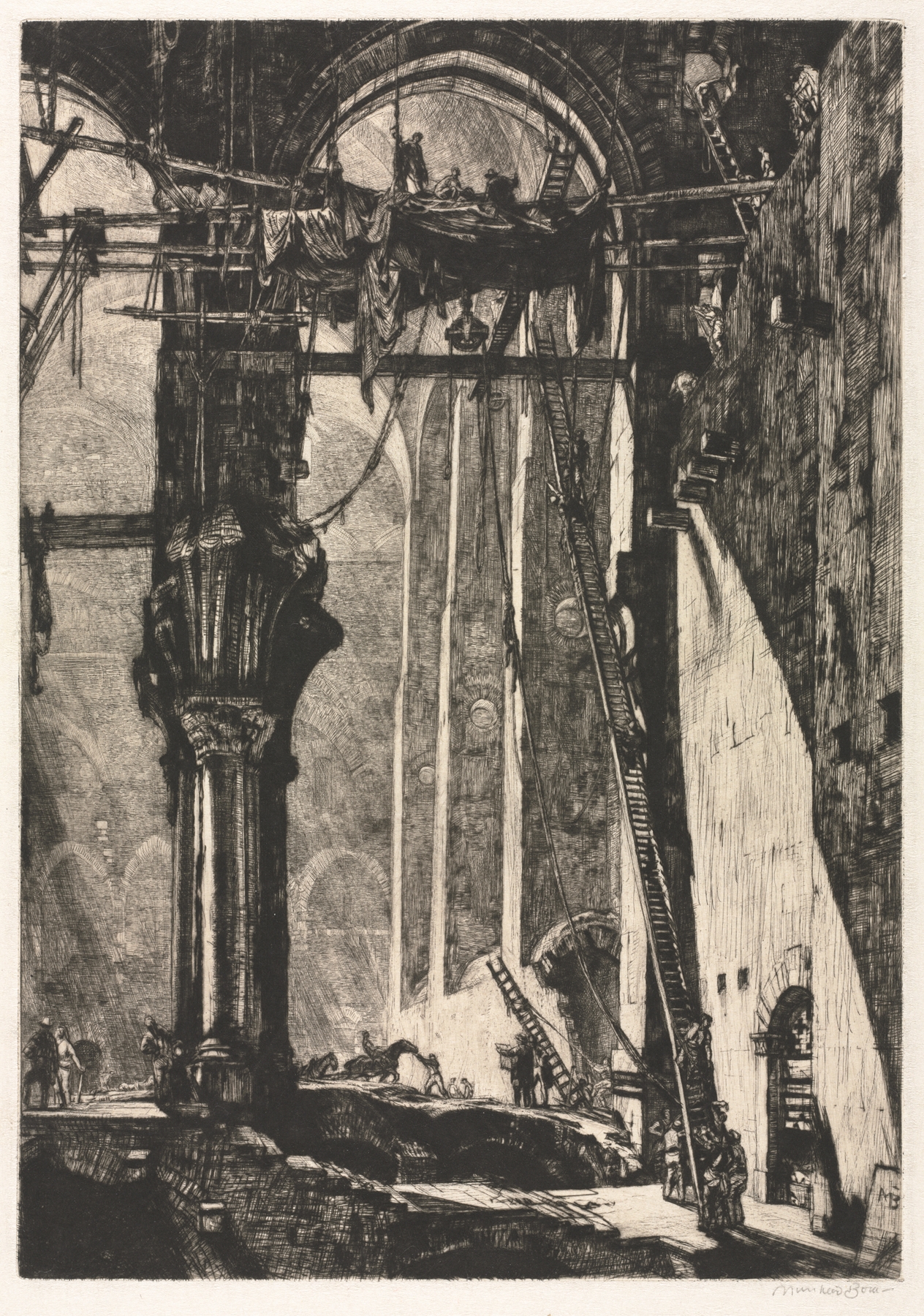
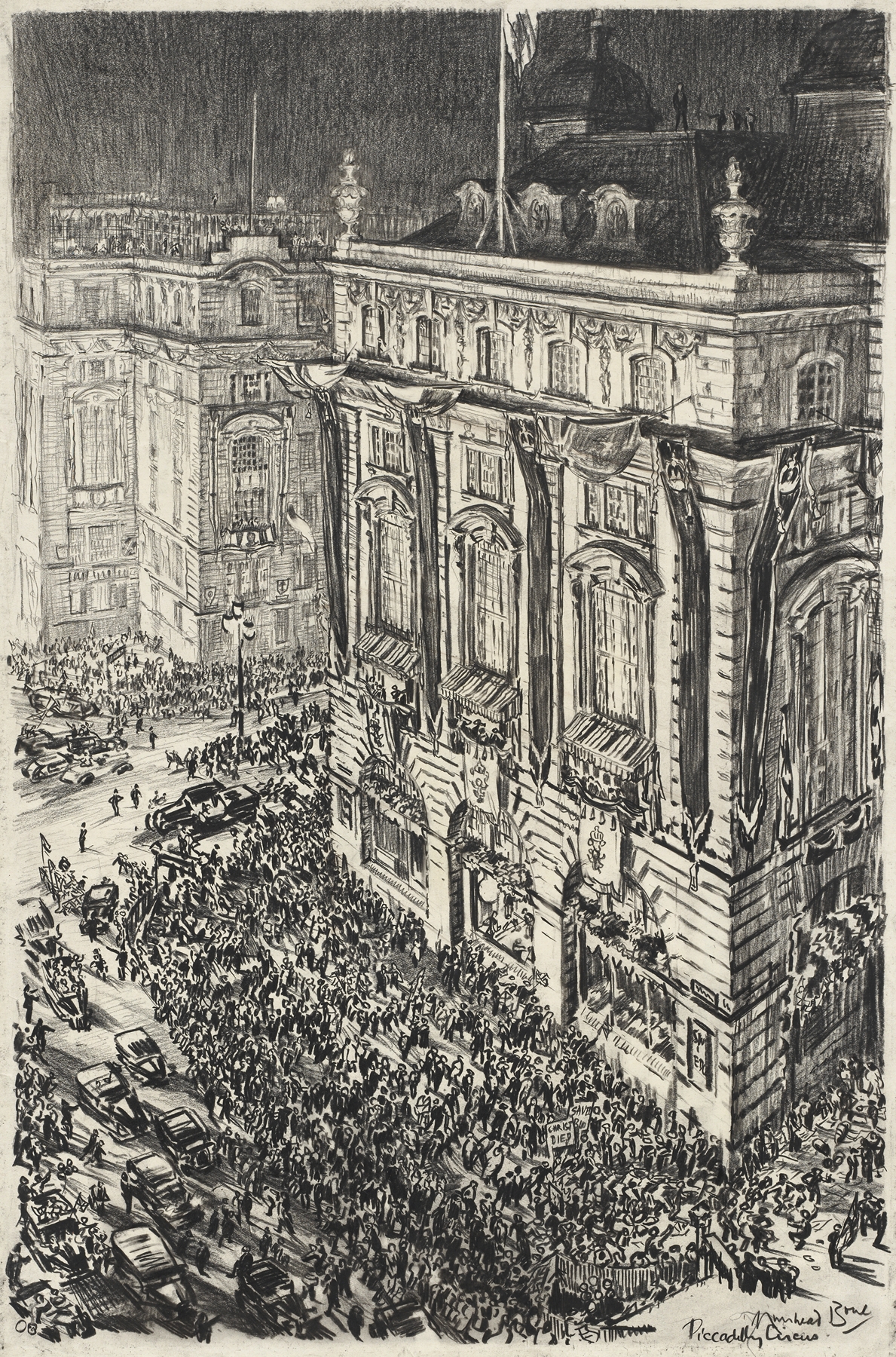
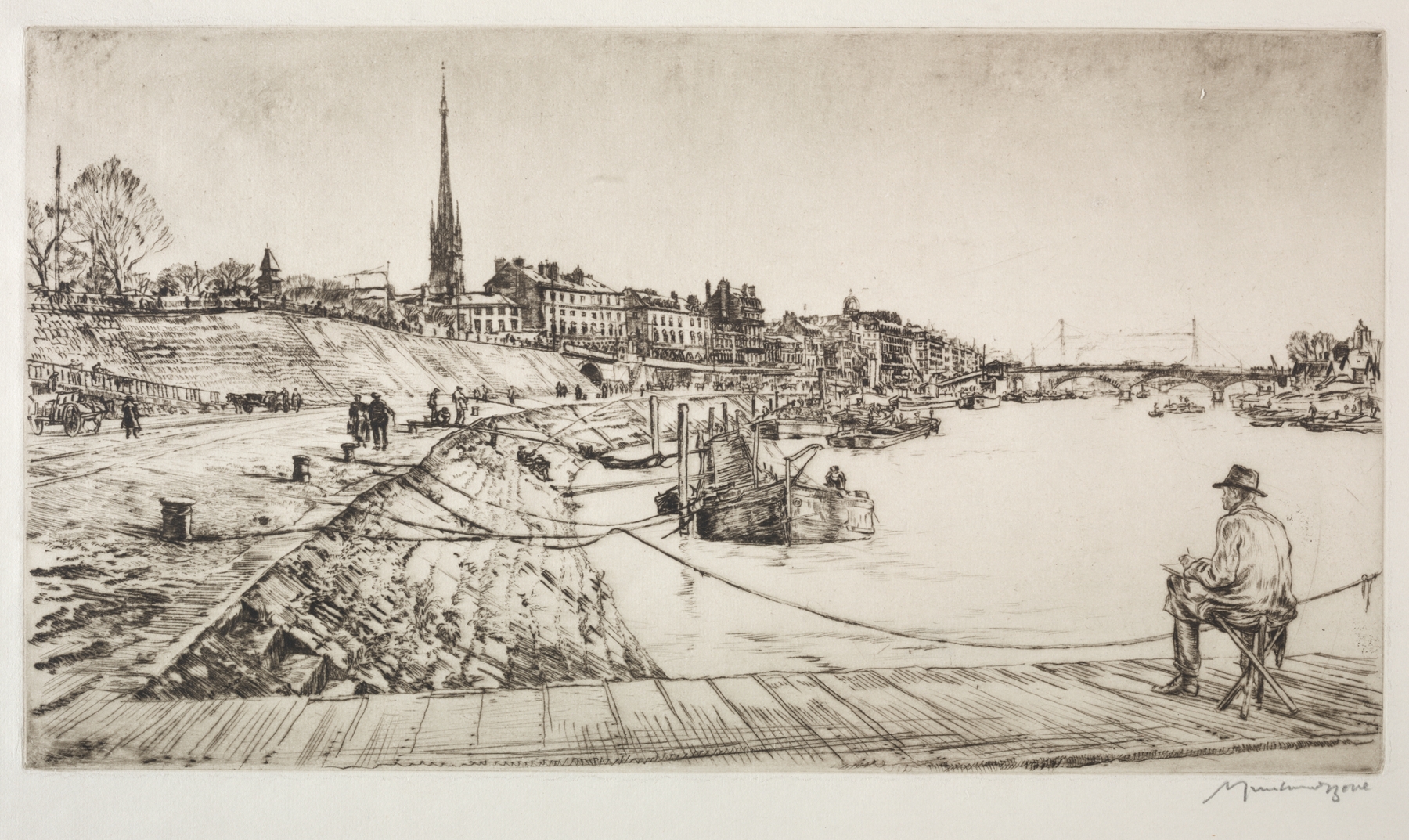
“To paint is to remember what time wants us to forget.” In the act of capturing a moment, transformation becomes a brushstroke against the inevitable march of history. Muirhead Bone’s work speaks not just of a place, but of an ethereal essence that transcends the physical realm of Ely Cathedral. Look to the foreground where the intricate details of stonework invite your gaze, revealing the cathedral’s majesty in stark contrast to the softness of the surrounding landscape. Notice how the light caresses the weathered facade, accentuating the interplay of shadows and illuminated surfaces.
The muted palette exudes a sense of solemnity, while the artist’s deft strokes create a rhythmic harmony between structure and nature, seamlessly blending the sacred with the ephemeral. Beneath the cathedral's grand silhouette lies a duality—between permanence and decay. The crumbling edges of the stone reflect the passage of time, while the towering spires reach toward eternity. This juxtaposition evokes a feeling of reverence, as the viewer grapples with the fragility of human creations amidst a constantly evolving world.
The scene whispers of faith, resilience, and the stories etched within the stone, hinting at the lives once lived beneath its vaulted roofs. Muirhead Bone painted this work in 1903 during a transformative period in British art, where the influence of the Arts and Crafts movement was fading, giving way to a new wave of modernism. Living in London at the time, Bone was deeply engaged with printmaking and drawing, drawing inspiration from the interplay of light and shadow, which would become hallmarks of his style. His exploration of architecture captured the spirit of the era, bridging traditional techniques with a growing fascination for the ephemeral nature of existence.