Explosion of the Alfred Thomas at Easton Pa. March 6th 1860. — History & Analysis
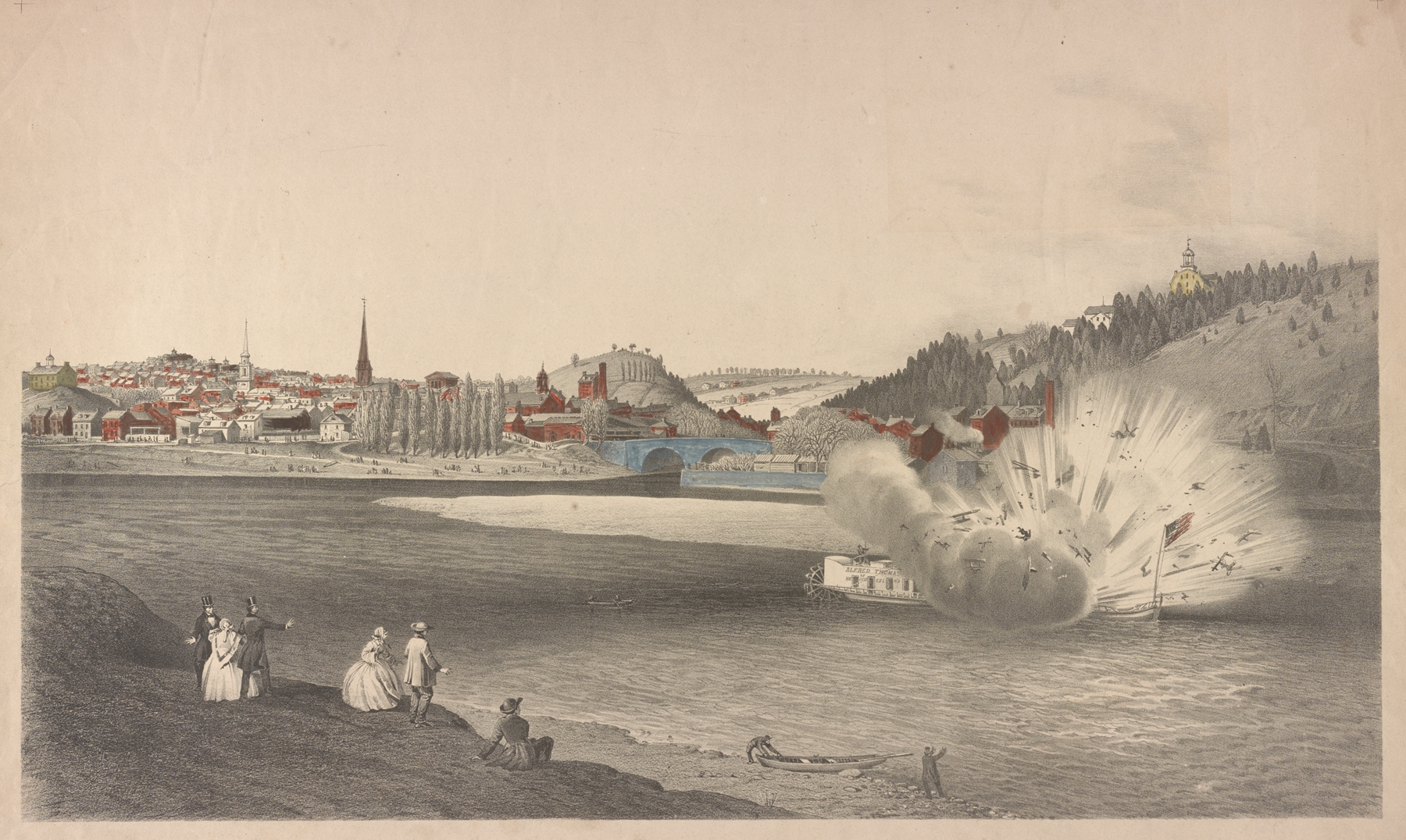
Could beauty survive in a century of chaos? This question hovers over Explosion of the Alfred Thomas at Easton Pa. March 6th 1860, a poignant glimpse into a moment where devastation intertwines with the human spirit’s resilience. Look to the center of the canvas, where the chaotic explosion erupts with a vivid palette of fiery oranges and deep blacks, starkly contrasting against the pale sky.
The artist’s masterful use of light captures the moment of catastrophe, as cloud-like smoke billows upward, swirling through the air with a sense of frenetic energy. The figures in the foreground—some fleeing, others frozen in shock—draw our gaze and reveal their varied reactions to the calamity, showcasing an emotive tapestry of fear and despair. Delve deeper into the details: notice the splintered timbers that frame the explosion, a symbol of shattered lives and ambitions. The artist captures a delicate balance between the tragic and the sublime; while the explosion conveys chaos, the harmonious arrangement of figures and the rhythmic lines of the smoke suggest an underlying order amidst the turmoil.
Each face tells a story, reflecting the human capacity for hope even in the darkest of moments, inviting contemplation on the fragility and strength of existence. James Fuller Queen painted this work in 1860, right after a time marked by a burgeoning tension in America leading up to the Civil War. Living in Pennsylvania, he skillfully responded to the era’s unrest, using this piece to highlight the impacts of industrial advancements and their often-turbulent consequences. The painting serves as a historical document as much as an artistic statement, capturing a pivotal moment where technology and humanity collided in spectacular fashion.