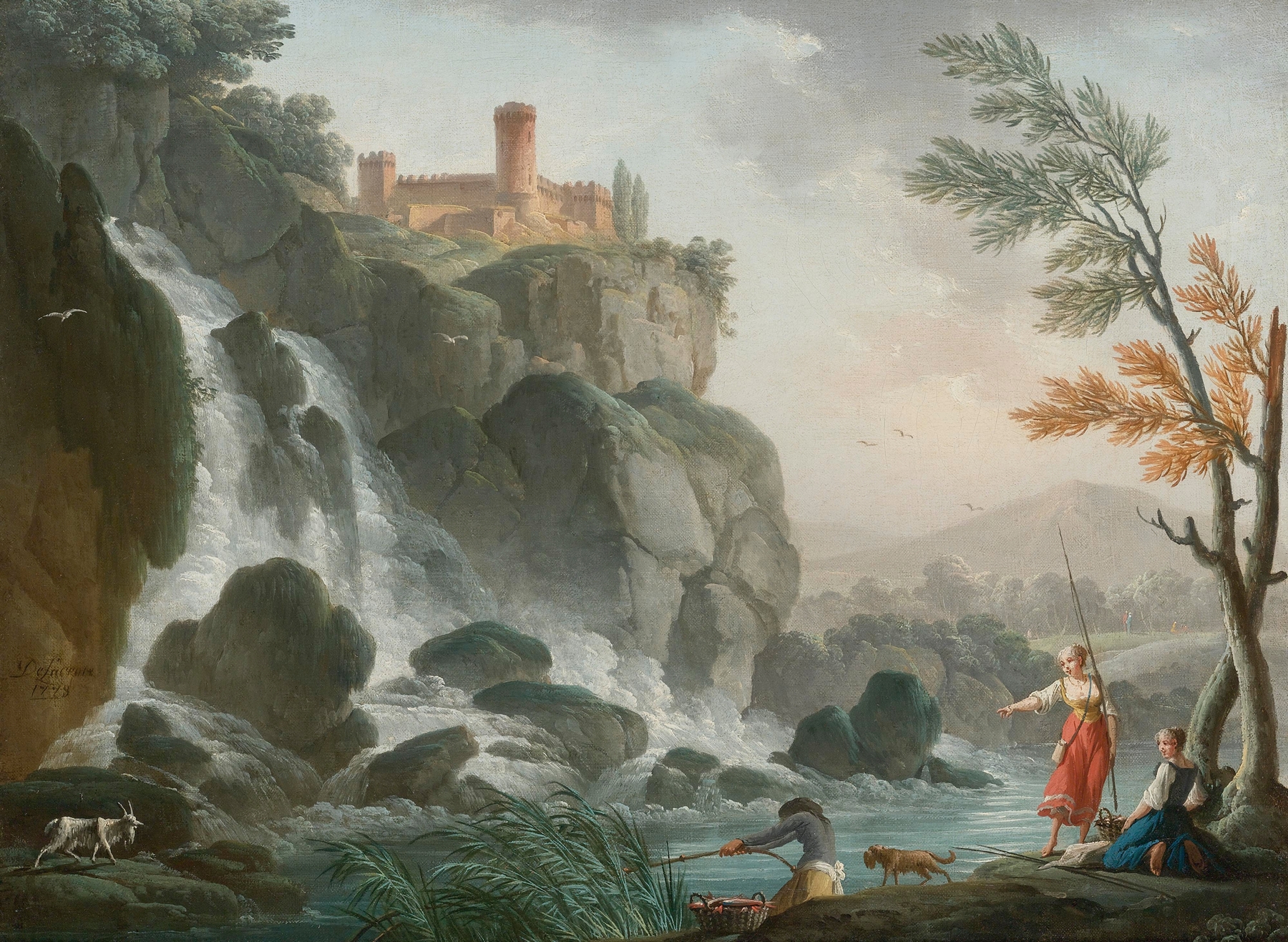
Fishing At The Edge Of A River With A Waterfall, Below A Castle — History & Analysis
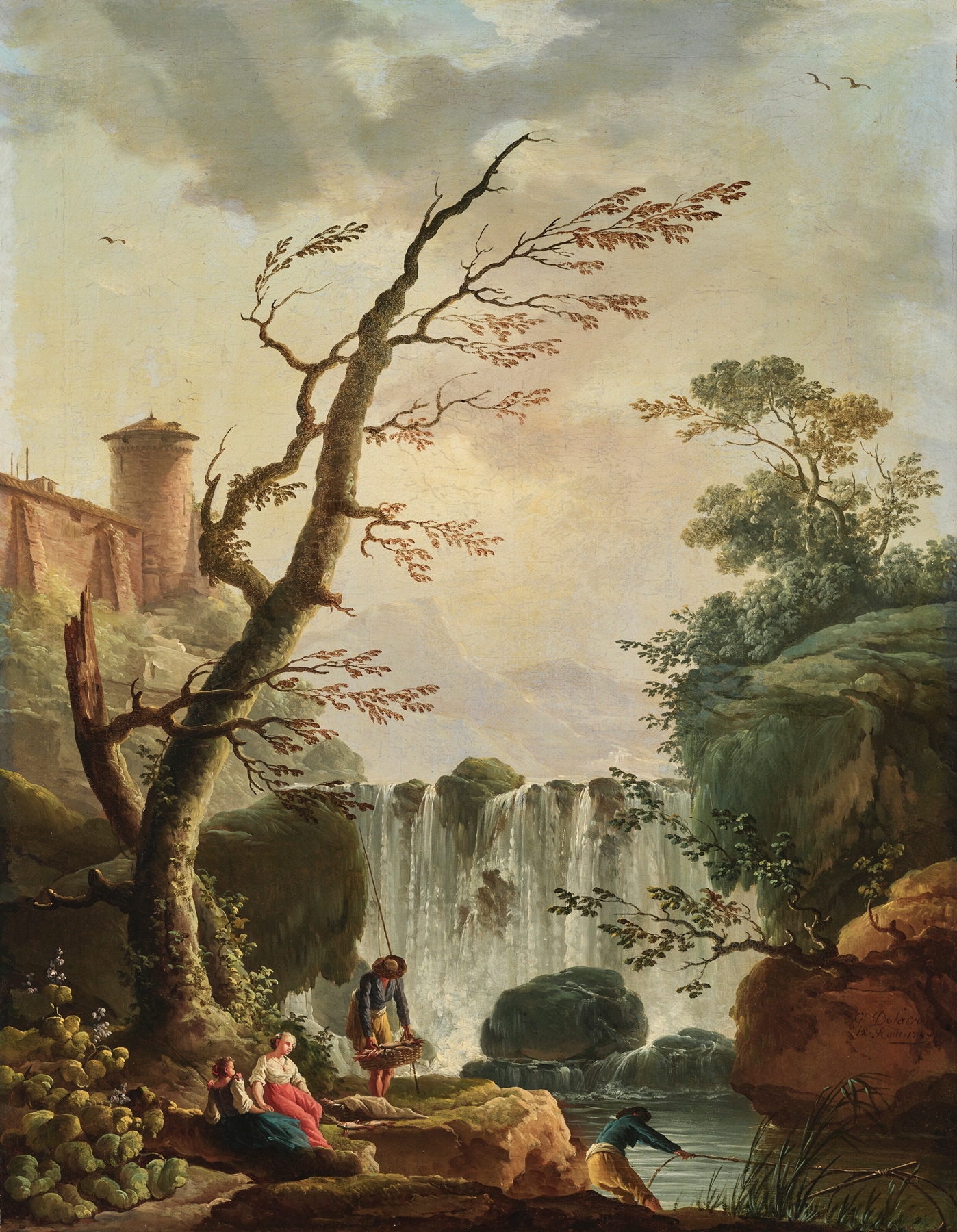
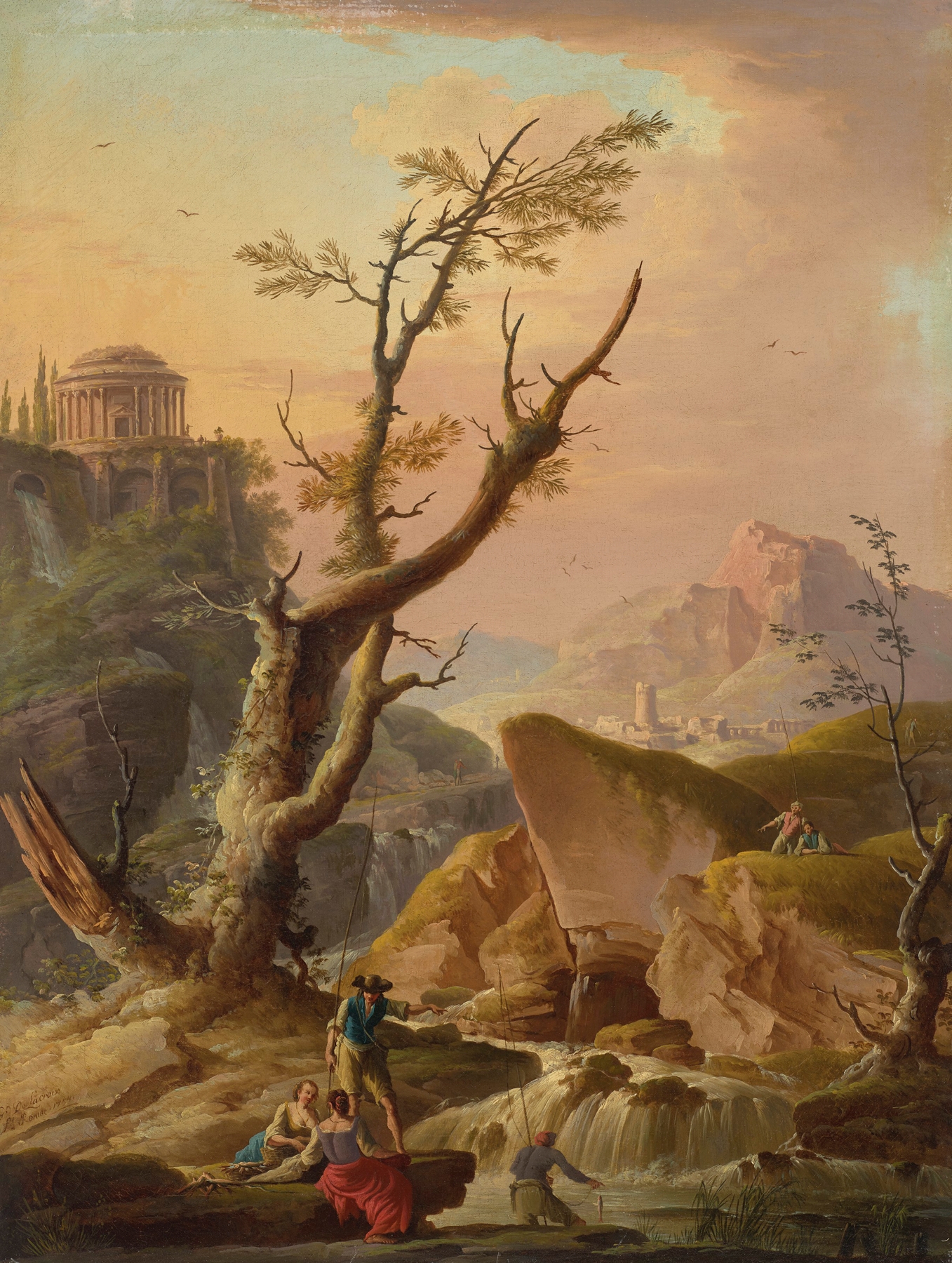
“The canvas doesn’t lie — it simply waits.” In the heart of nature, whispers of divinity dance through serene landscapes, evoking introspection and wonder. What truths lie beneath the surface of this tranquil scene? Look to the center where the river flows, dividing the canvas with its shimmering blue tones that reflect a celestial sky. Notice how the artist’s brushwork captures the sunlight filtering through the foliage, casting dappled shadows that play upon the water’s surface.
The imposing castle looms in the background, its sturdy walls positioned against the soft undulations of the landscape, creating a striking contrast that anchors the vibrant chaos of nature. Each detail is meticulously rendered, revealing not just a moment, but a narrative that invites deeper contemplation. In this harmonious composition, the juxtaposition of the flowing water and the fixed castle speaks to the transient nature of life against the backdrop of eternity. The fishermen, small yet determined, embody humanity's relentless pursuit of sustenance and connection with the divine.
The waterfall, a symbol of purity, cascades gracefully, hinting at the blessings bestowed by nature, while the castle stands as a reminder of human ambition and ambition's often fleeting grasp on permanence. Charles-François Grenier De Lacroix painted this piece in 1778, during a time when neoclassicism was flourishing. Working in France, he was influenced by the grandeur of the landscape and the philosophical currents of the Enlightenment. This period was marked by an exploration of nature's beauty and the human condition, themes that resonate deeply within this artwork, capturing a moment that is both timeless and reflective of the artist's own contemplations on existence.