Flößer an der Theiß — History & Analysis
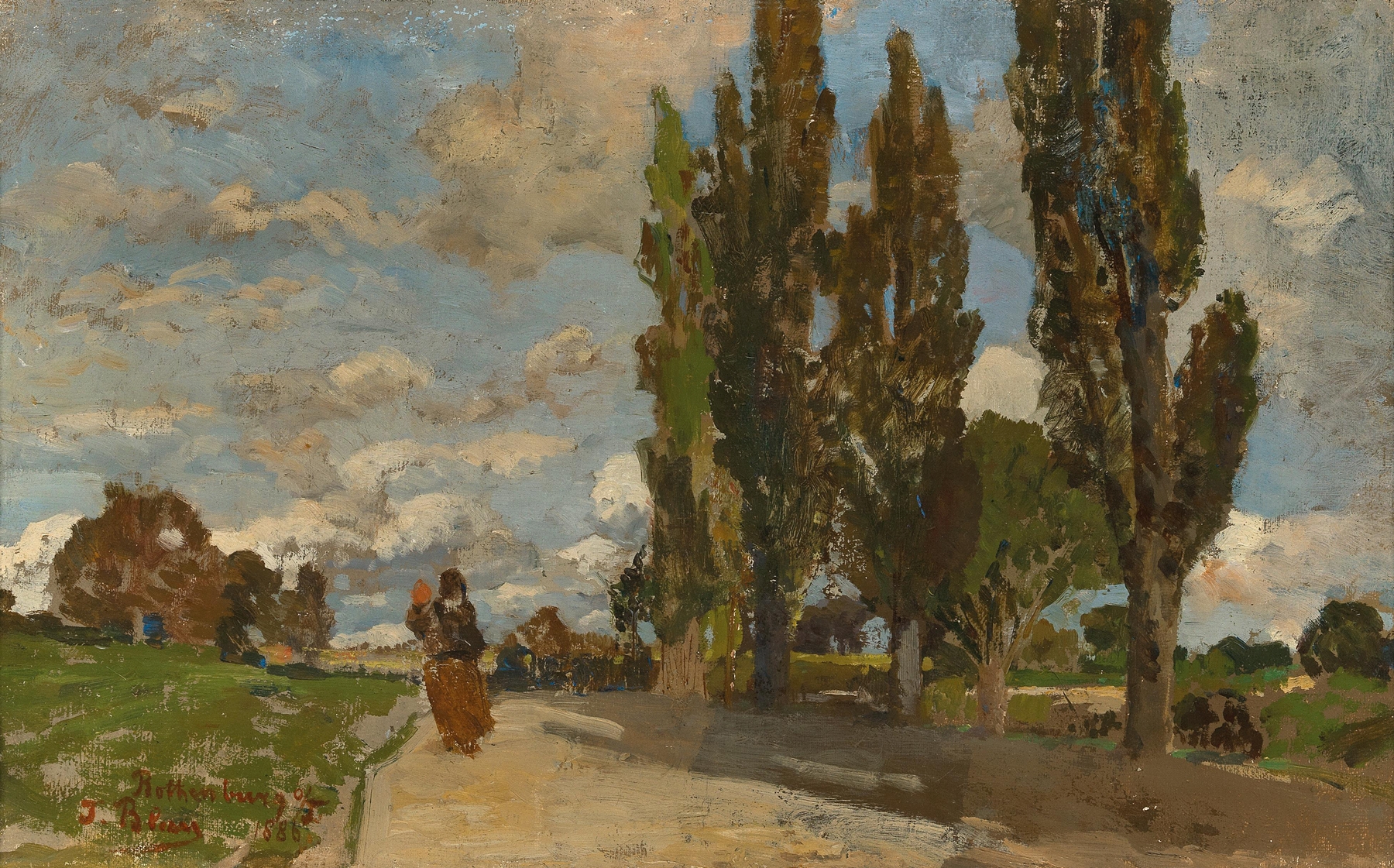
“Every silence here is a confession.” In the stillness of a moment, the weight of faith hangs heavy in the air, unseen yet profoundly felt. Look to the center of the canvas, where a solitary figure stands at the helm of a wooden raft, navigating the gentle currents of the Theiß River. The artist's deft brush strokes create a sense of movement, with the water shimmering under a soft, golden light that hints at the setting sun. Notice the earthy palette — the deep greens and browns of nature juxtaposed against the warm hues of the sky, enveloping the scene in a serene embrace.
The composition draws your eye towards the figure, evoking a sense of contemplation and purpose. Yet, beyond the tranquil landscape lies a deeper narrative. The lone raftsman, poised on the threshold of adventure and uncertainty, embodies the tension between nature’s vastness and the individual's journey. The gentle ripples in the water symbolize the passage of time, while the distant horizon suggests aspirations that remain just out of reach.
This intricate interplay of light and shadow invites viewers to reflect on their own faith in the unseen paths ahead. In 1874, while living in Vienna, the artist captured this moment amidst a burgeoning interest in plein air painting. The world around her was evolving, as the Impressionist movement gained momentum, fostering a new appreciation for nature and light. It was a time of personal exploration for her, as she sought to convey not just the aesthetic beauty of landscapes, but also the emotional resonance they evoke in the human experience.