Fortress Hohensalzburg — History & Analysis
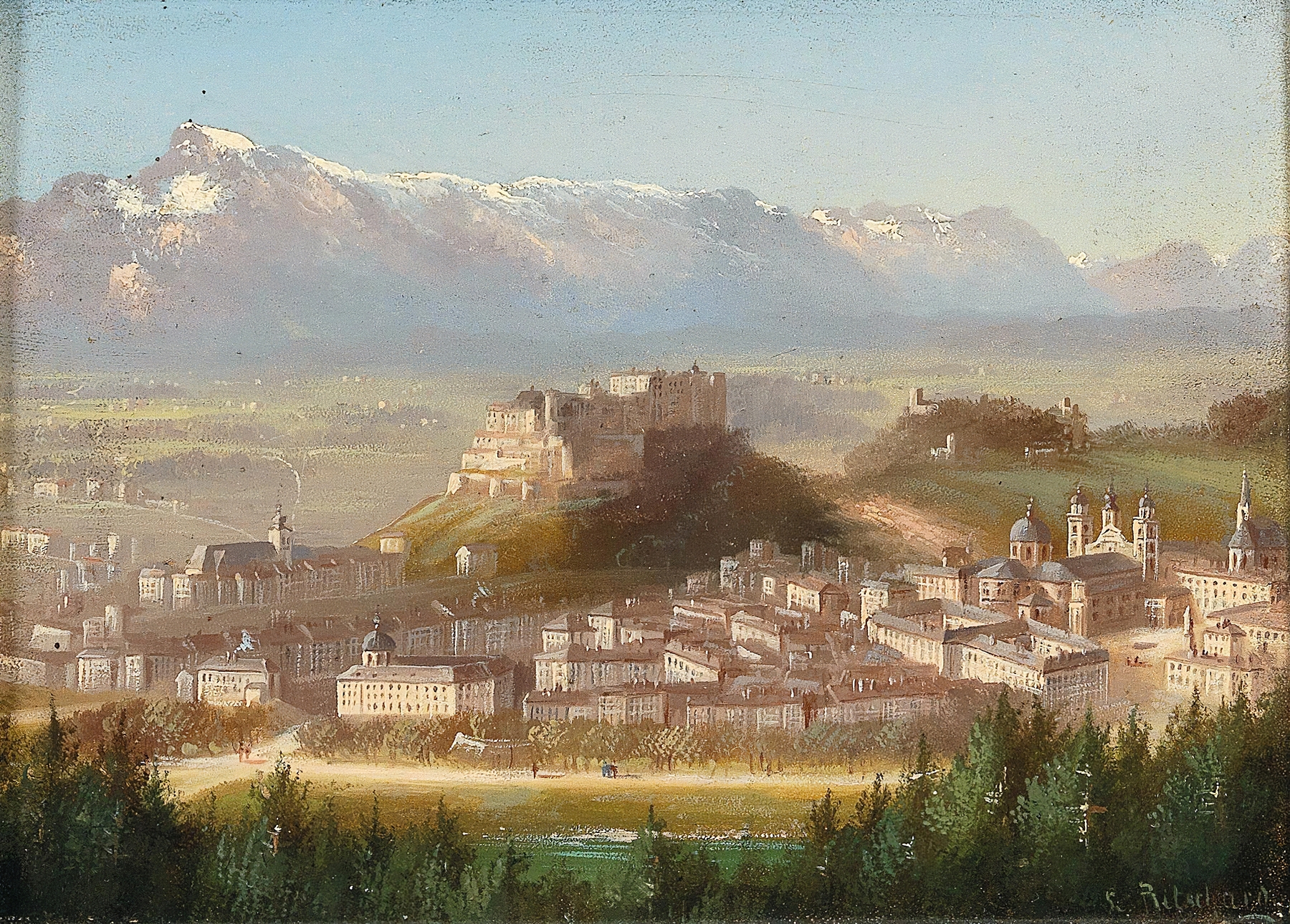
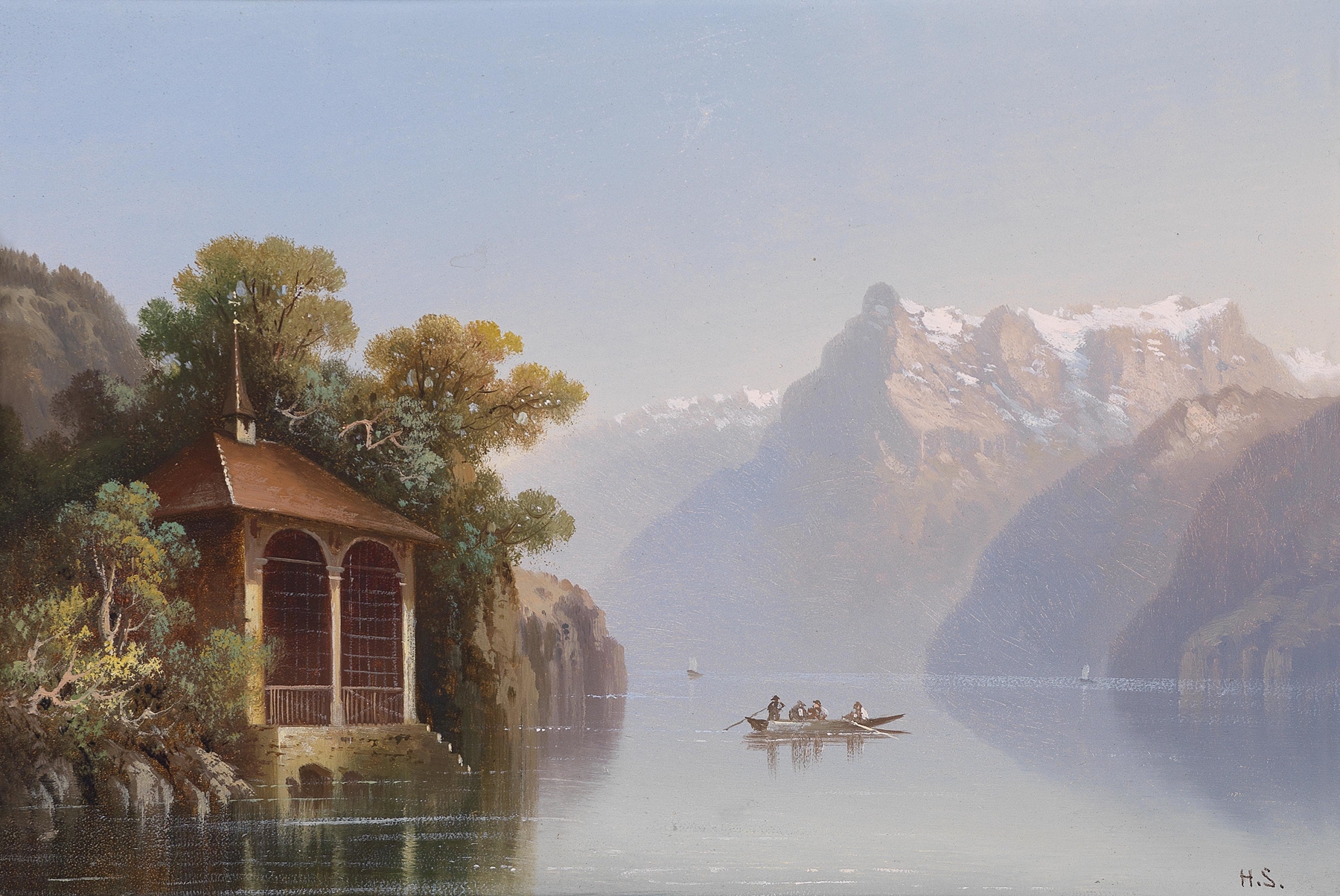
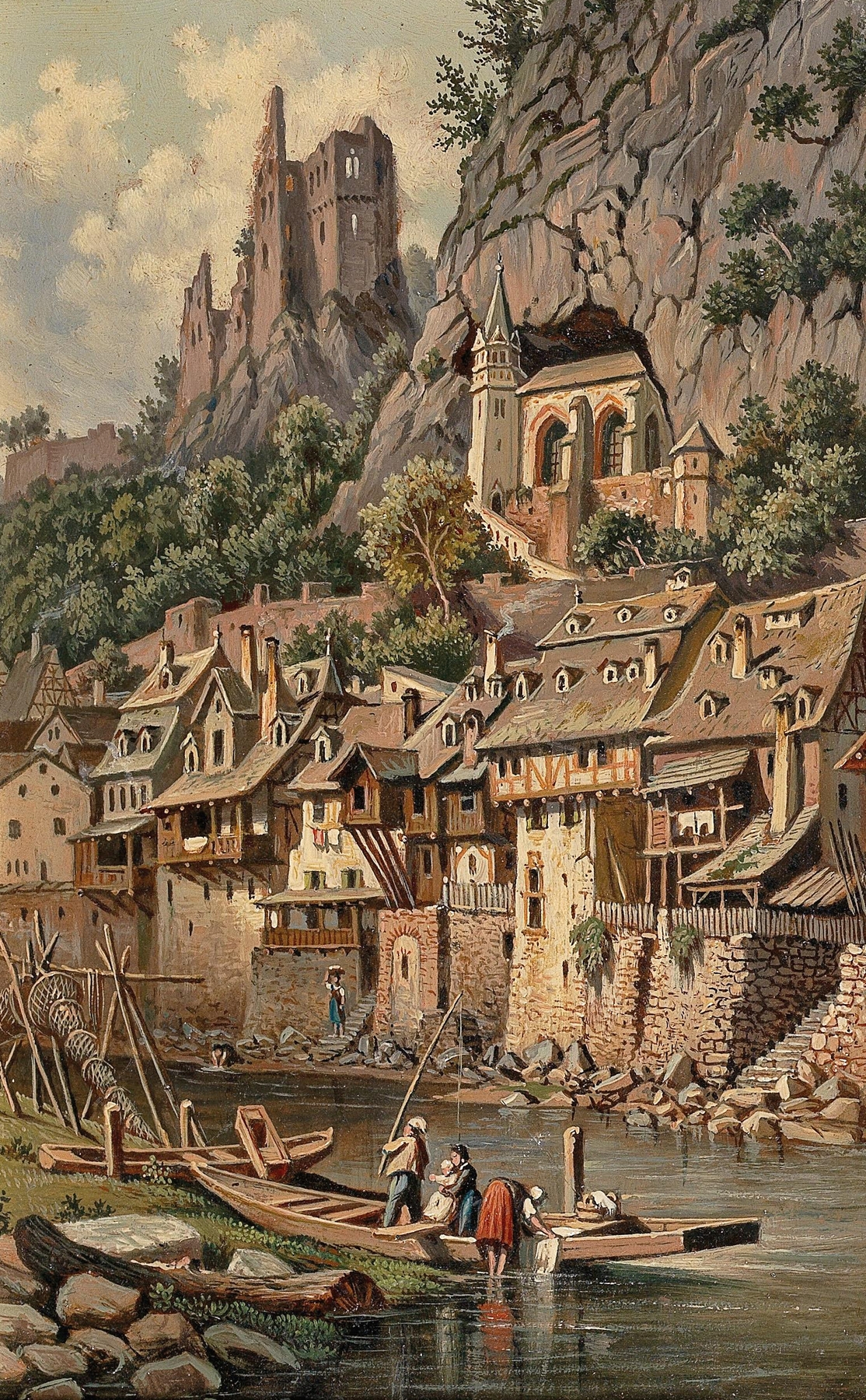
Who listens when art speaks of silence? In the stillness of Fortress Hohensalzburg, a powerful narrative unfolds, whispering stories of resilience and revolution through its hallowed stones. As you gaze upon the canvas, look to the left at the imposing fortress perched atop the hill, its rugged silhouette contrasting sharply against the soft hues of the sky. Notice the intricate brushwork that defines the castle's ancient walls, each stroke meticulously capturing the interplay of shadow and light.
The warm golden tones of the sun sinking behind the mountains evoke a sense of time standing still, inviting contemplation and introspection. Yet, beneath the serene surface lies a tension, a reminder of the historical upheavals that have shaped this stronghold. The fortress, once a bastion of power and protection, now stands in quiet defiance against the passage of time and the revolutions that have swept across the land. The tranquility of the landscape belies the tumultuous narratives of those who once sought refuge or fought for freedom beneath its watchful gaze.
During the period when this work was created, the artist was deeply influenced by the Romantic movement, which emphasized the awe of nature and the complexities of human existence. While the exact date remains unknown, it is believed to have been painted in the mid-19th century, a time when Europe was rife with political changes and artistic exploration. This backdrop undoubtedly informed Sattler's vision, melding life and landscape into a profound meditation on strength and silence.