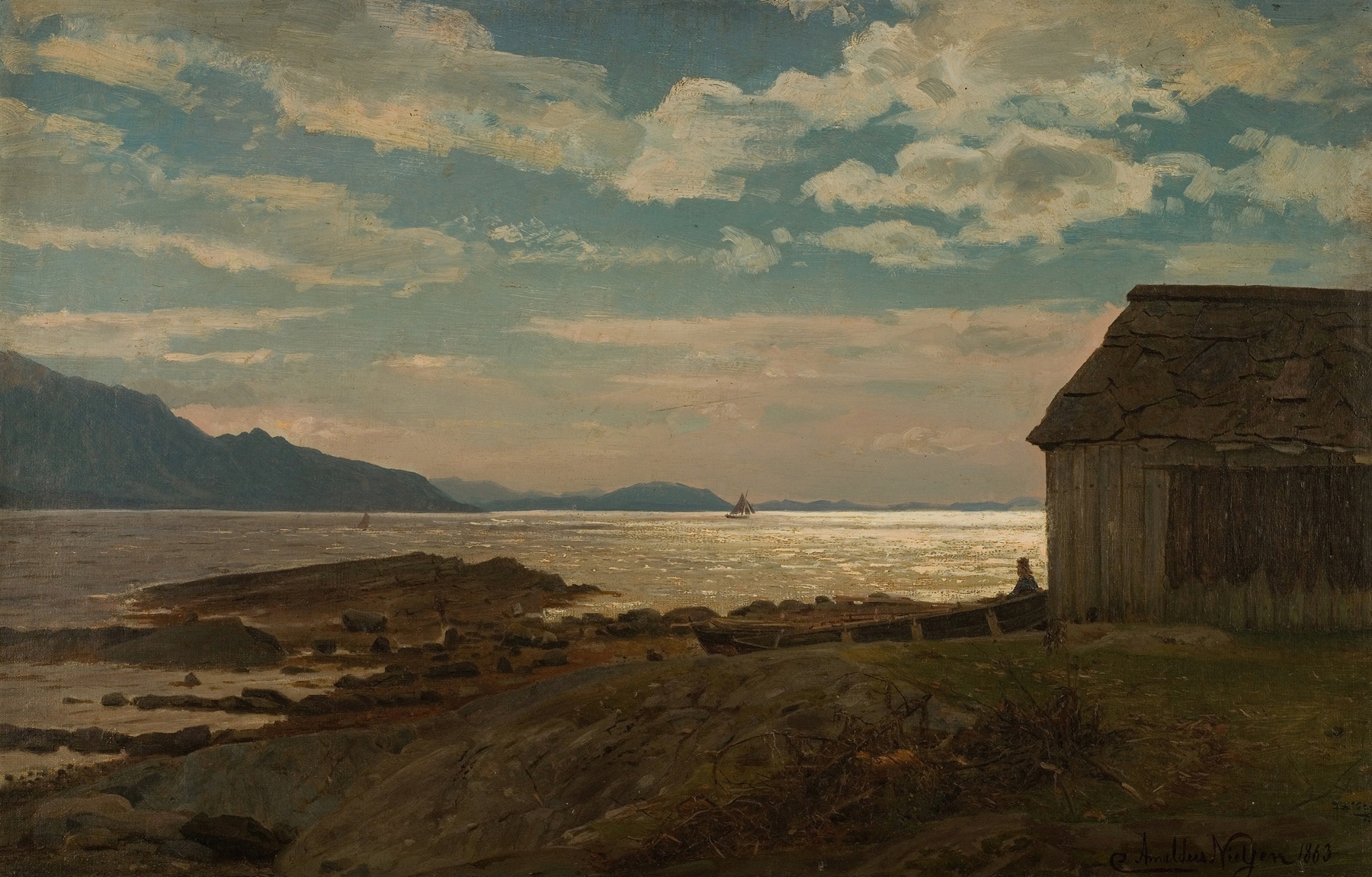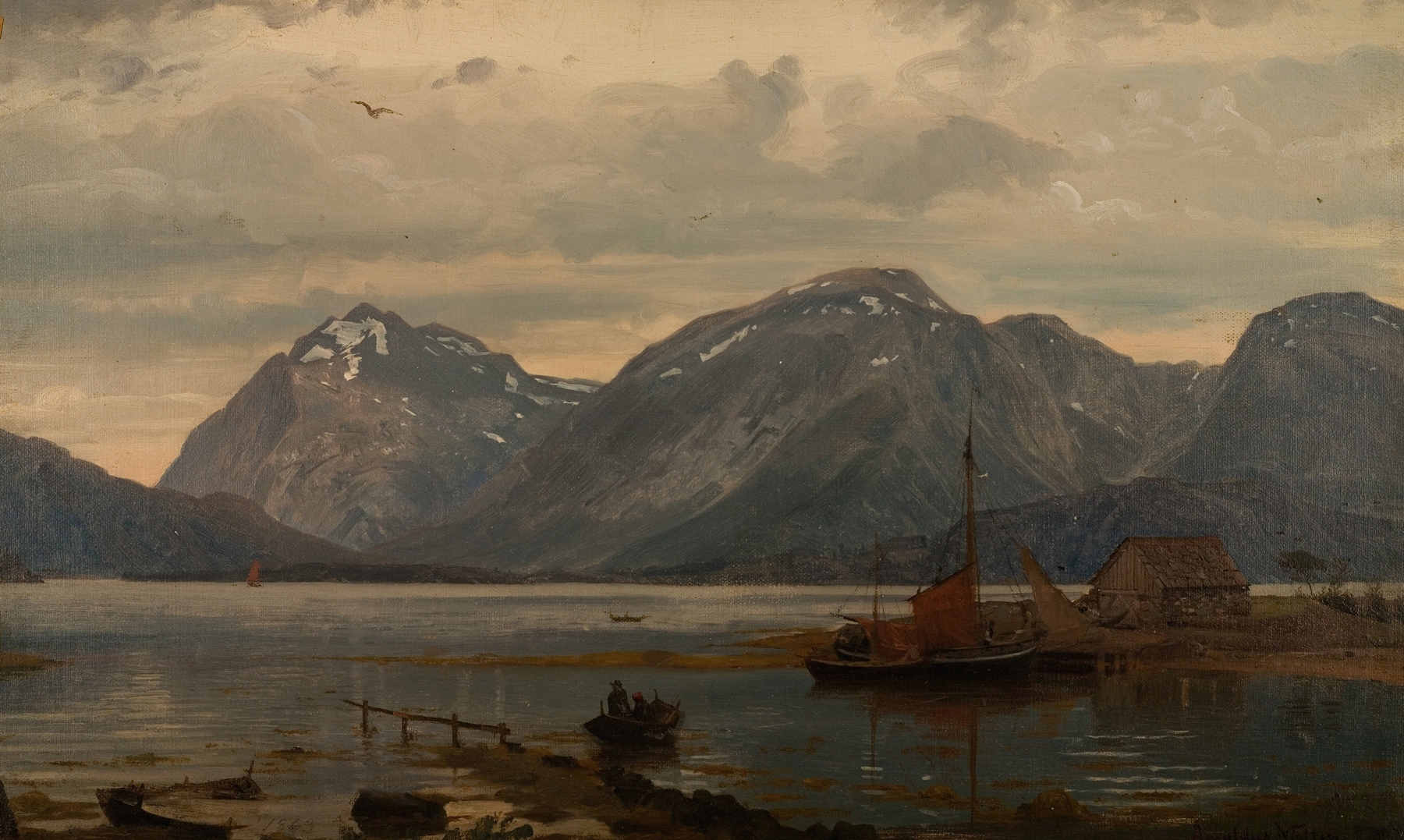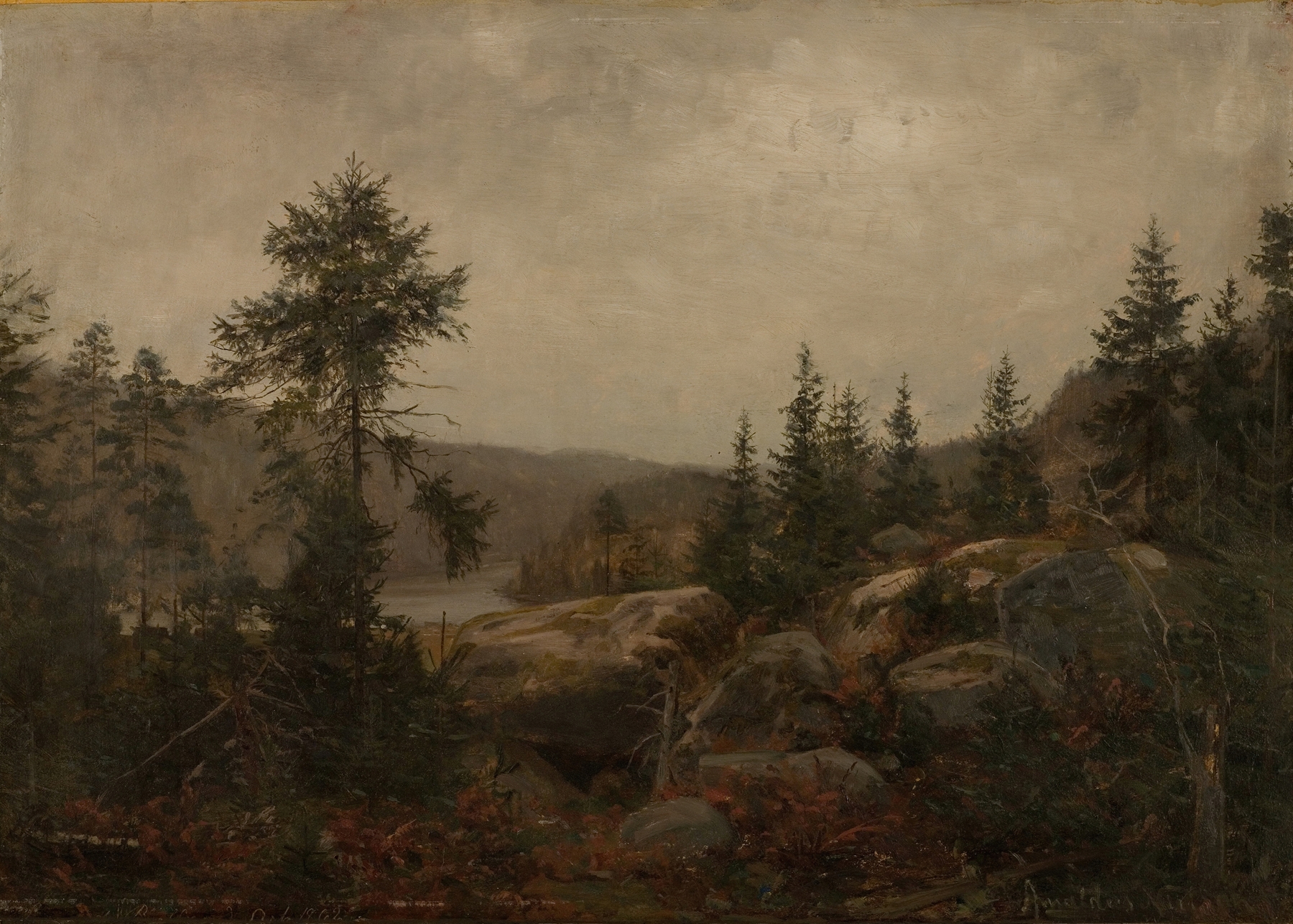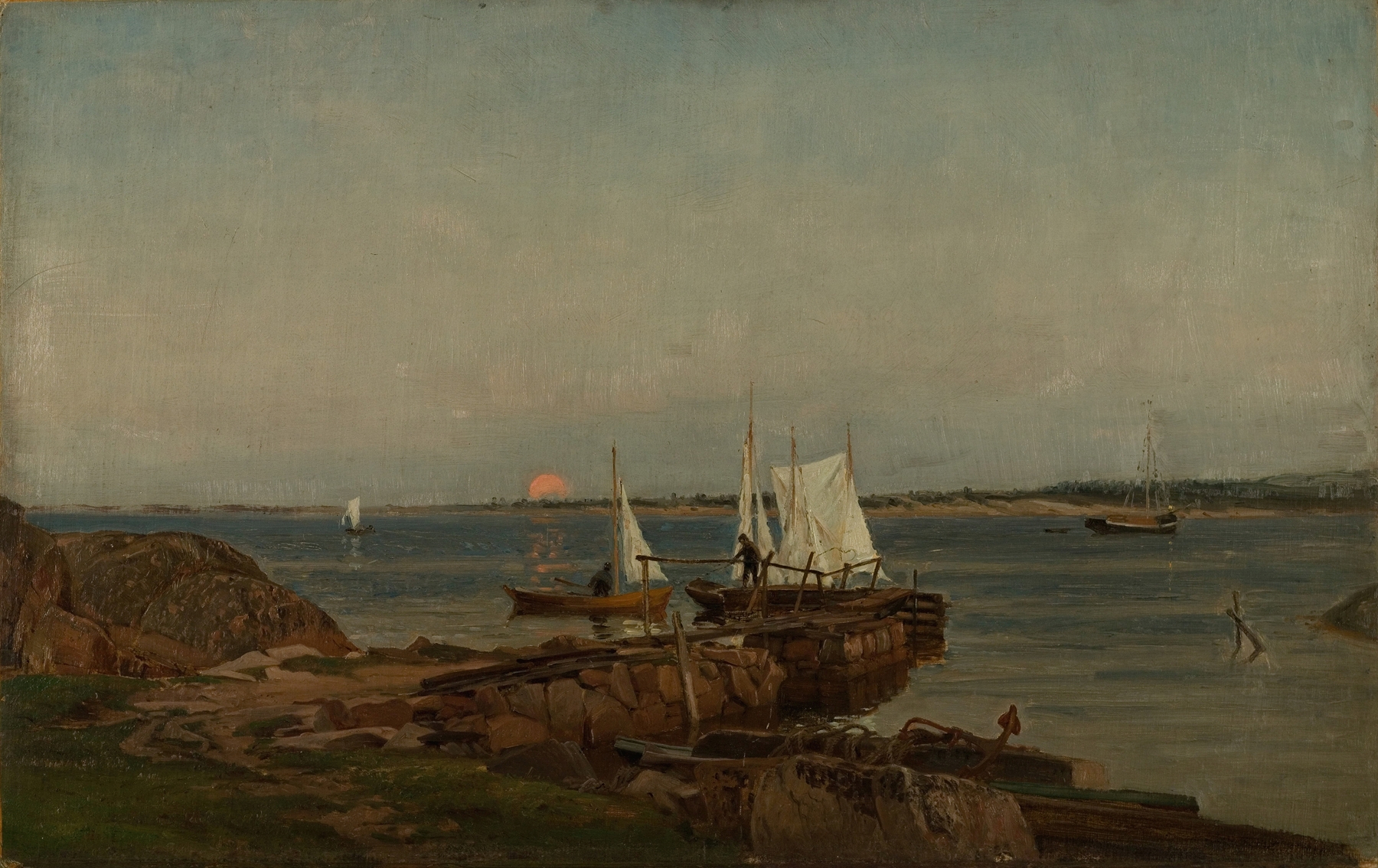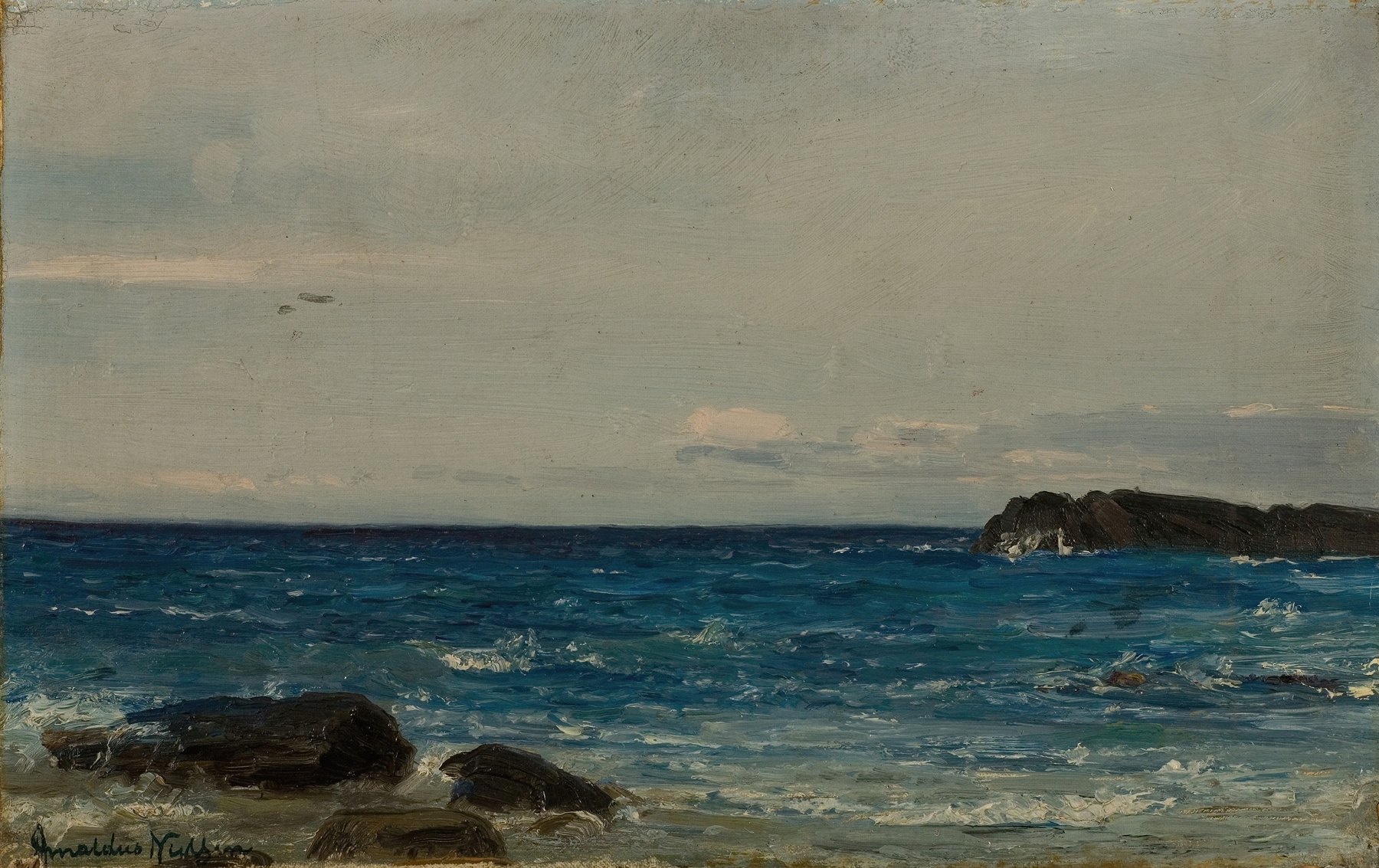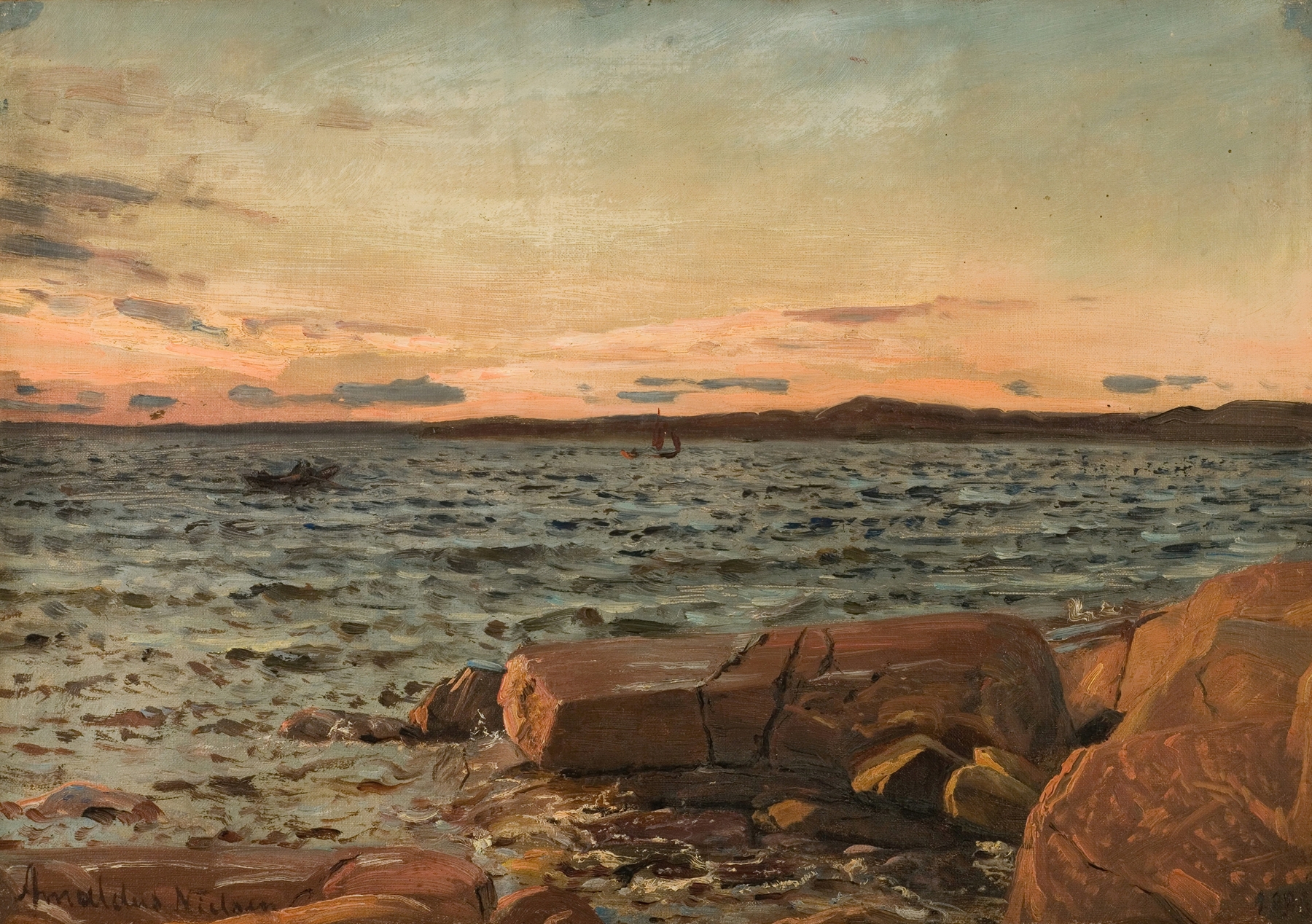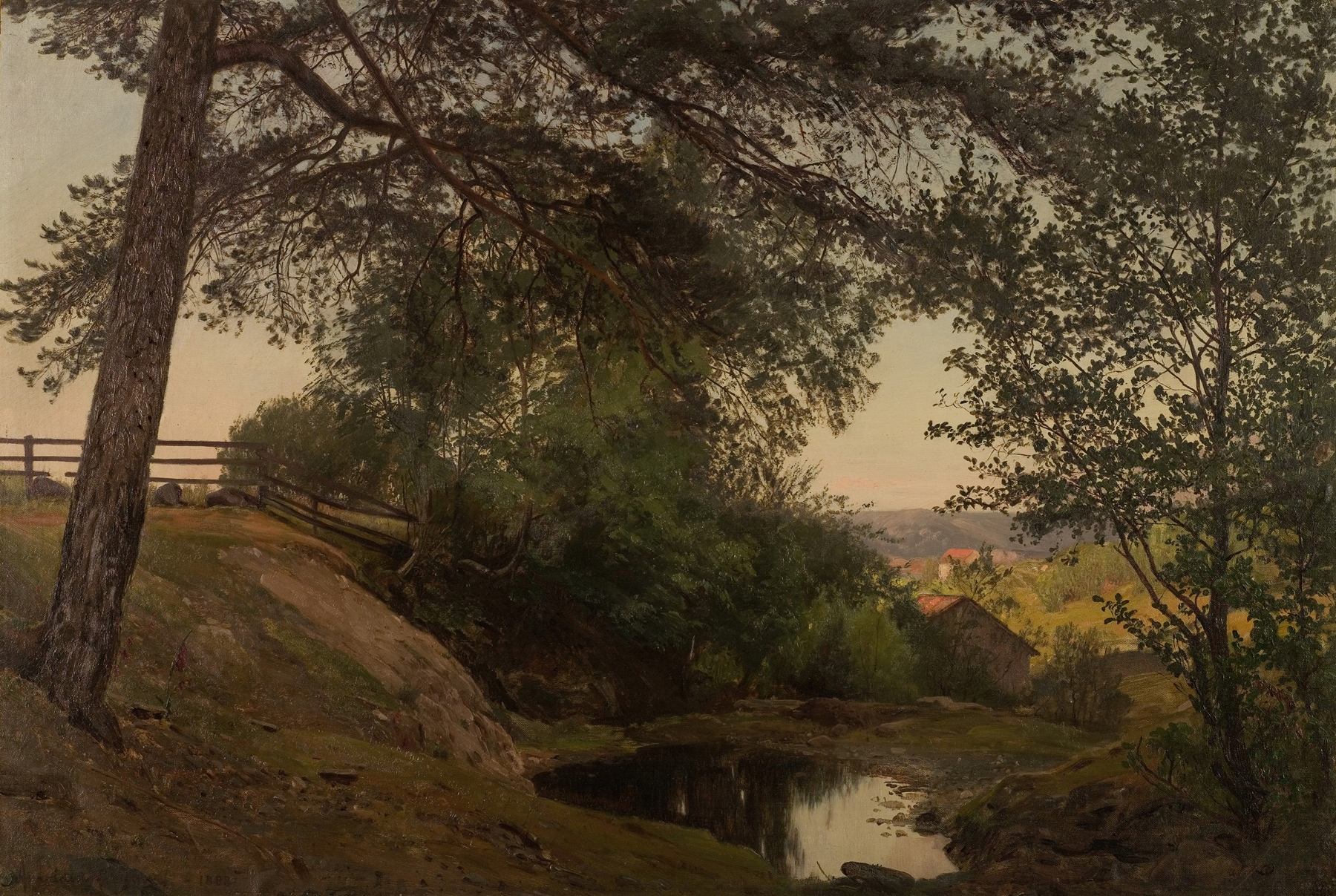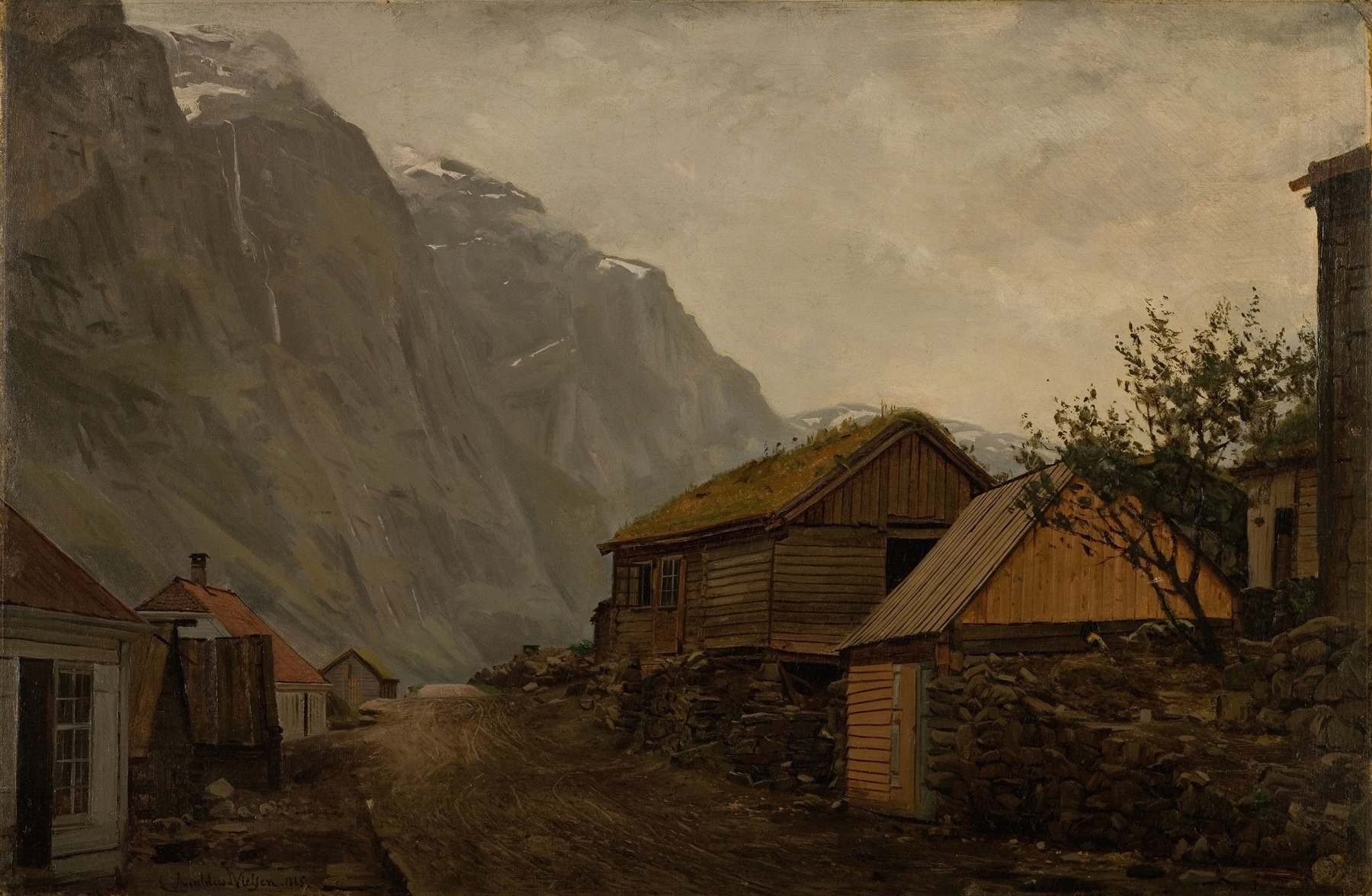
Can beauty exist without sorrow? In *Fra Jæren*, the delicate interplay of light and shadow speaks to an ecstasy that is both profound and haunting. Look to the foreground where a lone figure stands, gazing out upon the rolling hills of Jæren. The soft, muted palette—comprised of earthy greens and gentle browns—invites you into a serene landscape, yet the expressive brushstrokes hint at an undercurrent of emotional turbulence. Notice how the clouds overhead swirl with a sense of movement, their soft whites contrasting with the deepening hues of twilight. This tension between tranquility and turmoil draws the viewer’s eye, creating a rich tapestry of visual narrative. As you take in the scene, subtle details emerge: the figure’s posture is one of quiet reflection, embodying a yearning that resonates within the viewer’s own heart. The juxtaposition of the expansive sky and the solitary presence evokes feelings of both isolation and connection, suggesting that the beauty of nature is intertwined with the complexity of human emotion. This duality invites contemplation on the relationship between joy and sorrow, hinting at ecstasy found within the experience of longing. In 1892, Amaldus Nielsen painted this work during a period of personal exploration and artistic development in Norway. He was deeply influenced by the natural beauty of his homeland and the emerging Symbolist movement, which sought to express the inexpressible. At this time, the world of art was shifting towards capturing emotional truths, and Nielsen's painting reflects this transformative spirit, showcasing the delicate balance between ecstasy and melancholy.