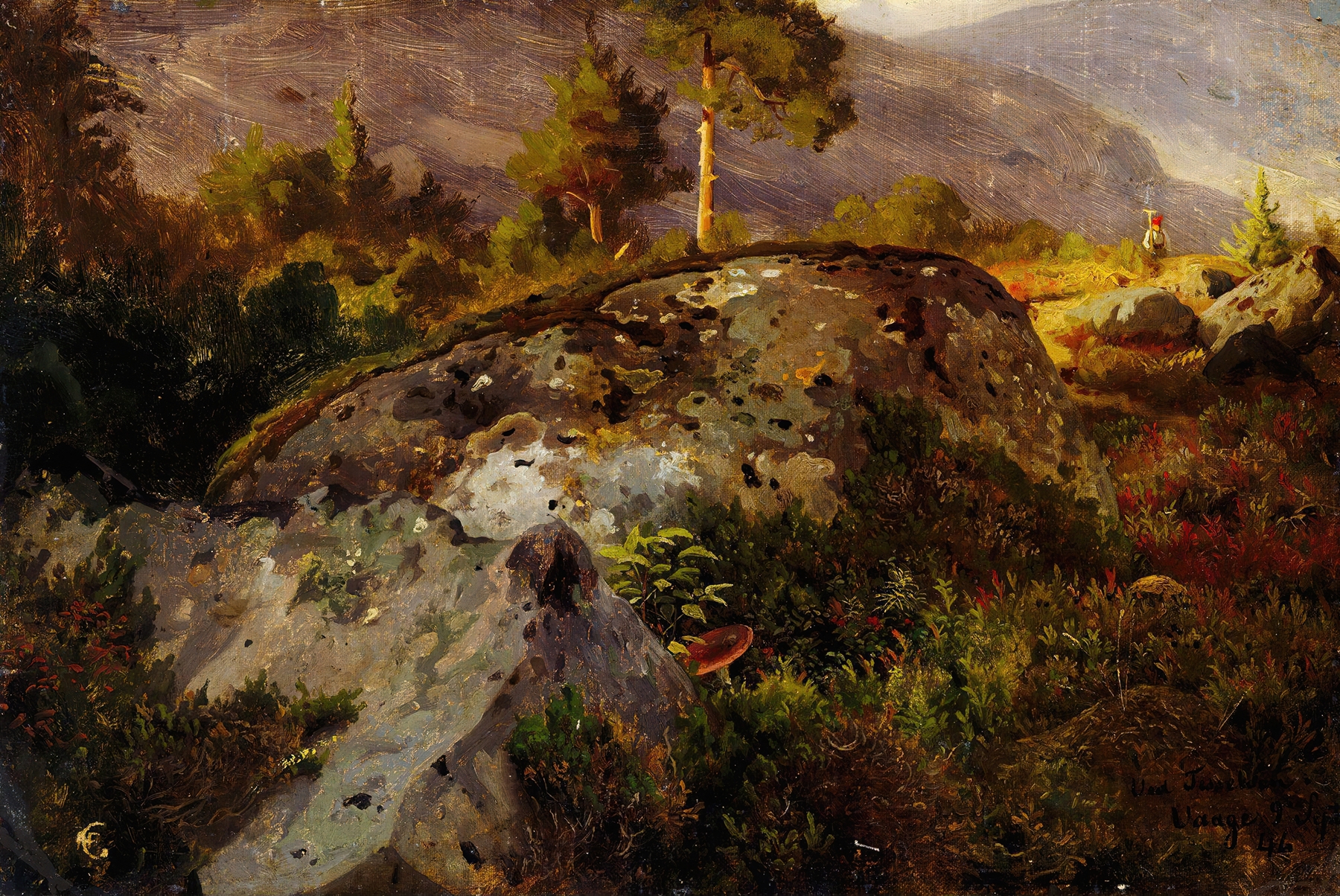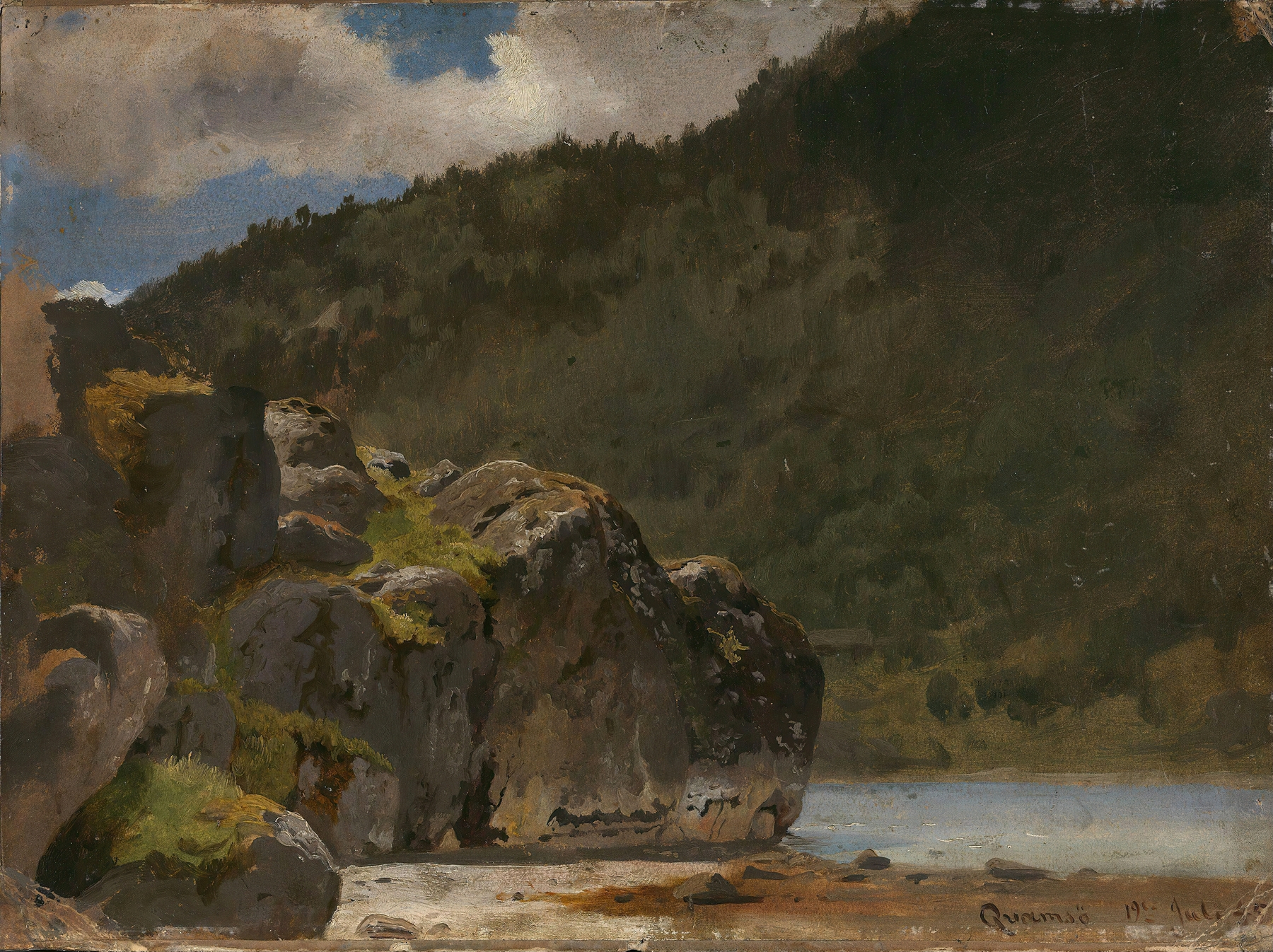
From Kvamsøy in the Sognefjord — History & Analysis
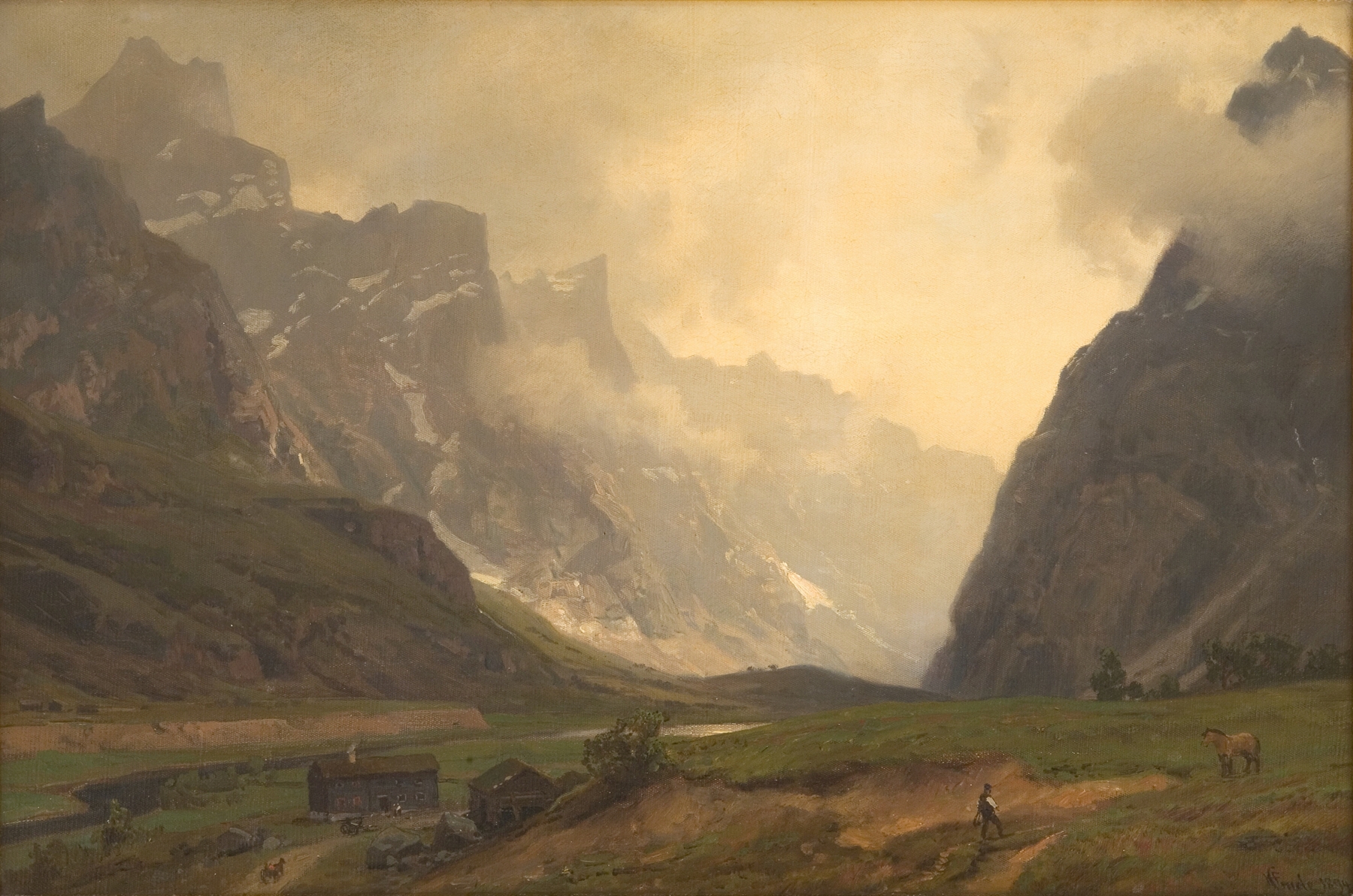
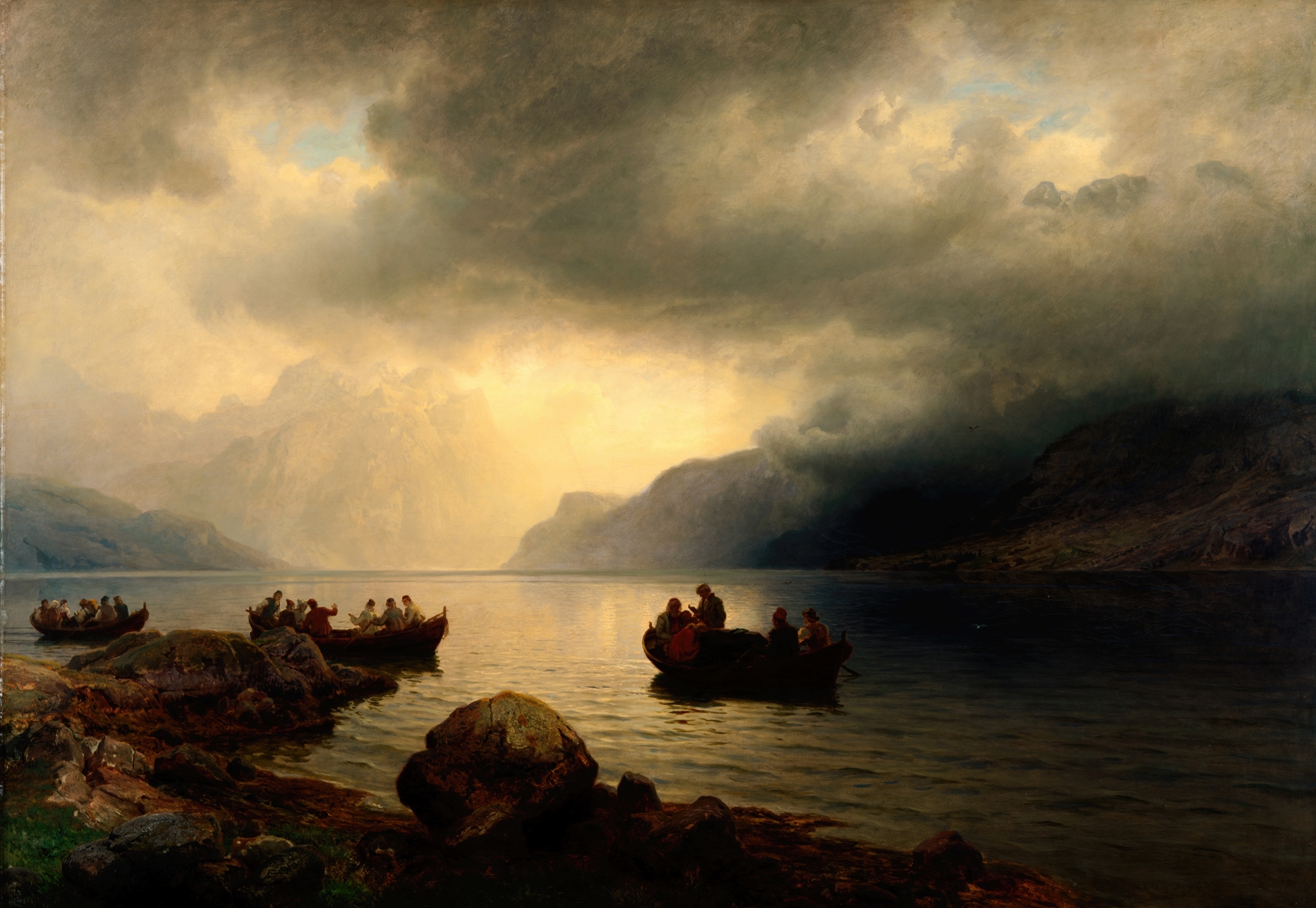
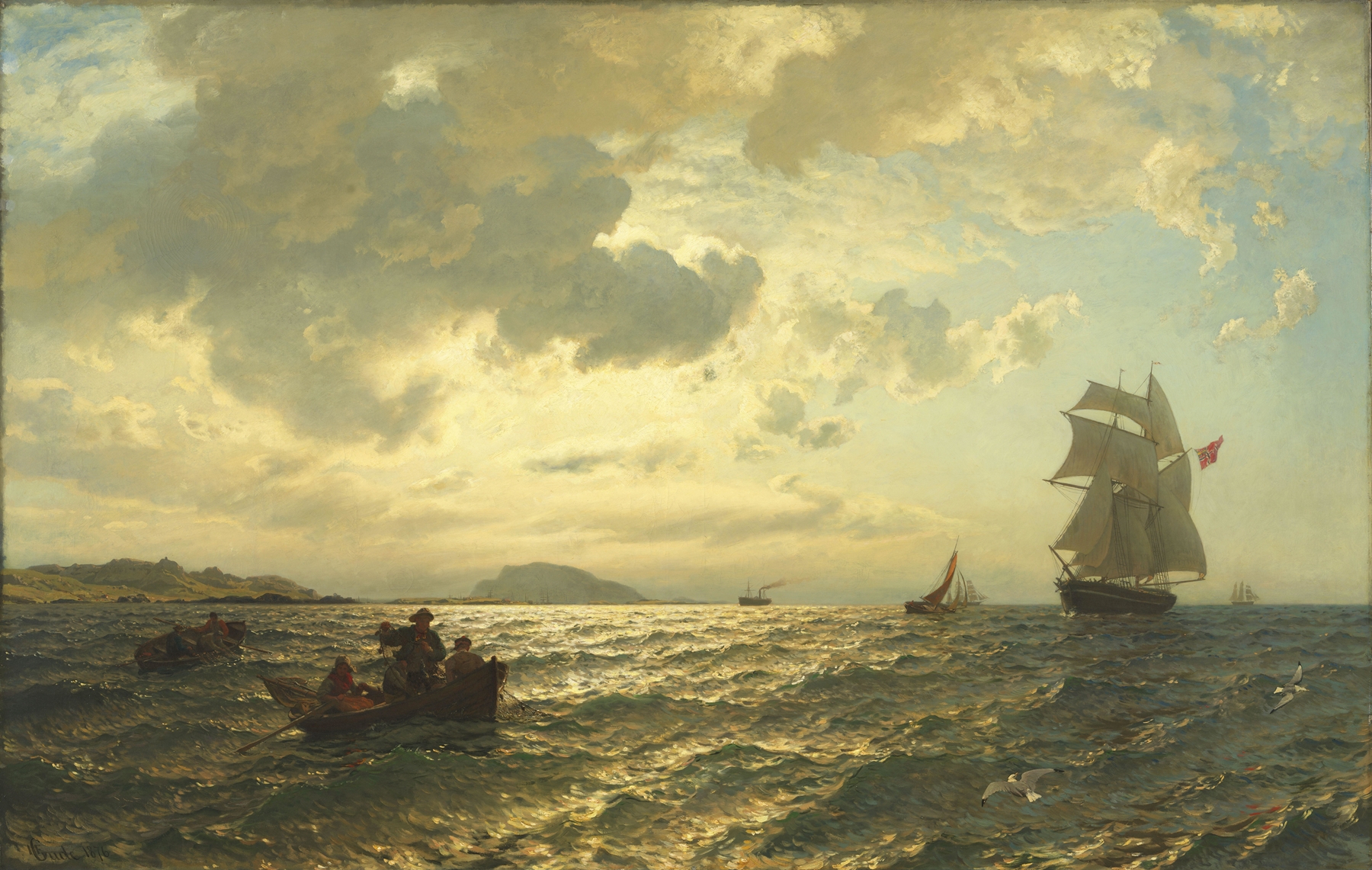
Who listens when art speaks of silence? In the stillness of nature, innocence unfolds, capturing the essence of a fleeting moment that transcends time. Look to the left at the gentle slope of the fjord, where soft greens mingle with the deep blues of the water. Notice how the light dances upon the surface, creating a shimmering reflection that draws you into the scene.
The meticulous brushwork reveals distant mountains, their peaks cradled by a delicate veil of mist, hinting at both solitude and comfort. Gude’s subtle palette invites the viewer to linger, as the tranquility of this untouched landscape beckons exploration. Hidden within this serene vista are emotional tensions—between the vastness of nature and human insignificance, between the fleeting and the eternal. The tiny figures of fishermen, almost swallowed by their surroundings, evoke a sense of innocence, suggesting a harmony with the world that is both enchanting and poignant.
Each stroke of the brush captures the duality of existence: the joy of life intertwined with the inevitability of solitude. In 1845, Hans Gude painted this work while living in Germany, having been inspired by the picturesque landscapes of his native Norway. At this time, Romanticism was flourishing, emphasizing emotion and the sublime beauty of nature. Gude’s commitment to depicting the essence of his homeland reflects a personal longing and a broader cultural narrative, as artists sought to express the profound connections between humanity and the natural world.