Hudson River at Cold Spring — History & Analysis
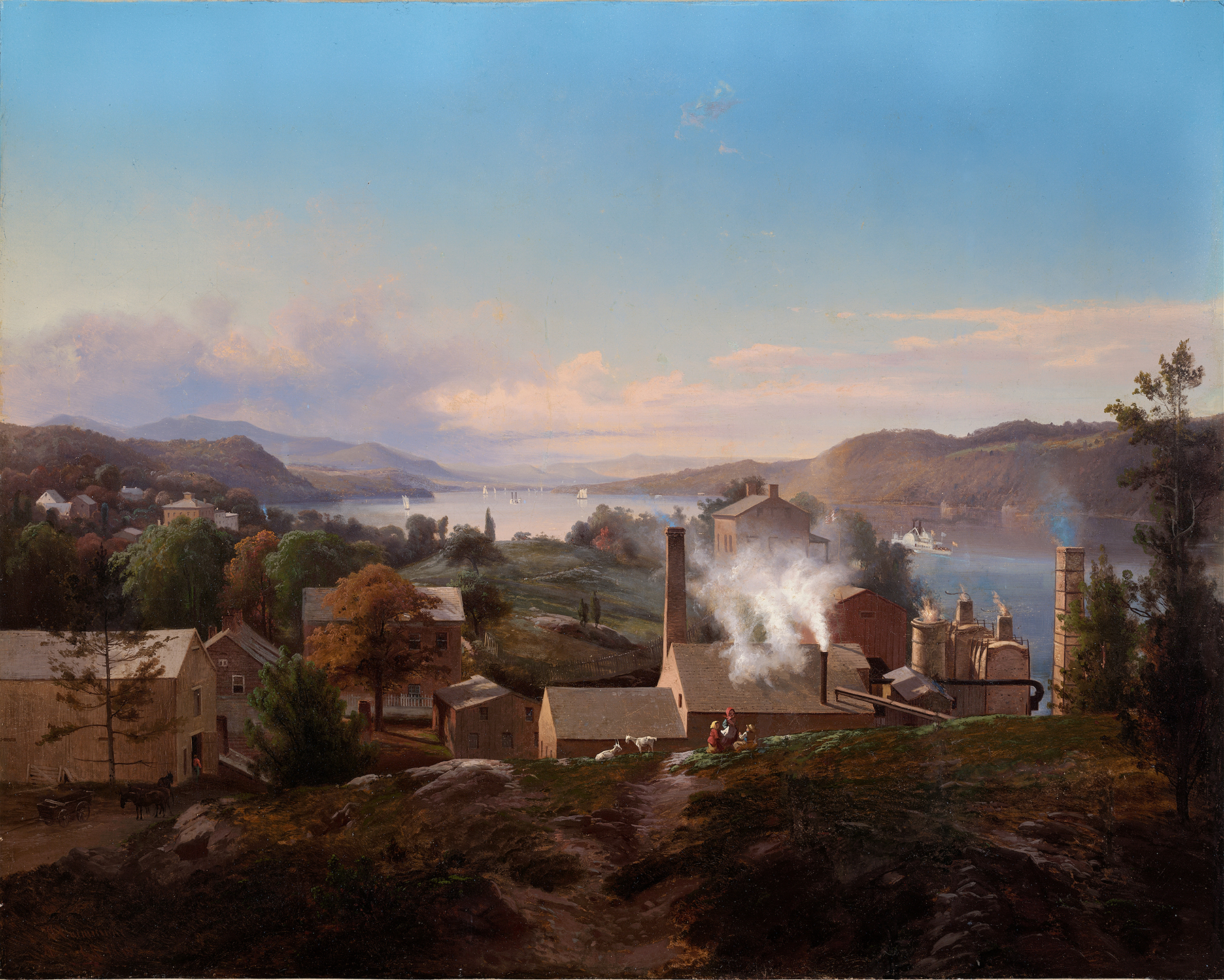
What if beauty was never meant to be finished? In Johann Hermann Carmiencke’s Hudson River at Cold Spring, the fleeting allure of nature unfolds, evoking a sense of fragile serenity amid the impending changes of time. Look to the lower left where the river's gentle current glides under a delicate play of light. The soft pastels of dawn reflect upon the water's surface, blurring the lines between reality and dream. Notice how the trees, tall and venerable, frame the scene with their intricate branches, each leaf whispering secrets of the landscape.
The horizon, kissed by soft hues of orange and blue, invites the viewer’s gaze deeper into the tranquil expanse, a moment suspended in the air. Yet, beyond the picturesque beauty lies a tension between permanence and transience. The shadows cast by the trees hint at the inevitable passage of time, while the shimmer of the water suggests moments that can slip away unnoticed. This duality speaks to the fragility of the natural world, encouraging reflection on how quickly such beauty fades, impacted by seasons and human hands alike.
Each stroke of color captures a fleeting moment, a reminder that what we cherish can vanish in an instant. In 1861, Carmiencke painted this piece during a period of personal and artistic exploration. Living in the United States, he found inspiration along the Hudson River, a burgeoning landscape of romanticism and industrial change. The art world was moving toward impressionism, yet Carmiencke's dedication to capturing the essence of nature's beauty reflects a deep-seated reverence for the landscapes he loved, setting a poignant contrast to the tumultuous environment around him.