Il Ramoscello — History & Analysis
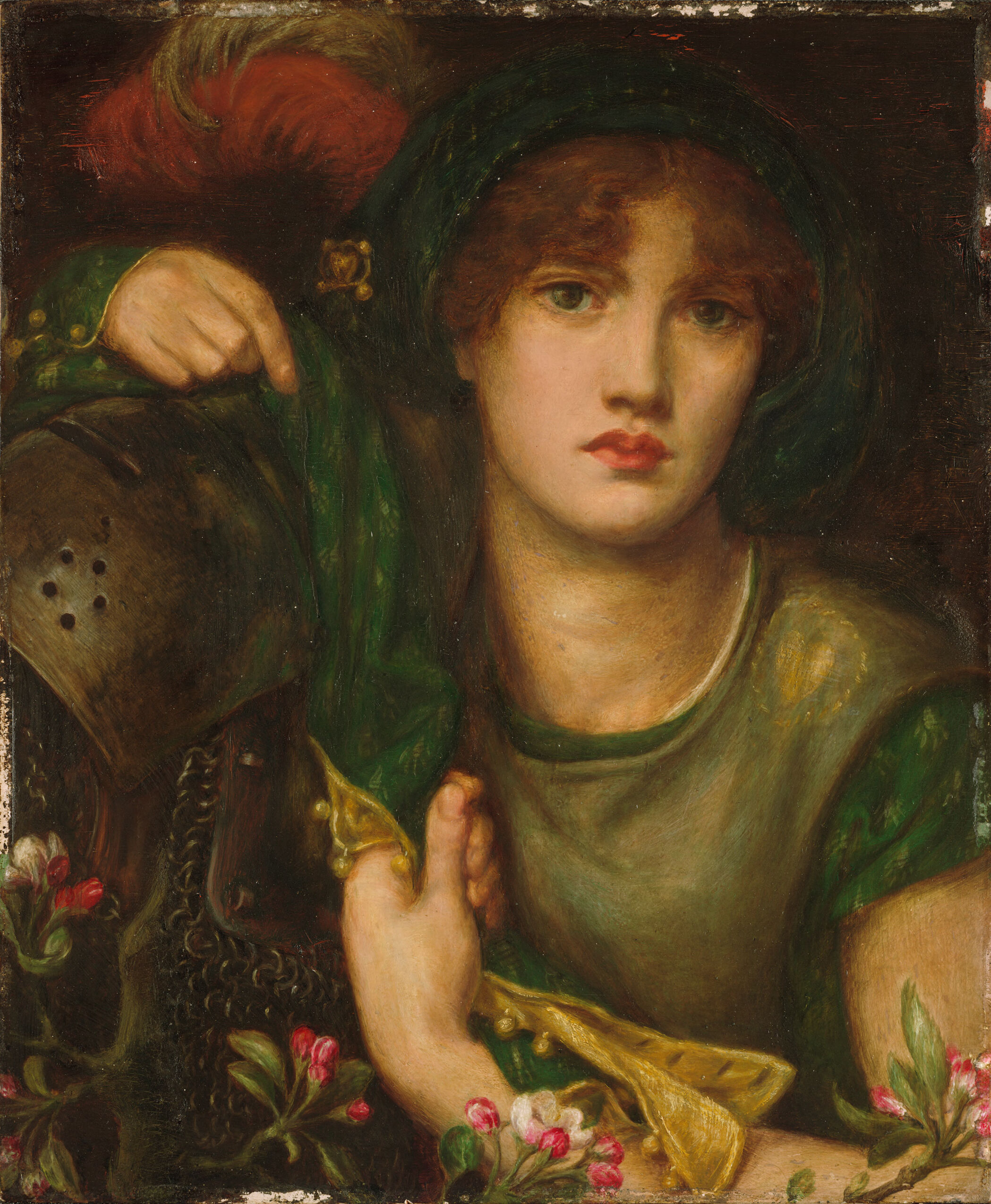
When did color learn to lie? In Il Ramoscello, the illusion of reality becomes a spectacle, challenging our perception of truth and beauty through its vivid palette and intricate forms. Focus on the luscious greens and warm browns that burst forth from the canvas, drawing your eye towards the delicate figure entwined with nature. Notice how the woman’s flowing hair mirrors the soft, curling leaves around her, creating a harmonious blend of flesh and foliage. The interplay of light dances across her figure, casting gentle shadows that enhance the tactile quality of the petals within her grasp.
Each hue is carefully chosen, as if Rossetti painted not just with color, but with emotion itself. Yet beneath this botanical embrace, a somber tension lingers. The woman’s gaze, though serene, hints at an inner conflict, perhaps a longing for something just out of reach. The ram’s horn she holds serves as a symbol of both creation and destruction, suggesting that beauty often comes with sacrifice.
This duality invites the viewer to reflect on the fragile relationship between nature and the human spirit, evoking a sense of melancholy amidst the vibrancy. In 1865, the artist was deeply entrenched in the Pre-Raphaelite movement, advocating for a return to nature and emotional authenticity in art. Living in London during a time of sociopolitical upheaval, Rossetti’s work was influenced by the Victorian era’s burgeoning interest in symbolism and the complexities of the human experience. Il Ramoscello encapsulates this moment, embodying the artist's quest to explore the depths of beauty and its inherent contradictions.