The Blessed Damozel — History & Analysis
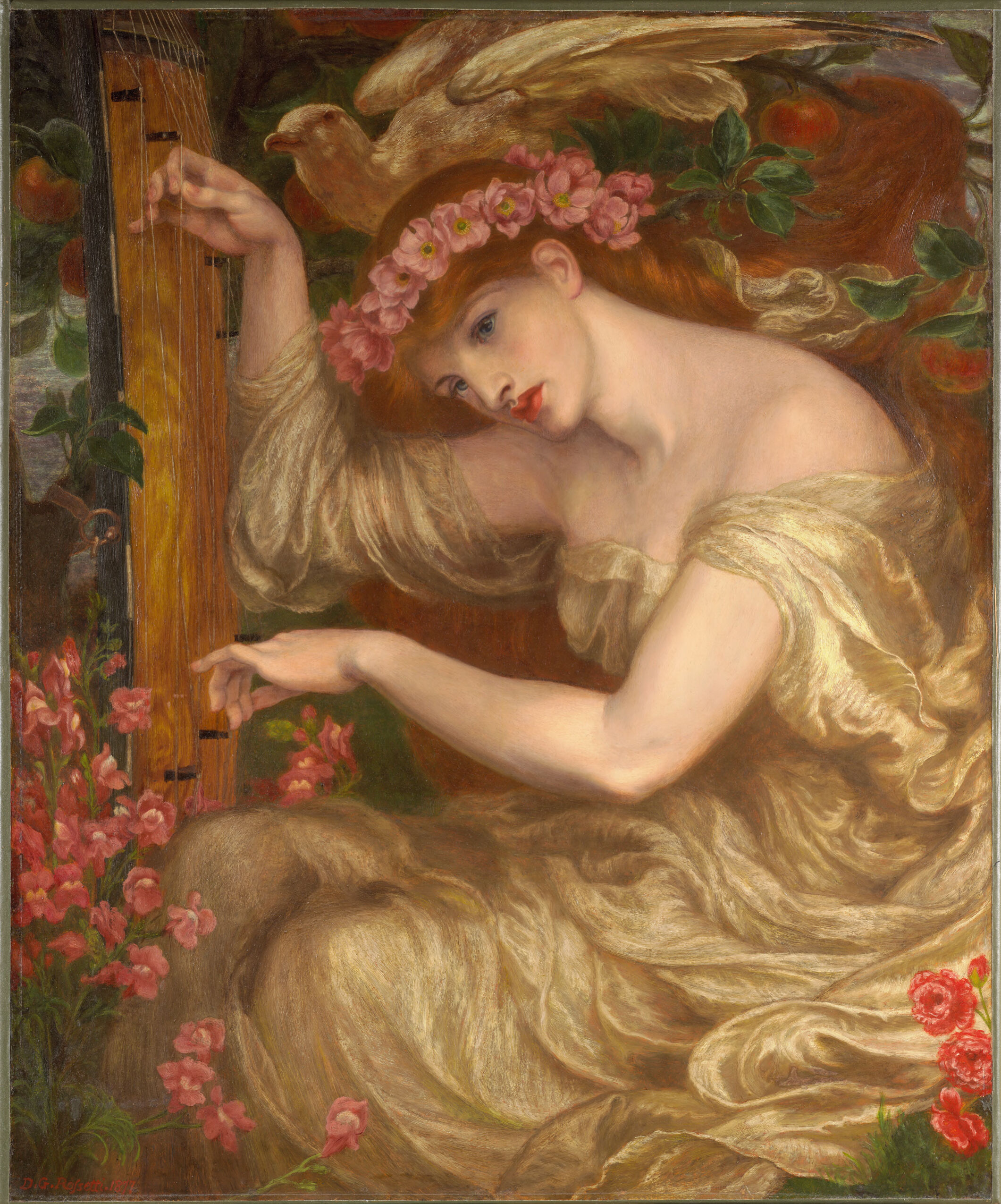
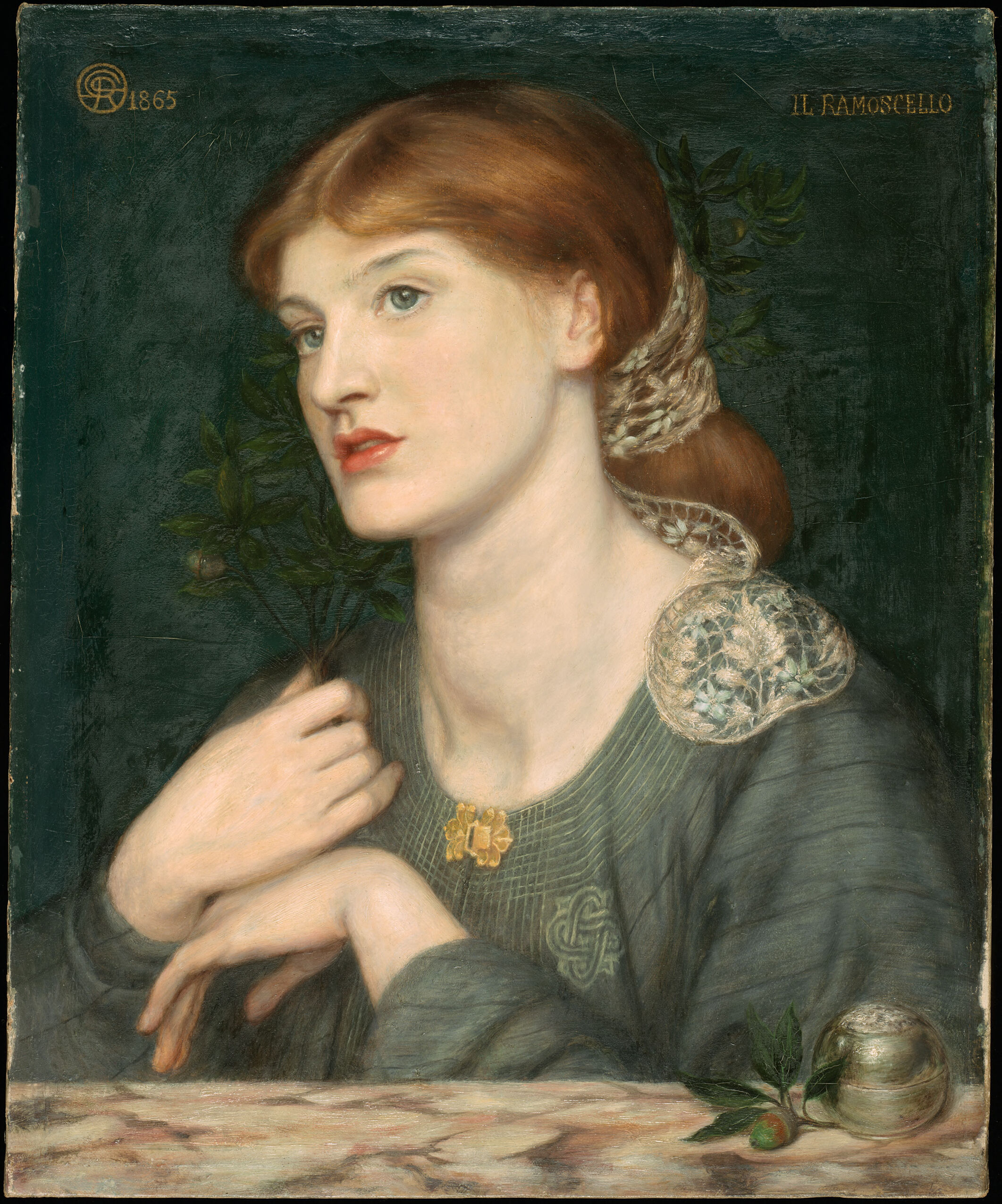
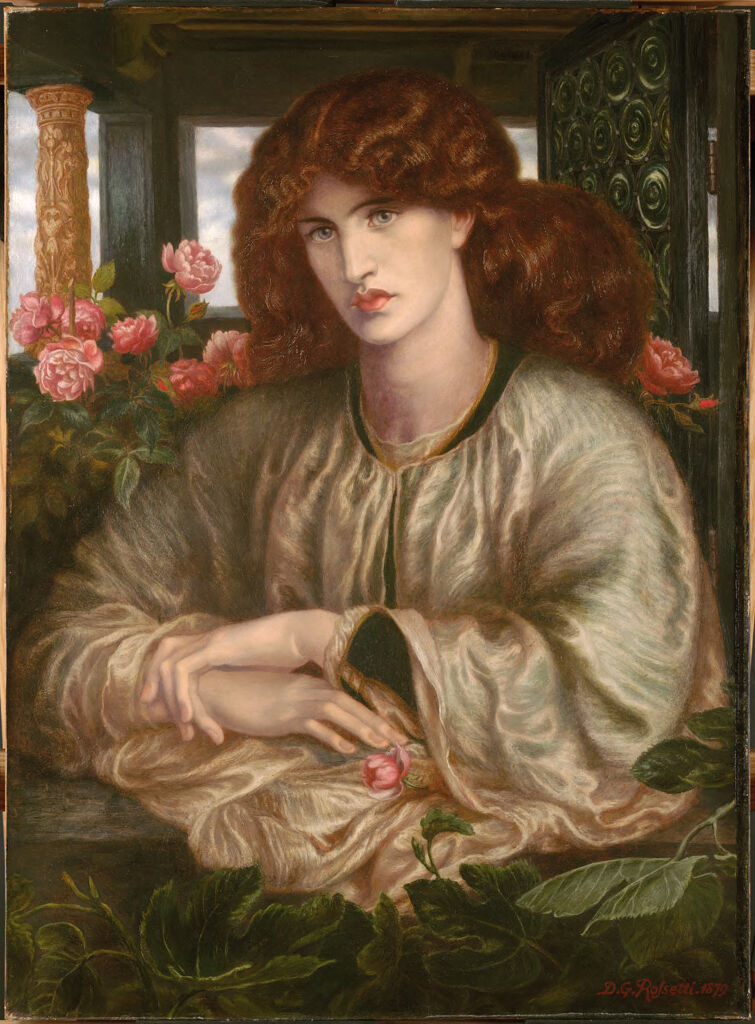
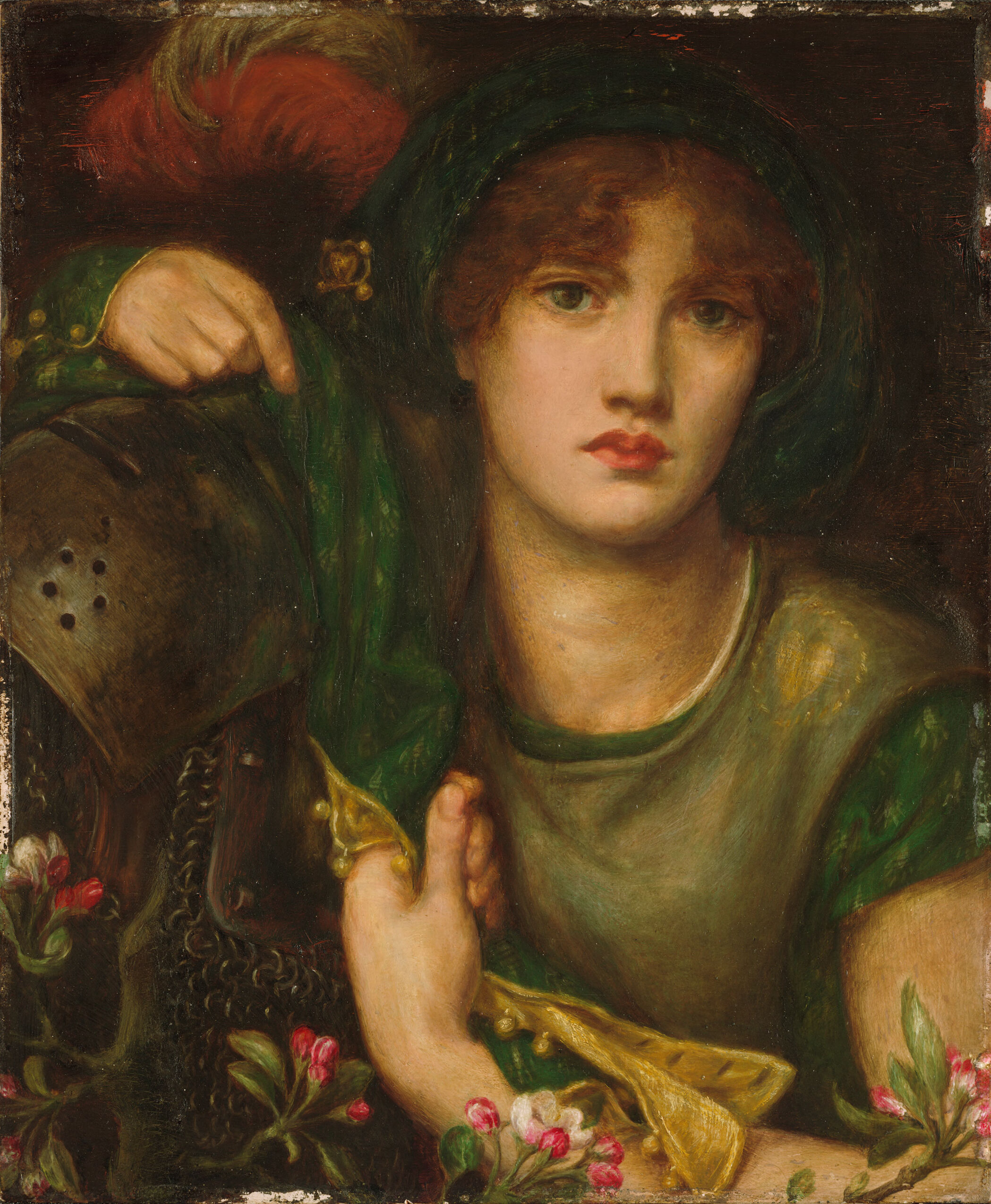
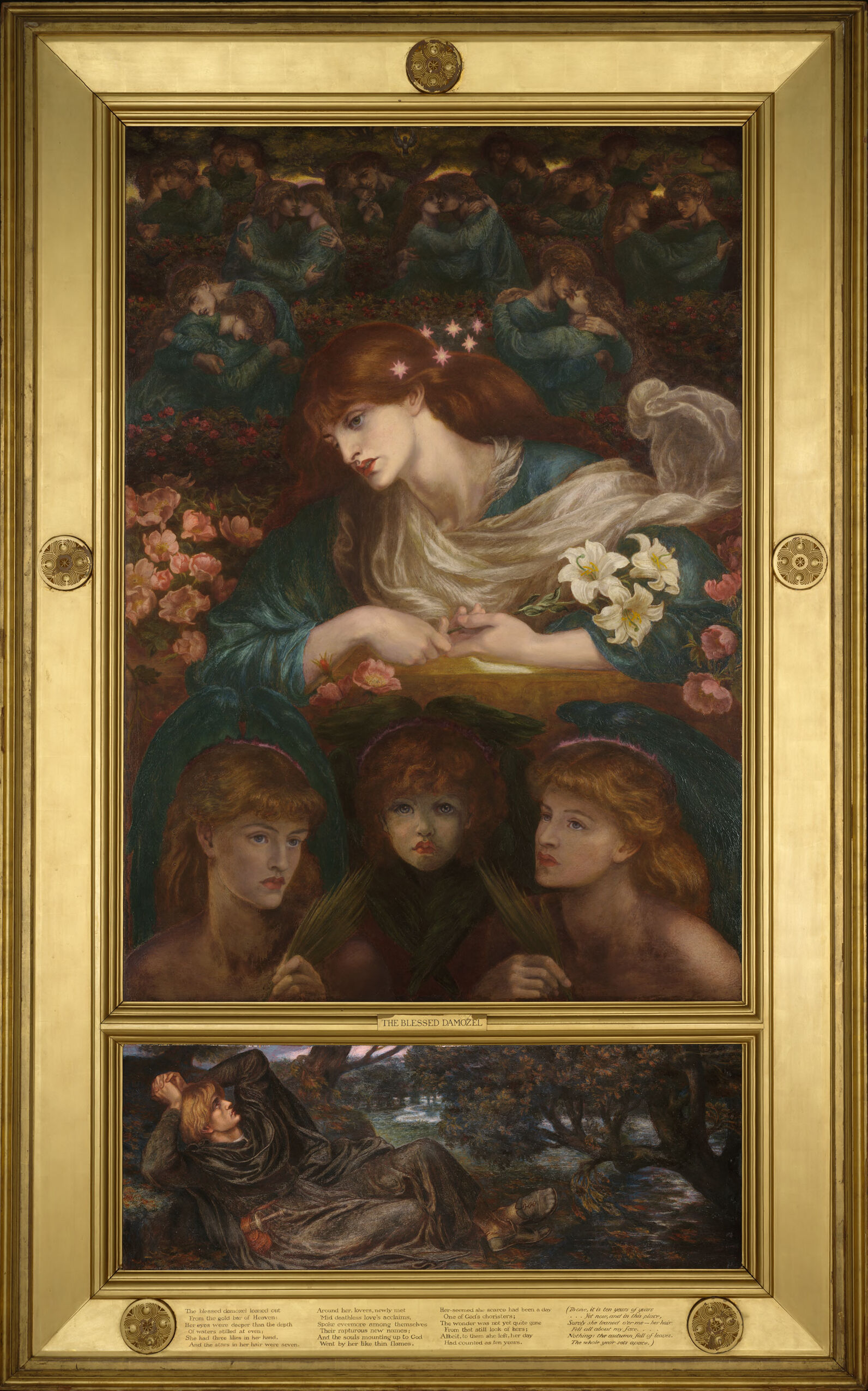
“Every silence here is a confession.” In a world governed by fleeting moments, beauty stands eternal, whispering secrets that the heart longs to unveil. Look at the figure, draped in ethereal garments, her golden hair flowing like sunlit silk. Notice how the soft hues of gold and blue intertwine, inviting us to a realm where the earthly and the divine embrace seamlessly. The lush background blooms with roses, symbolizing love and loss, while the damozel gazes serenely downwards, her expression a blend of longing and tranquility.
Her delicate hands clasp a wreath of flowers, an emblem of purity and devotion, drawing the viewer into her poignant narrative. The juxtaposition of her serene demeanor against the vibrant, textured surroundings creates a tension that resonates deeply. Each flower, each brushstroke, speaks to an inner turmoil—beauty intertwined with the ache of separation. The distance she gazes toward hints at the beyond, evoking a sense of yearning for connection that transcends the boundaries of life and death.
This artwork captures not just the essence of beauty but the profound complexities that lie beneath its surface. Dante Gabriel Rossetti painted this masterpiece between 1871 and 1878, during a time when he was deeply involved in the Pre-Raphaelite Brotherhood. Living in London, he was influenced by the ideals of beauty and emotion that defined this movement. At this juncture, he grappled with personal losses and the evolving landscape of Victorian art, infusing his work with both nostalgia and a longing for transcendence.