In an oriental landscape a caravan moves through a river — History & Analysis
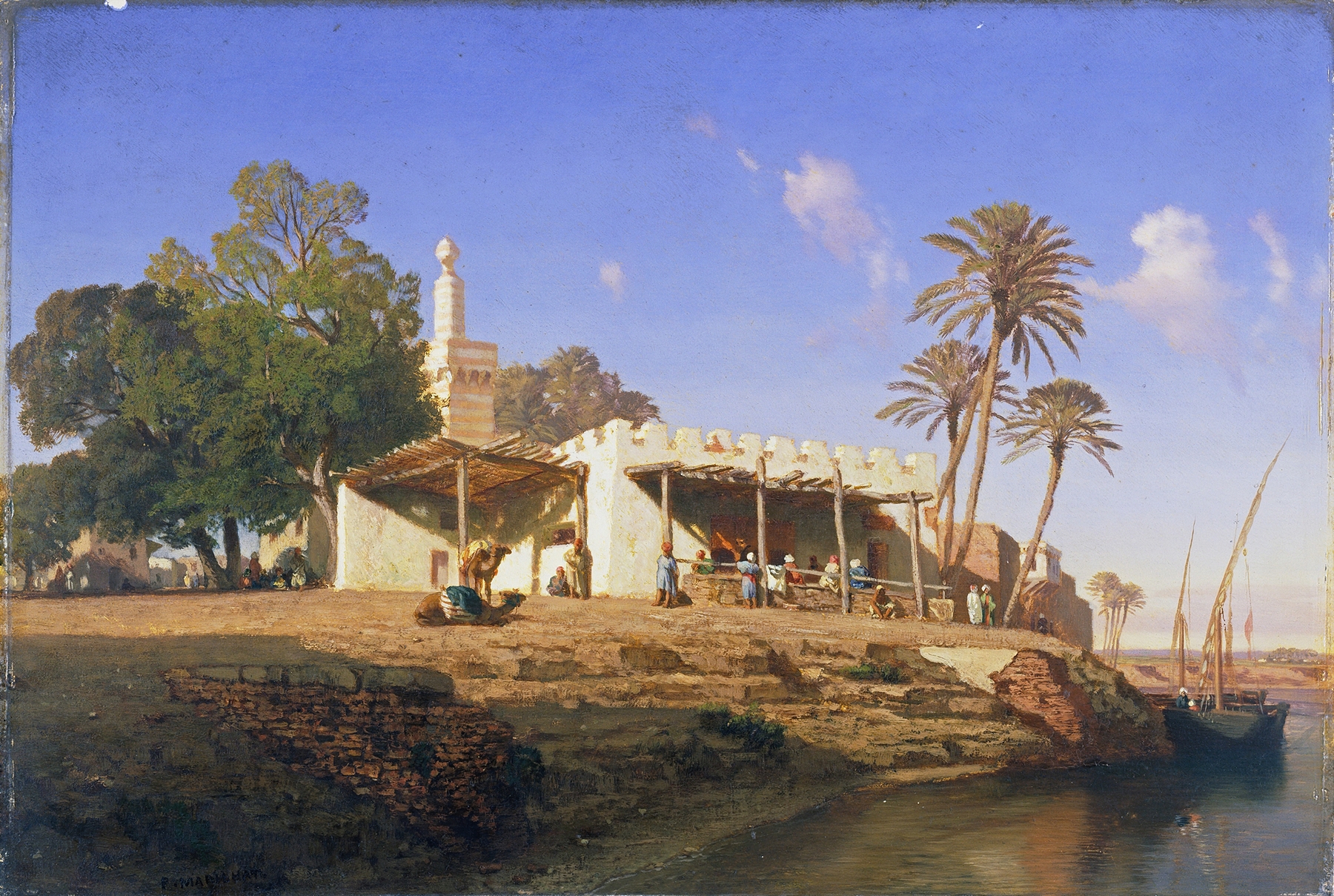
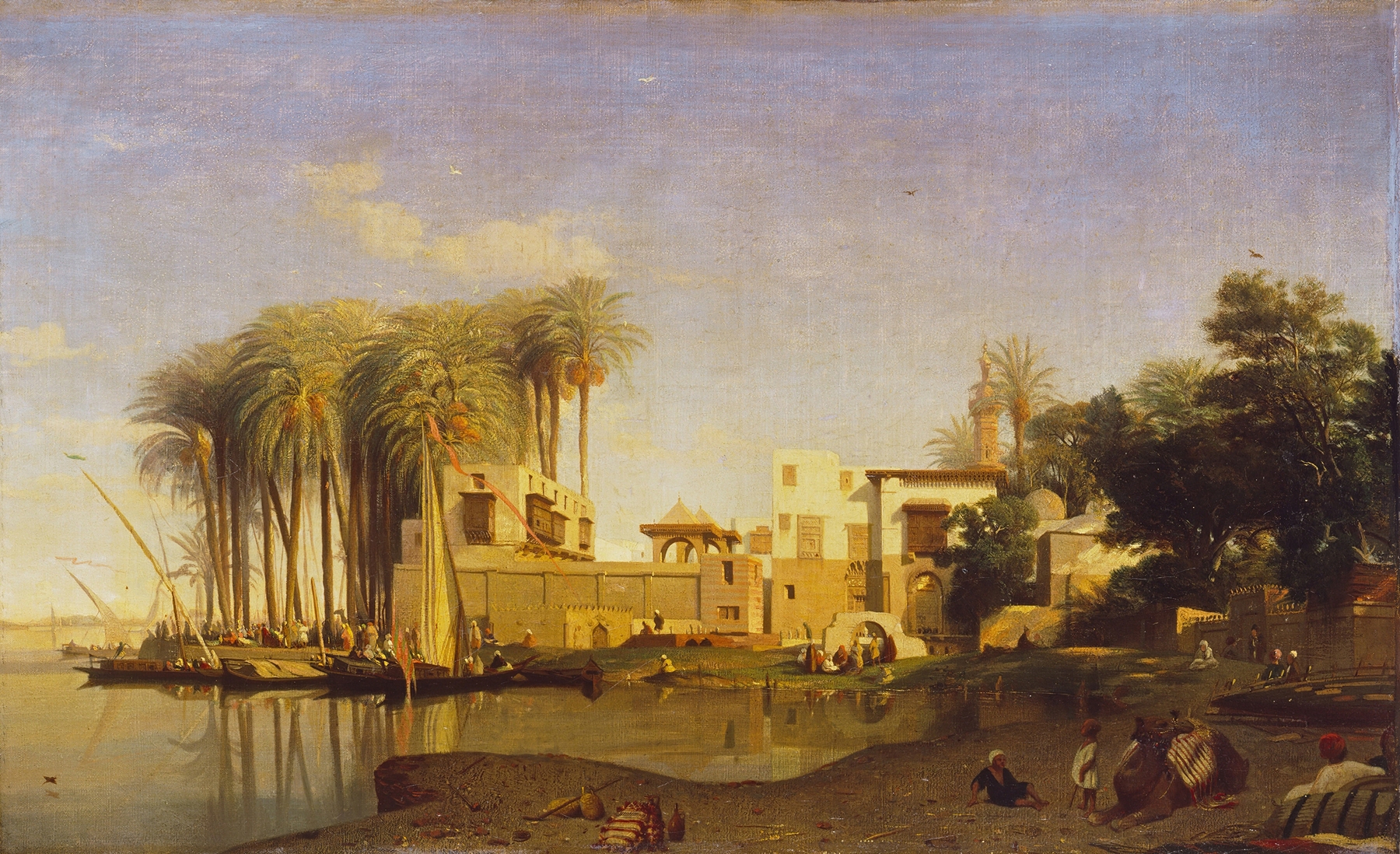
What if beauty was never meant to be finished? This notion dances within the brushstrokes of an evocative scene, where a caravan flows seamlessly through the river’s embrace, framed by a landscape that feels both foreign and familiar. Look closely at the finely rendered figures in the caravan, their vibrant garments contrasting against the lush greens and earthy browns of the landscape. The shimmering water reflects the soft hues of twilight, drawing the eye toward the gentle ripples as they guide the caravan's journey.
Notice how the artist uses warm tones to illuminate the figures, allowing a sense of movement to emerge as they navigate through the winding river. Hidden within the layers of this work lies a dialogue between nature and humanity, a delicate balance of serenity and purpose. The caravan, a symbol of exploration, invites contemplation on the themes of transition and adventure, while the stillness of the river speaks of the passage of time. The vibrant colors pulse with life, yet a sense of longing pervades, suggesting beauty is found in the journey, not merely the destination.
During the years between 1826 and 1847, Prosper Marilhat created this piece, capturing the fascination of European artists with the exotic scenes of the Orient. At this time, he was influenced by his travels in the East, where he encountered diverse cultures and landscapes. This artwork reflects both his personal experiences and a broader artistic movement that sought to bridge the known with the unknown, ultimately capturing the spirit of exploration that characterized the era.